The ‘White Genocide’ Story Shaped U.S. Policy. Now It’s Quietly Falling Apart As White ‘Refugees’ Return To South Africa
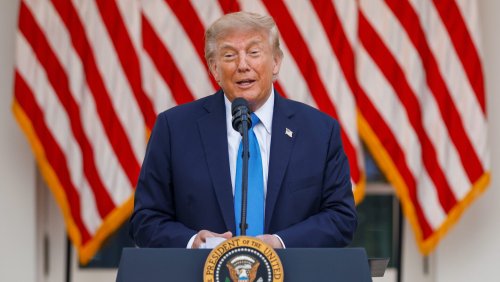
Source: Chip Somodevilla / Getty A few months ago, you couldn’t turn on cable news or scroll through social media without hearing about an alleged humanitarian catastrophe unfolding in South Africa. According to the story pushed by Donald Trump and amplified across right-wing media, white farmers were being hunted down, civilization was collapsing, and the [...]



A few months ago, you couldn’t turn on cable news or scroll through social media without hearing about an alleged humanitarian catastrophe unfolding in South Africa.
According to the story pushed by Donald Trump and amplified across right-wing media, white farmers were being hunted down, civilization was collapsing, and the country had become the epicenter of a racial bloodbath dubbed “white genocide.” The situation was supposedly so dire that white South Africans were fleeing for their lives.
America, we were told, had to step in.
And eventually it did.
Several thousand white South Africans were admitted to the United States through a special refugee pathway championed by the Trump administration. Conservative media treated the moment like a rescue operation. Cable news segments framed it as a humanitarian intervention. The United States, once again, was stepping in to save white victims of a violent and collapsing African society.
Fast-forward to today.
Some of those same “genocide refugees” are now packing up their bags and heading back to South Africa. The reasons being cited are almost painfully ordinary. The cost of living in the United States is high. Housing is expensive. Healthcare is a financial horror show. Some people say they miss their families. Others say they’re afraid of mass shootings. None of this sounds like the behavior of people fleeing real extermination. Historically speaking, genocide victims are not known for returning home because the lifestyle and costs are better.
And yet here we are.
Which raises some critical questions, not just for the politicians who promoted this story, but for the media ecosystem that helped carry it.
How did a conspiracy theory about “white genocide” travel so far from the fringes of the internet into presidential rhetoric and U.S. refugee policy?
Why did the propaganda spread faster than the fact-checking?
Why did so much coverage frame the claim as a political dispute rather than interrogating where the narrative came from in the first place?
Why weren’t the politicians and pundits pushing the claim being pressed harder for evidence before the story hardened into policy?
Now, to be fair, some journalists did push back. Outlets like Reuters, the Associated Press, PBS, and others published fact-checks explaining that there is no credible evidence of a racial extermination campaign against white farmers in South Africa. Experts pointed out that the country has a serious crime problem affecting people of multiple races and that the “white genocide” narrative has circulated for years in far-right propaganda networks.
But the debunking didn’t travel nearly as far as the panic. Right-wing media ecosystems treated the claim like breaking news. Cable hosts spoke about it with grave urgency. Social media influencers turned it into viral content. Politicians repeated the phrase in speeches and interviews.
Meanwhile, much of the mainstream coverage settled into a familiar pattern of modern political journalism. Trump says white farmers are being slaughtered. Critics say that the claim is exaggerated or false. South African officials deny that genocide is occurring.
On paper, that’s balanced reporting. But in practice, it can also function as a kind of laundering process. This is what happens when a conspiracy theory that began in extremist spaces suddenly appears in mainstream coverage as a legitimate political controversy worthy of national debate. And once the claim enters the bloodstream of the political conversation, it doesn’t just sit there. It starts shaping policy.
That’s how the “white genocide” narrative eventually became an immigration story. And that’s how thousands of white South Africans arrived at American airports framed as refugees from a racial apocalypse.
Now fast-forward to the present moment. There’s another round of questions that the media should be asking right now.
If genocide was actually underway, why are these white refugees voluntarily returning to the place where they were supposedly hunted? Because many of the people returning say their decisions are about ordinary life factors, not fear of extermination.
Has anyone asked Donald Trump whether he still believes white genocide is happening?
Not in any sustained or widely reported way tied to the recent stories about refugees returning. While journalists have fact-checked the claim, there hasn’t been a major moment where Trump has been pressed directly about the return migration and asked whether he still stands by the genocide narrative.
Have the pundits who spent months warning about a racial apocalypse been asked to explain the sudden migration in reverse? Not really. Most of the commentators and media personalities who amplified the “white genocide” narrative have either stopped discussing it, shifted to other political topics, or reframed the conversation around general crime in South Africa rather than addressing the collapse of the original claim.
And why does so much of the current coverage read like a lifestyle story about relocation decisions instead of an autopsy of how a conspiracy theory turned into refugee policy?
Because many outlets are treating the development as a migration trend by reporting on personal reasons for moving, rather than revisiting the political narrative that drove the policy in the first place. The result is coverage that explains the moves but often stops short of interrogating how the propaganda traveled from fringe internet spaces into mainstream political debate and policy.
At the end of the day, the story we’re getting is that some people moved to the United States. Some people are moving back. End of story. It’s all very calm and neutral. It’s giving very NPR and strange journalistic amnesia.
Propaganda doesn’t have to convince everyone that a lie is true. It simply has to push the lie into the public conversation. Once the claim becomes a topic journalists feel obligated to cover, it gains a legitimacy it never earned. By the time reality catches up, the narrative has already shaped public opinion and, in this case, public policy.
This is not just an awkward human-interest migration story. It’s a reminder of how easily propaganda can travel, and how reluctant the media sometimes is to interrogate the damage once the narrative falls apart. Because when a genocide story collapses into a housing-cost story, journalists shouldn’t just report the move-out date. They should ask how the lie made it this far in the first place and why reality took this long to catch up with the headline.
SEE ALSO:
Trump’s South African Refugee Program Is ‘Whites Only’
Trump Prioritizes White Afrikaners Over Black And Brown Migrants
Share
What's Your Reaction?
 Like
0
Like
0
 Dislike
0
Dislike
0
 Love
0
Love
0
 Funny
0
Funny
0
 Angry
0
Angry
0
 Sad
0
Sad
0
 Wow
0
Wow
0