The History Of Black GOP Leaders
Source: Photo by Michael M. Santiago/Getty Images/Photo by: GHI/Universal History Archive/Universal Images/Getty Images/White House website. Black GOP leaders over the years. The Republican Party has had a complex and evolving relationship with Black Americans, from its early days as an abolitionist movement to its more recent controversies over race and civil rights. One of the [...]


The Republican Party has had a complex and evolving relationship with Black Americans, from its early days as an abolitionist movement to its more recent controversies over race and civil rights. One of the first African Americans to play a significant role in U.S. politics through the GOP was Hiram Revels, who made history in 1870 as the first African American to serve in Congress. Revels, a Republican from Mississippi, was elected to the U.S. Senate just after the passage of the 15th Amendment, which granted Black men the right to vote. His election was a reflection of the Republican Party’s post-Civil War commitment to civil rights and Reconstruction, according to the Senate’s website. Revels used his brief tenure to champion civil rights, promote education for freedmen, and oppose school segregation in the District of Columbia. Representing Mississippi during Reconstruction, he spoke out against racial discrimination, supported amnesty for former Confederates, and helped secure employment opportunities for Black workers.
Some context.
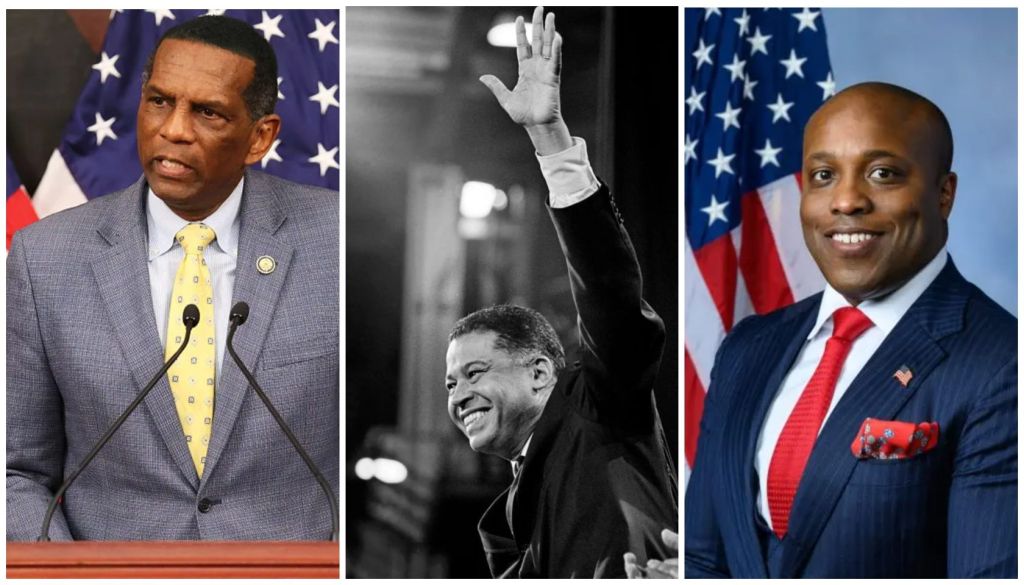
Fast forward to the 21st century, and Black Republicans have remained an important, though controversial, part of the GOP. In the 2010s, House Republican Leader Kevin McCarthy aimed to recruit more Black candidates to diversify the party’s white image. This led to the election of high-profile figures like Tim Scott (South Carolina), Burgess Owens (Utah), Wesley Hunt (Texas), Byron Donalds (Florida), and John James (Michigan). Known collectively as the starting five, critics argue that their alignment with far-right positions, including support for some of Donald Trump’s policies, conflicts with the priorities of many Black voters. They have drawn praise for challenging traditional identity politics and criticism from detractors who label them as “tokens” for the Republican Party. Their decision not to join the Congressional Black Caucus has also sparked debate, with figures like Tim Scott arguing that his campaign “was never about race.
But things are getting ready to change for the Starting Five. As of 2026, several of these figures have announced their departures. Owens is retiring after being redistricted out of his seat, while Hunt is stepping down after failing to secure his party’s Senate nomination. James and Donalds are running for governor in their states. This leaves Tim Scott as the sole Black Republican in the U.S. Senate.
Let’s learn more about the history of Black GOP leaders over the years.
Edward Brooke
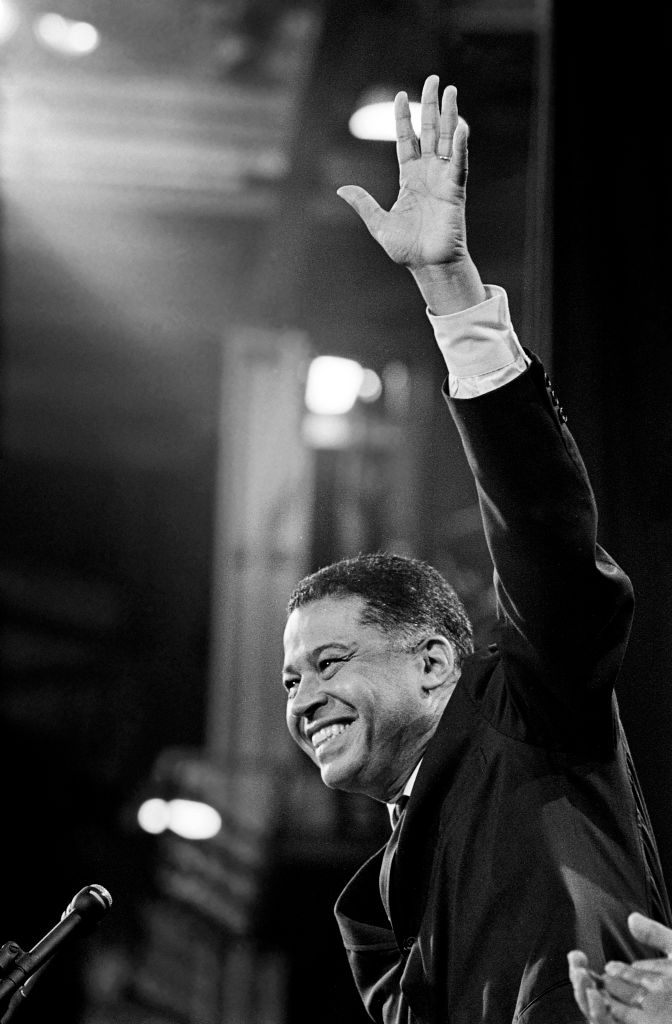
Throughout history, Black Republicans have played pivotal roles, yet the party’s relationship with African Americans has been fraught with tension, especially as the GOP evolved in the mid-20th century. The shift from a progressive party advocating for civil rights upon its founding in 1854 to one that increasingly used racially coded language, what some call the “Southern Strategy,” alienated many Black voters and trickled down into other social issues for the community. In simple terms, the Southern Strategy was a plan used by the Republican Party in the 1960s and 1970s to win over white voters in the South. They did this by tapping into frustrations and anger some people felt about changes brought by the Civil Rights Movement and new civil rights laws. Over time, this approach helped shift many Southern states from supporting Democrats to voting Republican.
U.C. Berkley professor and historian John A. Powell encapsulates this idea succinctly, writing in a blog post, “The Southern Strategy married the conservative politics antipathy to marginal tax rates and civil rights, labor, and environmental regulations of corporate elites with culturally conservative antipathy towards civil rights, women’s rights, and gay rights.”
After Revels, and before the Starting Five, there was Edward Brooke, who became the first African American elected to the Senate by popular vote in 1966, who helped advocate for civil rights during a period of growing partisan division. He served two full terms from 1967 to 1979. During his time in the Senate, he advocated for affordable housing, pushed for a higher minimum wage, and supported the expansion of commuter rail and public transit. He was a persistent voice for racial equality in the South and made a symbolic stand against segregation by integrating the Senate barbershop with his first visit as a senator.
In recognition of his service, he was awarded the Presidential Medal of Freedom on June 23, 2004, and later received the Congressional Gold Medal in 2008. Some historians note that he faced backlash for positioning himself as a liberal Republican while in office. Although he was a strong advocate for civil rights, Brooke openly criticized the “militancy” of certain activists in the community in the 1960s, arguing that it undermined the broader movement, which drew sharp criticism from some Black leaders.
Share
What's Your Reaction?
 Like
0
Like
0
 Dislike
0
Dislike
0
 Love
0
Love
0
 Funny
0
Funny
0
 Angry
0
Angry
0
 Sad
0
Sad
0
 Wow
0
Wow
0