The ‘Black recession’ is here: Trump’s tariffs gutted Black workers and Black-owned businesses
“Under the Trump presidency, we know that Black unemployment has increased dramatically and Black homeownership has decreased significantly because of

“Under the Trump presidency, we know that Black unemployment has increased dramatically and Black homeownership has decreased significantly because of toxic policies,” U.S. House Democratic Leader Rep. Hakeem Jeffries tells theGrio.
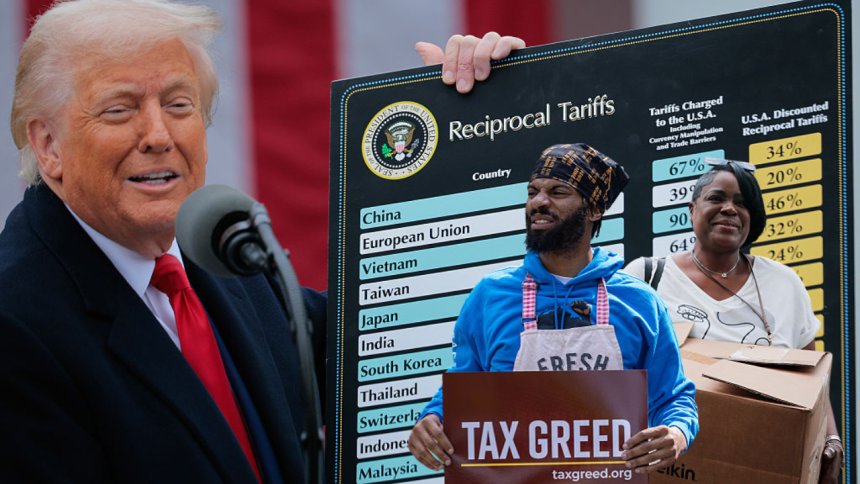
A year ago today, President Donald Trump unveiled his reciprocal tariff policies on what his administration dubbed “Liberation Day,” promising that the tax on global exports would lead to an economic “golden age.” Instead, Americans have endured a year of unpredictable high prices for goods and a major hit to businesses and the workforce.
According to data analyzed by the Joint Center for Political and Economic Studies, Black Americans have suffered the most under Trump’s tariffs program, which was struck down by the U.S. Supreme Court in February. And as Trump has promised to implement new tariffs under a different legal framing, relief for Black-owned businesses, workers and homeowners is nowhere in sight as Trump’s war in Iran also drives up gas and energy prices.
In its “State of the Dream 2026: From Regression to Signs of a Recession” report, the Joint Center says there are real signs that a “Black recession” is already underway as a result of Trump’s tariffs, evidenced by the high Black unemployment rate, which is currently 7.7%. The report also notes the Trump administration’s anti-DEI agenda, which has resulted in the overturning of civil rights era policies and programs designed to address racial inequality and advance diversity.
“The systematic withdrawal of protections, investments, and accountability mechanisms that have historically assisted Black communities from economic shocks combined with a substantive increase in Black unemployment all point to 2025 as a regression and recession for African Americans,” says the January 2026 report.
The Joint Center noted that Trump’s tariffs served as a tax on consumers, driving up prices and weakening specific industries where Black Americans over index.
“Employment in both the retail and transportation industries are disproportionately comprised of African American workers, which means that higher tariffs can have a substantive impact on African American employment,” said the report. “The tariffs of 2025 instigated trade wars, however brief, which raised retail costs and led to decreases in cross-border tourism that can have a negative impact in hospitality and retail employment.”
“One year later, the impact of these tariffs is clear—they drove up costs, disrupted key industries, and placed the heaviest burden on communities already navigating economic barriers,” said President and CEO of the Global Black Economic Forum Alphonso David.
He told theGrio, “Black entrepreneurs in particular have been hit hardest, facing rising expenses and shrinking pathways to compete and grow.”
David said the Supreme Court made clear Trump’s tariffs were “unlawful” and reinforced “what many had warned from the start.”
“Further, this is also part of a broader pattern—policies that undermine economic opportunity and free enterprise for Black communities under the guise of reform,” he added. “If we are serious about a strong economy, we cannot continue down a path that restricts access, concentrates opportunity, and sidelines the very communities driving innovation and growth.”
During a Democratic National Committee press call marking the one-year anniversary of Trump’s tariffs and its impact on Black communities, U.S. House of Representatives Democratic leader, Rep. Hakeem Jeffries, told theGrio that should Democrats win back control of Congress after this November’s midterm elections as expected, they will push forward legislation to ensure that “everyday Americans, including those in Black and Brown communities throughout the country, are paid back for the fact that these Trump tariffs have increased their costs and expenses by thousands of dollars per year.” 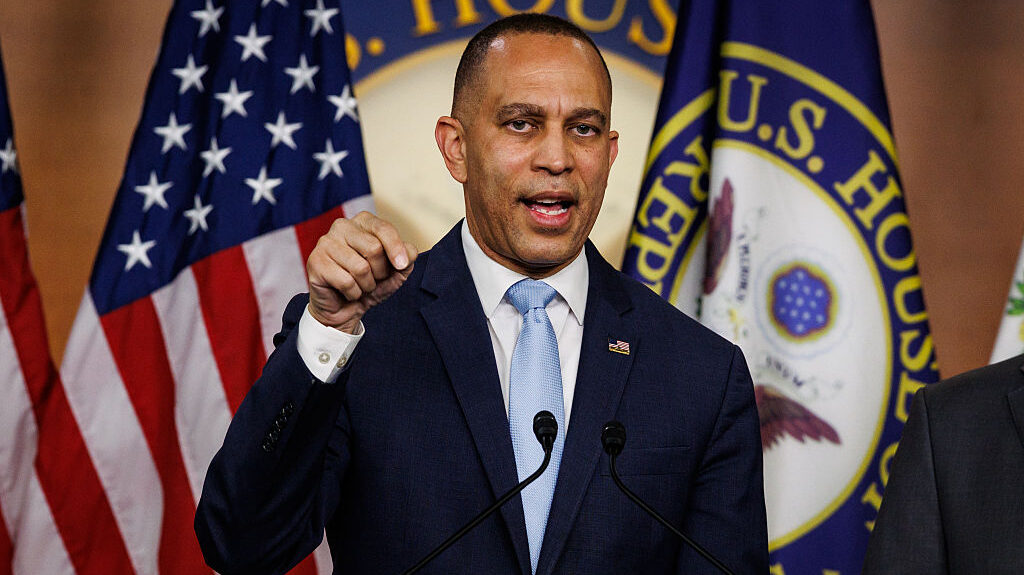
He added, “Under the Trump presidency, we know that Black unemployment has increased dramatically and Black homeownership has decreased significantly because of toxic policies being put into place by the Trump administration, in many cases, aimed at preventing the type of progress that we previously saw under the Biden administration.”
Under President Joe Biden, Black unemployment reached its lowest rate in U.S. history and data shows that Black businesses saw significant growth.
According to Brookings, “Between 2022 and 2023, the number of Black-owned employer businesses increased by an estimated 6,300 firms. That year, Black employer firms created roughly 238,000 new jobs while generating $37 billion more in revenue and paying $8.6 billion more in wages to their employees than in the year prior.”
The Brookings research added, “Higher rates of Black business ownership in a metro area or county correlate with longer life expectancies for Black residents overall, and metro areas with more equitable representation of Black-owned employer businesses show higher rates of Black well-being.”
During the 2024 presidential election cycle, Trump accused President Biden of hurting so-called “Black jobs” through his immigration policies and claimed that his campaign promise of mass deportations would result in economic prosperity for Black Americans. Nearly two years later, President Trump’s tariffs and other economic policies—as well as cuts to Medicaid that are driving up health care costs—stand to undo much of the progress Black communities saw just a few years ago.
Black women—92% of whom voted against Donald Trump—have especially suffered from Trump’s policies, notably his purging of the federal workforce and pressure on the private sector to do away with diversity, equity and inclusion in hiring and investments. Approximately 300,000 Black women have been left unemployed under the second Trump presidency.
“Donald Trump has failed to lead across the board. He has tanked the economy, killed the jobs market, and made it impossible for the American people to afford basic necessities…all to make the rich even richer,” NAACP President and CEO Derrick Johnson told theGrio.”Much as we all have felt his failed economy in our wallets, he will feel the blowback at the ballot box.”
Congressman Jeffries, who is poised to become the first Black speaker of the U.S. House should Democrats win the majority in November, vowed to theGrio, “We’re going to work as hard as we can on day one to reverse the damage that Donald Trump and Republican extremists have done to America.”
Share
What's Your Reaction?
 Like
0
Like
0
 Dislike
0
Dislike
0
 Love
0
Love
0
 Funny
0
Funny
0
 Angry
0
Angry
0
 Sad
0
Sad
0
 Wow
0
Wow
0