Target launches costume, swiftly removes it after backlash for resembling racist Black minstrel performers
Target, girl, what are you doing?? Minstrelsy, with its demeaning songs and performers who don exaggerated bright red lips and


Target, girl, what are you doing??
Minstrelsy, with its demeaning songs and performers who don exaggerated bright red lips and wide, unsettling, toothy smiles, may be a shameful relic of the past, but its imagery is so seared into America’s cultural memory that you can spot it a mile away — or so Target may have just learned.
Over the weekend, several pages and blogs reported that the Minneapolis-based big-box retailer launched and swiftly removed a kids’ Halloween costume resembling a 19th-century Blackface minstrel performer after a wave of intense backlash.
According to images circulating online, the $25 “Kids’ Glows under Blacklight Circus Clown Halloween Costume Bodysuit,” part of Target’s Hyde and EEK! Boutique collection, consisted of a baggy orange-and-black striped bodysuit and a black mesh face mask adorned with a wide, snaggletoothed, exaggerated smile. The whole thing was topped off with a tiny top hat with a flower fastened to it and matching gloves.
Shortly after it launched, consumers began downrating the costume and airing their complaints in the reviews. It wasn’t long before folks started sharing screenshots across social media, kicking off a firestorm. Target eventually removed the product and the link went dead, Hollywood Unlocked reported.
This all after skating on thin ice with some consumers and trying to climb back from an ongoing boycott sparked by its retreat from several diversity, equity and inclusion commitments in early 2025, however, the damage may already be done. Well into Monday morning, the controversy was still trending online, with many appalled by the costume and wondering what the retailer was thinking.
Target did not immediately return theGrio’s request for comment.
“So, Target, you really don’t have anyone left in Minneapolis to say, “Hey, that’s racist”? Y’all cut DEI and now you’ve got a minstrel clown costume for kids on your website,” one user quipped on Threads.
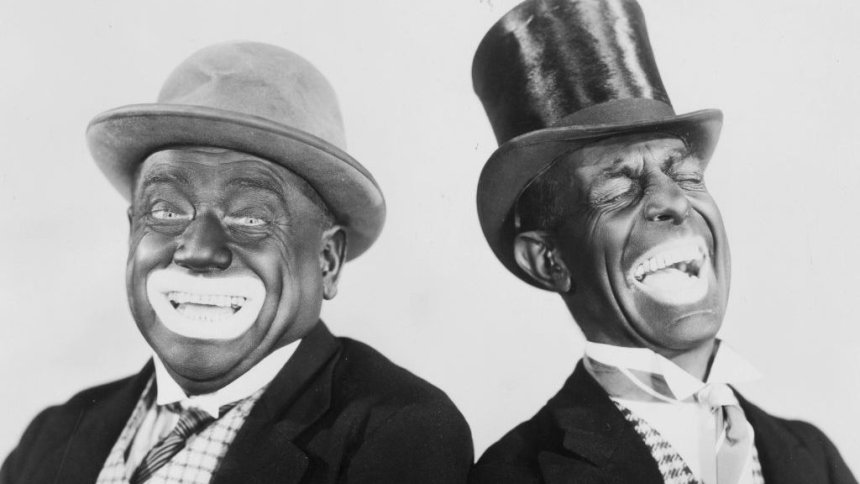
Among those reacting have been many sharing the historical context behind why the costume struck them as more than a simple clown costume — or even just a spooky one. While the word “minstrel” has a much older history referring to performers and entertainers, blackface minstrelsy emerged in the 19th century as a wildly popular form of American entertainment built around white performers caricaturing Black people for predominantly white audiences.
View on Threads
The first minstrel shows emerged in 1830s New York, where white performers blackened their faces with burnt cork or shoe polish, exaggerated their lips and other features, dressed in tattered clothing, and mimicked enslaved Africans on Southern plantations, according to the Smithsonian’s National Museum of African American History and Culture. Through exaggerated speech, music, and mannerisms, Black people were depicted as lazy, ignorant, superstitious, hypersexual, cowardly, and prone to thievery.
One of the most enduring of those caricatures was “Jim Crow.” Around 1830, white performer Thomas Dartmouth Rice popularized the blackface character, portraying an enslaved Black man as ragged, dim-witted, and buffoonish through song and dance. The act became a sensation, and by 1845, blackface minstrelsy had spawned an entertainment industry of its own, churning out songs, sheet music, makeup, costumes, and an entire catalog of racist stereotypes to be recycled again and again.
Those caricatures were deeply embedded by the time emancipation arrived, leaving aspiring Black performers to inherit an entertainment industry steeped in their degradation. After the Civil War, Black entertainers in minstrel troupes often had to don blackface themselves and perform versions of stereotypes white entertainers had created to mock them. Even as some found ways to introduce authentic Black music and culture into their performances, they were working within a form that had spent decades teaching audiences to laugh at, not with them.
Blackface minstrelsy survived well beyond the 19th century, with its conventions migrating into vaudeville, film, radio, and television, pushing those stereotypes into generations of American popular culture.
Since the Target costume began circulating, images of Jim Crow and other characters have appeared alongside screenshots of the child modeling the costume, with social media users drawing comparisons from the exaggerated facial features, styles of dress, and poses.
“Target’s photographer (or whoever it was) definitely knew what was going on,” another user on the same platform wrote, who included a side-by-side of a screenshot of the costume and an old photograph of a minstrel performer posed eerily similar. “They literally had that child mimicking the exact same poses. There’s no way that’s a “clown” costume. Disgusting.”
Someone commenting under a post about the incident on Instagram wrote, “At this point, they know what they’re doing!”
Whether the resemblance was intentional or the result of a glaring cultural blind spot, the controversy has given Target’s critics fresh ammunition. It’s also a reminder of the whole point behind the boycott, which is that having diverse voices in the room brings diverse outlooks, perspectives, and life experiences, or at the very least someone who can recognize when a smile is offensively wide.
Or as one user on Threads put it, “Target never would have made the disastrous decision to market a Halloween costume that looks like it’s straight out of the Jim Crow era if Black folks had a seat at the table.”
Update: After publication, a company spokesperson for Target reached out with an apology for the costume.
“As a company, we know we got this wrong, and we are deeply sorry,” the statement began, adding that the costume was “offensive” and should have never been available. The statement also confirmed the costume is no longer available.
“We know this is especially hurtful for our Black guests, team members and partners,” the statement continued. “Removing the costume is an important first step, and the company is looking closely at how this happened and what needs to change to ensure this won’t happen again.”
Share
What's Your Reaction?
 Like
0
Like
0
 Dislike
0
Dislike
0
 Love
0
Love
0
 Funny
0
Funny
0
 Angry
0
Angry
0
 Sad
0
Sad
0
 Wow
0
Wow
0