Supreme Court rules Trump move to deport 350,000 Haitians isn’t about race. Critics pull out the receipts
“At every turn, we see this administration undertaking policy motivated by a toxic combination of racism and xenophobia,” said Kristen

“At every turn, we see this administration undertaking policy motivated by a toxic combination of racism and xenophobia,” said Kristen Clarke, General Counsel at NAACP.
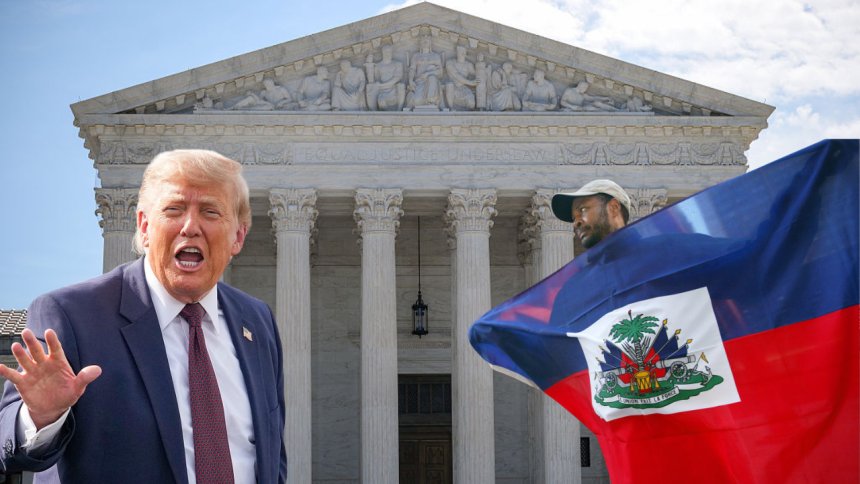
The Supreme Court’s conservative majority dealt a devastating blow to more than 350,000 Haitian migrants living in the United States, ruling that the Trump administration’s determination to terminate Temporary Protective Status (TPS) for Haitians, as well as Syrian migrants, was legal.
Most notably, the high court determined that race was not a factor in the administration’s decision to end TPS for Haitians, despite several racist and unsavory remarks President Donald Trump made about them over the years.
“None of the cited statements by either the President or the Secretary was overtly racial, and in substance all expressed policy views that could rest on race-neutral justifications,” reads the majority opinion written by Justice Samuel Alito. “Viewing all the relevant evidence…respondents are unlikely to prove that race was a motivating factor in the decision to terminate Haiti’s TPS designation, and it follows that they are not entitled to interim relief on their equal protection claim.”
In her dissent, Justice Elena Kagan, backed by liberal Justices Ketanji Brown Jackson and Sonia Sotomayor, pulled out receipts to prove otherwise.
“The evidence [the plaintiffs] have offered includes statements by the President so repellent and racially inflected that the majority declines to put them in print,” writes Justice Kagan, who was nominated to the bench by President Barack Obama.
Kagan listed several statements by Trump from 2018 to 2024, including calling Haiti a “shithole country” and describing the Caribbean nation as “filthy, dirty, [and] disgusting.” President Trump also reportedly said that Haitians living in the United States are “like a death wish for our country” and said they “probably have AIDS.”
Justice Kagan also pointed to more recent remarks Trump made about Haitians during the 2024 presidential election, in which he falsely claimed they were “eating the dogs…[and] eating the cats,” adding that Haitians are also eating “other things too that they’re not supposed to be.”
“Haitians are Black. (Norwegians and Swedes not so much.) The references—of filth, disease, and primitiveness—are shot through with racial stereotypes and tropes. It is hard to imagine the statements being made today of any White community,” wrote Kagan.
“The racial motivation that animated this administration’s callous decision to terminate TPS for Haitian nationals in our country is simply undeniable,” said Kristen Clarke, NAACP General Counsel and former Assistant Attorney General for the Department of Justice Civil Rights Division under President Joe Biden. 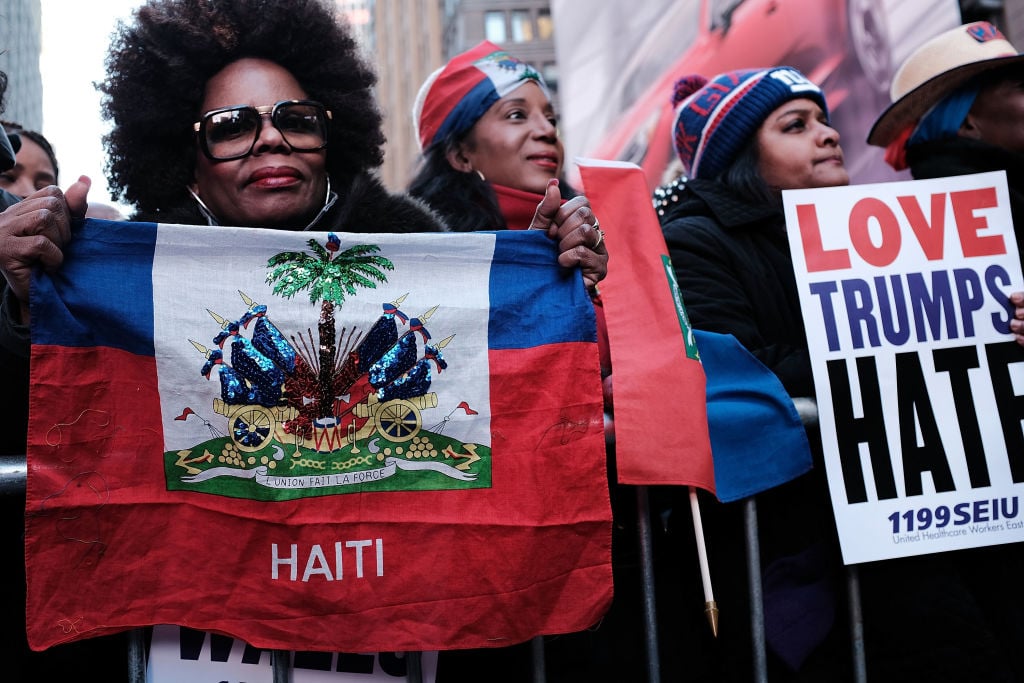
“This decision flies in the face of the 14th Amendment of the Constitution, which prohibits intentional acts of racial discrimination. At every turn, we see this administration undertaking policy motivated by a toxic combination of racism and xenophobia, intended to dehumanize, diminish, and erase Black people’s presence, our political power and our voice.”
Nana Gyamfi, executive director of the Black Alliance for Just Immigration (BAJI), told theGrio, “This is the same court that says that you can’t use race to fix race discrimination.”
The longtime Black immigration rights advocate explained, “It’s not just nationality. When we’re talking about Haitians, or Nigerians, or Ghanaians, Cameroonians, Sudanese, Somalis…that it’s not just about your individual nation…we do have to talk about immigration as a racial justice issue.”
Another aspect of the Supreme Court case concerned whether the Department of Homeland Security, then led by former Secretary Kristi Noem, followed proper legal procedures before determining its end of TPS status for Haitians. While the majority concluded that DHS followed the law and therefore did not require judicial review under federal statute, Justice Kagan notes that Noem failed to consult with the appropriate government agencies to determine whether Haiti, which has been in economic and social upheaval for years, was safe enough for Haitians to return.
“The State Department did not do that here, so the Secretary did not fulfill her consultation requirement,” Kagan writes in her dissent.
While the Trump administration insists TPS is meant to be “temporary,” noting that the word is in its name (Temporary Protected Status), advocates for Haitians argue that the law is broader than that surface-level argument.
“The basis for it is the current country condition. They continue to use this false narrative to not only create confusion but also be able to stand on the false pretenses that they are doing the right thing,” Guerline Jozef, executive director of Haitian Bridge Alliance, told theGrio.
Gyamfi said Haiti is clearly not safe, a requirement for determining TPS status for natives of a country, noting that the U.S. “doesn’t want its people to be going there,” adding that the State Department has issued travel warnings about the dangers of Haiti. What’s more, acknowledging U.S. policy dating back to supporting France’s poverty-inducing collection of debts from Haiti in exchange for its freedom in the 1800s, she told theGrio, “The United States is a reason for 90% of why it’s in the condition that it’s in.” 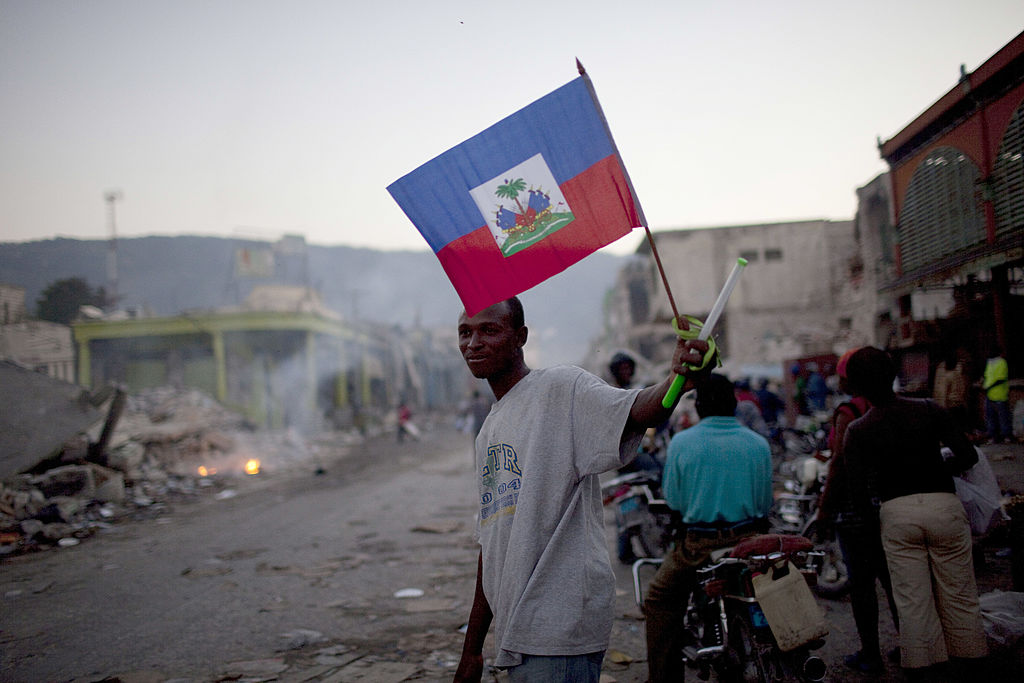
While Thursday’s Supreme Court decision is devastating and terrifying for Haitians, many of whom have lived in the U.S. for several years and contribute greatly to the U.S. economy, most especially the health care industry, advocates say the fight to protect Haitian migrants isn’t over.
“It’s not over,” said Gyamfi, who emphasized that “migration is a human right.” She told theGrio, “There’s still fight to be done, and one thing we should know about the Haitian people is they are the first people to teach us what fight means.”
Currently, there’s a bill in the U.S. Senate that would extend TPS for Haitians for three years until the end of the Trump administration.
U.S. Rep. Ayanna Pressley (D-Mass.), co-chair of the Congressional Haiti Caucus, and who successfully got a discharge petition to extend TPS passed in the U.S. House, said that Democratic lawmakers would “leverage every legislative tool available to us to stand in the gap in defense of these families and our neighbors, and the contributions that they make to civic, economic, and cultural life.”
However, she added, “I don’t want any individual at home to underestimate the power of them.” She continued, “This is a devastating comma in our fight for our TPS neighbors. It is not a finite period, and everyone who gives a damn has a role to play in this moment, and we ask you to join us in our advocacy, in our fight, in our push to the Senate.”
Gyamfi of Black Alliance for Just Immigration said advocates are also encouraging Haitian migrants to “immediately apply to adjust” their immigration status. Seeking asylum is one aspect, though the advocate notes, “We know that Black people, including Haitians, who apply for asylum have much lower rates [of approval] than others.”
Ultimately, advocates say it is important for everyday Americans, workers, and neighbors to use their collective power to call out what is happening to Haitian and other migrants being denied life-saving TPS status.
“There’s a lot that can still be done on an organizing community power-building level that is still untouched, and that’s where we are really putting our shoulder into,” said Gymafi.
She told theGrio that BAJI is encouraging Haitians to “not panic” following the court’s ruling by putting themselves in “harm’s way,” such as “complying in advance,” whether that means leaving their jobs or withdrawing all their money from the bank, no matter how understandable it is under such fear.
“All is not lost,” she encouraged.
Share
What's Your Reaction?
 Like
0
Like
0
 Dislike
0
Dislike
0
 Love
0
Love
0
 Funny
0
Funny
0
 Angry
0
Angry
0
 Sad
0
Sad
0
 Wow
0
Wow
0