Supreme Court revisits Mississippi death row case tied to disputed removal of Black jurors
Just years after overturning a similar conviction, the high court will weigh whether racial bias shaped Terry Pitchford’s jury and

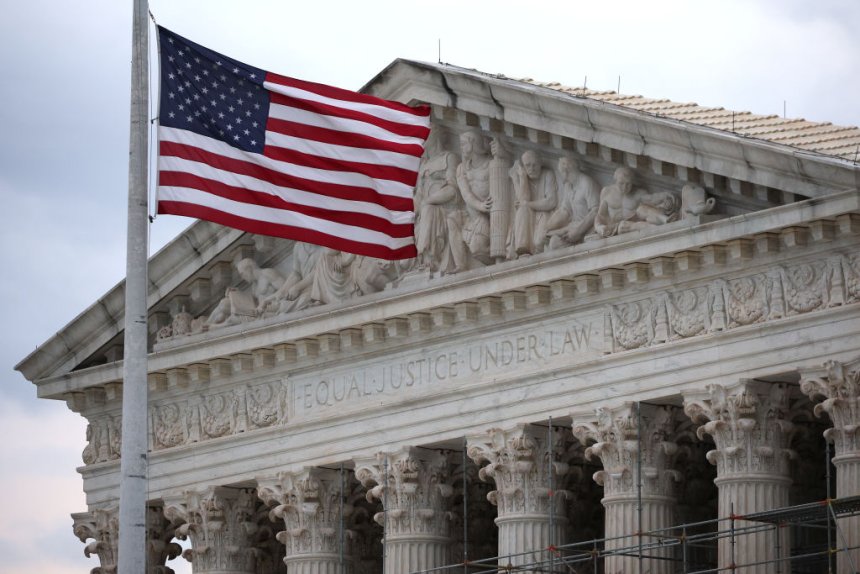
Just years after overturning a similar conviction, the high court will weigh whether racial bias shaped Terry Pitchford’s jury and whether lower courts ignored it
The U.S. Supreme Court is once again stepping into a Mississippi death penalty case that raises familiar and unresolved questions about race, jury selection, and the limits of fairness in the criminal justice system.
On Tuesday (Mar. 31), justices will hear arguments in the case of Terry Pitchford, a Black man sentenced to death for his role in a 2004 robbery and killing. At the center of the appeal is whether a now-retired prosecutor, Doug Evans, systematically removed Black jurors from the trial—something the court has rebuked before in a strikingly similar case.
Pitchford was 18 when he and another teen robbed a Mississippi grocery store. The other teen, who was younger than 18 and therefore ineligible for the death penalty, fired the fatal shots. Pitchford was later convicted of capital murder and sentenced to death.
During jury selection, Evans struck four of the five remaining Black prospective jurors, leaving just one Black person on the panel. Defense attorneys objected at the time, arguing the dismissals were racially motivated. The trial judge allowed the strikes without closely examining whether the reasons were legitimate or pretextual.
That history is now back in focus.
A federal judge overturned Pitchford’s conviction in 2023, citing concerns that the trial court failed to properly evaluate claims of discrimination. But a panel of the 5th U.S. Circuit Court of Appeals reversed that decision, setting the stage for the Supreme Court to weigh in.
Pitchford’s attorneys argue that the trial judge had a constitutional duty—established under Batson v. Kentucky—to determine whether the prosecutor’s explanations for striking Black jurors were credible. They say that duty was never fulfilled.
“The judge simply failed even to try,” Pitchford’s attorney wrote in court filings, arguing that the record clearly supports claims of discrimination.
Mississippi officials, meanwhile, maintain that the jury selection process was lawful and that the state Supreme Court acted appropriately in upholding the conviction.
But claims involving racial bias in jury selection have historically drawn broader concern—even among conservative justices—because they strike at the legitimacy of the legal system itself.
For Black defendants in particular, the stakes are longstanding. The removal of Black jurors has been a persistent issue in capital cases, raising questions about whether defendants are being judged by a true cross-section of their peers.
A lower court judge in Pitchford’s case noted that while the Flowers ruling alone doesn’t prove misconduct here, it should have been part of a broader “totality of the circumstances” analysis, one that fully considers patterns of behavior.
For now, the case puts a spotlight back on whether the legal safeguards meant to prevent racial bias in jury selection are being meaningfully enforced.
As the justices revisit these questions, the outcome could shape how courts nationwide handle claims of discrimination, and whether past patterns of bias are given the weight critics say they deserve.
Share
What's Your Reaction?
 Like
0
Like
0
 Dislike
0
Dislike
0
 Love
0
Love
0
 Funny
0
Funny
0
 Angry
0
Angry
0
 Sad
0
Sad
0
 Wow
0
Wow
0