SC Republicans defy Trump by rejecting map that could eliminate state’s lone Black Congressman Jim Clyburn
“It’s just a friendly reminder that there are still some people of goodwill that exist,” Democratic strategist Antjuan Seawright, a

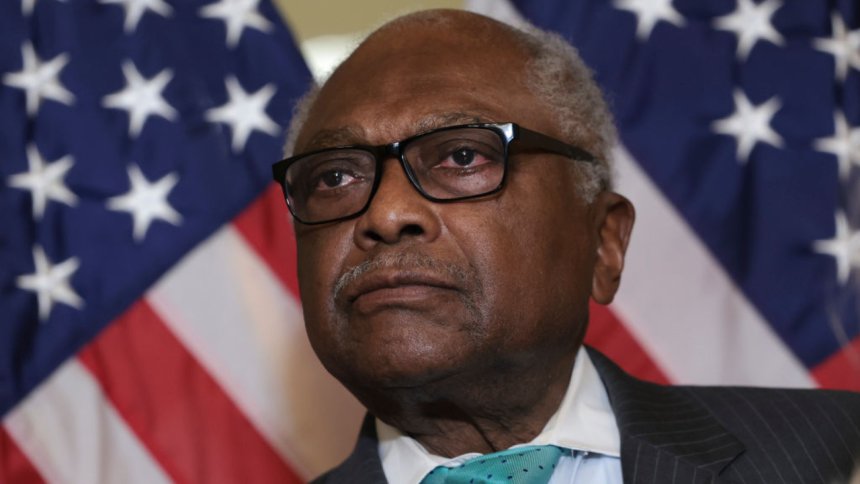
“It’s just a friendly reminder that there are still some people of goodwill that exist,” Democratic strategist Antjuan Seawright, a close advisor to Clyburn, tells theGrio.
South Carolina Republicans stunningly defied President Donald Trump’s call to redraw its congressional map, rejecting an attempt to eliminate the majority-Black district held by longtime Democratic U.S. Rep. Jim Clyburn.
On Tuesday, 12 Republican members of the state Senate joined Democrats in abandoning a plan to cancel early voting, which was already underway, and reschedule a new congressional primary election under a new map that would’ve weakened the voting power of Black voters in Clyburn’s 6th Congressional District. Clyburn, 85, has served the district for more than 30 years.
Many Republicans who flipped on the Trump-backed plan to racially gerrymander Clyburn’s district cited concerns about canceling an election that already began on Tuesday. The move reportedly caught the Trump White House off guard.
“The people’s will was respected by way of the process in the South Carolina Senate,” Democratic strategist Antjuan Seawright, a close longtime advisor to Congressman Clyburn and a South Carolina native, told theGrio. “It’s just a friendly reminder that there are still some people of goodwill that exist.”
Prior to the shocking vote in the South Carolina Senate, Clyburn sought to appeal to voters, urging them to cast their ballots early and send a message to South Carolina Republicans and Gov. Henry McMaster.
“I have no idea what that result will be. I do know this: that as many people that can vote should vote and challenge the process to throwing your vote out. We’ve done our part. Let’s see what the state senate would do to do its part,” said Clyburn, a powerful Black Democrat whose primary endorsement is credited for saving President Joe Biden’s once flailing campaign in 2020.
Seawright says the outcome in South Carolina is unique to the state and expressed uncertainty about whether similar Republican rejections of Trump’s campaign to pressure statewide Republicans to unprecedentedly redraw congressional maps mid-decade, as opposed to every 10 years after the U.S. Census.
“It’s very important to know that Jim Clyburn’s service to the state of South Carolina is also a very important factor in how folks maneuver at this moment, because what he’s done for our state, not just the 6th Congressional District, our state has benefited,” the Democratic strategist told theGrio. “I think that is certainly a sign that we don’t always have to agree, but we can agree to respect the work that has been done.” 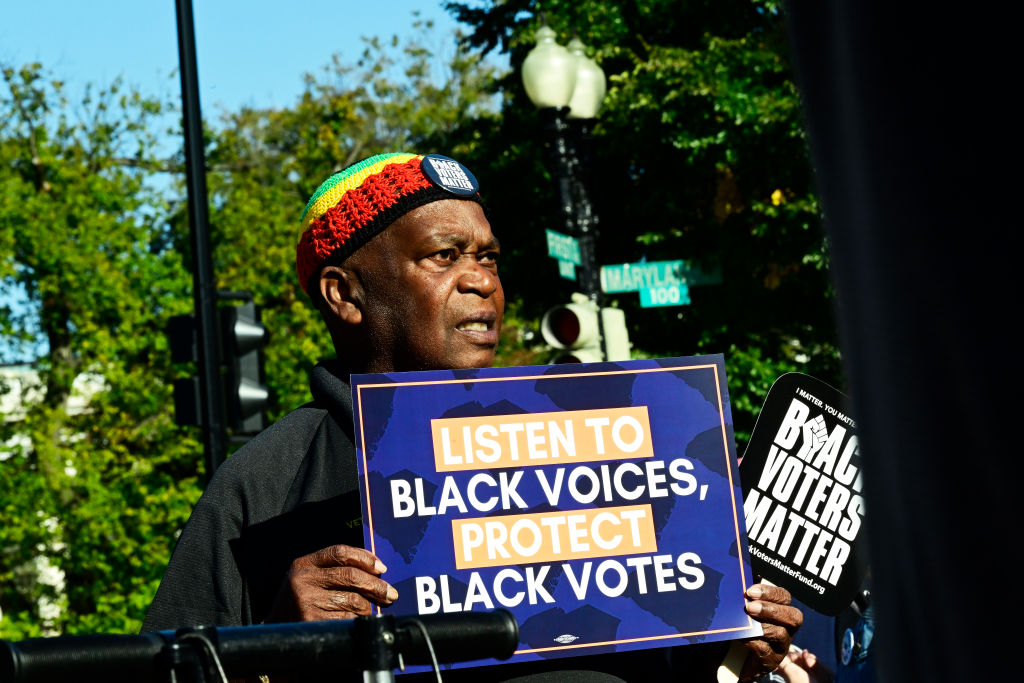
Seawright said he also believes Republican members of the congressional delegation are secretly thrilled that redistricting was halted in South Carolina — at least until the 2028 elections.
“They would have had to wrestle with maps that they were not supportive of or comfortable with, but they wanted to continue their audition for an audience of one, Donald Trump, and what they say privately and what they yield in public have been two different things in this process,” he told theGrio.
The turn of events in South Carolina comes the same day that a federal court rejected Alabama Republicans’ efforts to redraw the state’s congressional map to eliminate one of two majority-Black districts. As theGrio previously reported, despite the victory for Black voters, the state could still appeal to the U.S. Supreme Court, which has already ruled against a similar two-Black-majority district map in Louisiana, arguing that it is racially discriminatory against white voters under the equal protection clause of the 14th Amendment.
Since the Supreme Court’s Louisiana v. Callais ruling on April 29, which amended Section 2 of the Voting Rights Act and made it harder to prove racial discrimination in redistricting, a wave of southern states controlled by Republicans — including Tennessee, South Carolina, Mississippi, and Florida — have moved to redraw their maps, targeting majority-Black districts held by mostly Black members of Congress.
The wins for Black voters in South Carolina and Alabama give Democrats a fighting chance at winning the majority in Congress. Last August, Trump set off the current gerrymandering battle for control of Congress when he called on Texas Republicans to redistrict its map and guarantee the party five additional seats. Following Texas, Democratic-controlled states California and Virginia redrew their maps to offset the Republican advantage; however, the Virginia Supreme Court, in a shocking ruling, ruled on a technicality that the new map violated the state’s constitution.
Despite what transpired in South Carolina, Republicans maintain an advantage in the redistricting fight. Thanks to the U.S. Supreme Court, states across the South have sought to eliminate majority-districts by diluting the voting power of Black voters.
In response, the NAACP has called for an economic boycott of public university sports teams in states that have worked to weaken Black voting power. Additionally, the Congressional Black Caucus is now calling on all universities to speak out against the racial gerrymandering efforts that they note will significantly diminish Black representation.
“The Congressional Black Caucus is calling on Corporate America to publicly reaffirm its commitment to voting rights, equal representation, and the democratic principles so many companies pledged to uphold just a few years ago,” said U.S. Rep. Yvette D. Clarke, chair of the CBC. “Every institution that claims to believe in democracy has a responsibility to act like it.”
Share
What's Your Reaction?
 Like
0
Like
0
 Dislike
0
Dislike
0
 Love
0
Love
0
 Funny
0
Funny
0
 Angry
0
Angry
0
 Sad
0
Sad
0
 Wow
0
Wow
0