Rev. Jesse Jackson, a civil rights icon, is dead at 84
The Chicago giant was often dubbed one of the most controversial and outspoken civil rights leaders in U.S. history. Civil

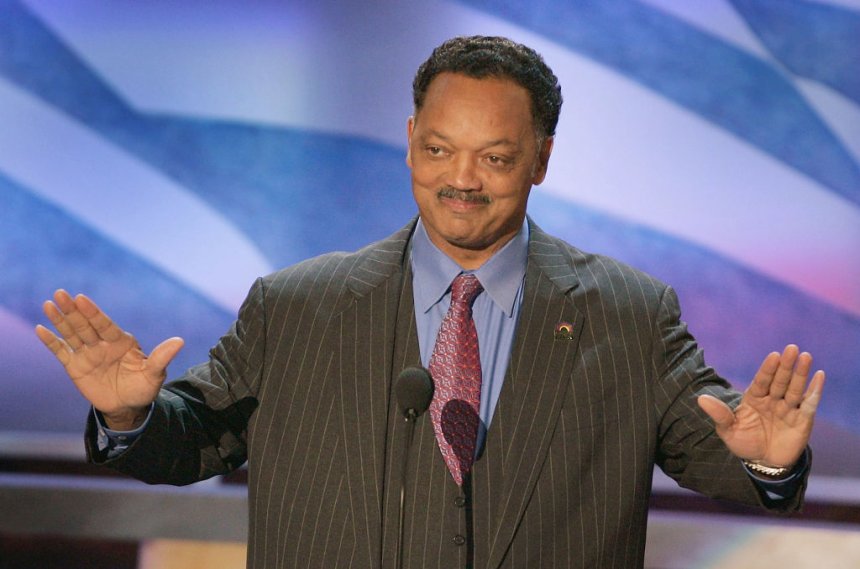
The Chicago giant was often dubbed one of the most controversial and outspoken civil rights leaders in U.S. history.
Civil rights icon Rev. Jesse L. Jackson has died at 84, his family announced on Tuesday.
“Our father was a servant leader — not only to our family, but to the oppressed, the voiceless, and the overlooked around the world,” the Jackson family said in a statement. “We shared him with the world, and in return, the world became part of our extended family. His unwavering belief in justice, equality, and love uplifted millions, and we ask you to honor his memory by continuing the fight for the values he lived by.”
Jackson, who battled cancer and lived with Parkinson’s disease and Progressive Supranuclear Palsy (PSP), was hospitalized several times over the years.
The Chicago giant was often dubbed one of the most controversial and outspoken civil rights leaders in U.S. history.
Jackson rose to prominence as a leader during the height of the American Civil Rights Movement in the 1960s and ran for president twice — in 1984 and in 1988. During the latter campaign, he won 11 primaries and caucuses and nearly 20% of the vote — making him the first viable Black American candidate to run for that office.
As the founder of the Rainbow PUSH Coalition, he remained at the forefront of the fight for civil rights, social justice, and political activism. And he became the prominent voice for the most marginalized in the Black community: poor and low-income families.
“If you fall behind, run faster. Never give up, never surrender, and rise up against the odds,” he said in a 2012 interview with The Guardian about one of the most important lessons he has learned in life.
Jesse Louis Burns was born on Oct. 8, 1941, in Greenville, South Carolina. Helen Burns, his mother, was a high school teen when her son was born. His father, Noah Robinson, was a former professional boxer and a 33-year-old married man who lived next door to the Burns family. He would have little contact at the time of his son’s birth. A year later, Burns married Charles Jackson, a janitor at the local post office. He would later adopt Jesse and give him his surname.
Still, Jackson faced ridicule as a young child. Neighbors called him a “bastard,” and classmates taunted him. It was a period in his life that remained raw even into adulthood. Yet, he did not let the pain of it halt him. By high school, he was an honor student and class president. He earned letters in baseball, basketball and football.
In a 1987 interview with The New York Times Magazine, Jackson recalls his childhood in the “small and quiet” town of Greenville. “I remember being taught my place,” Jackson said. 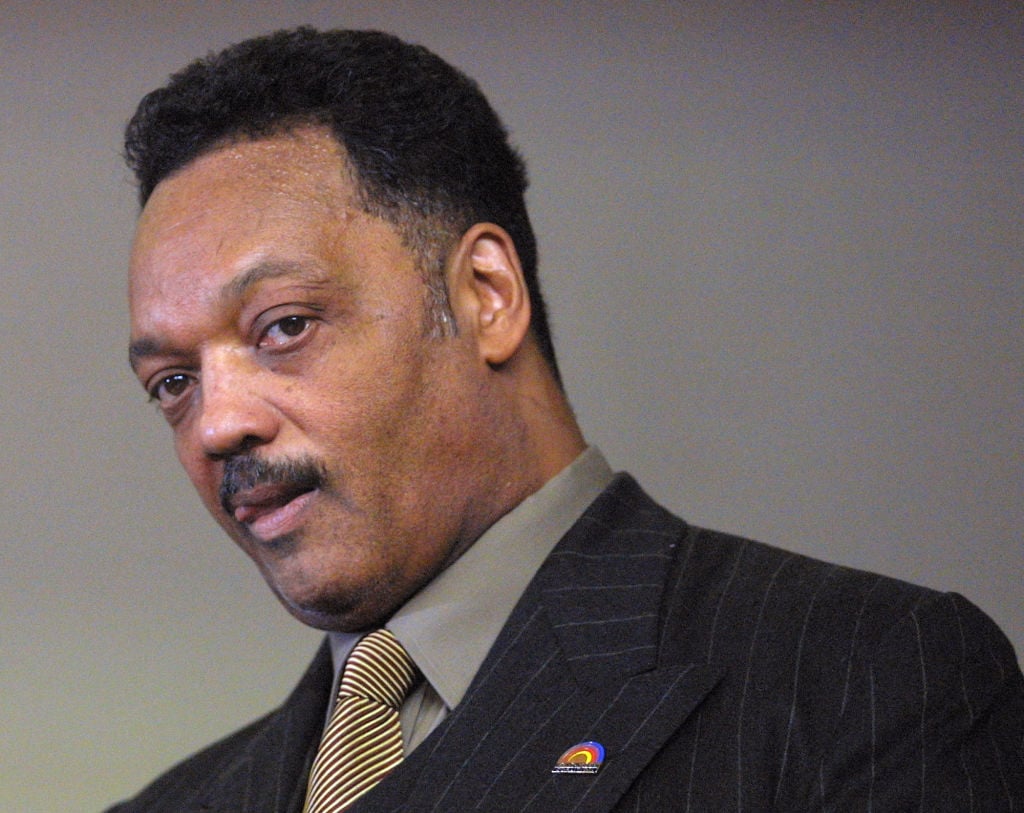
He also revealed that he remembered the first time his mother led him to the back of the bus; the two water fountains at Claussen’s bakery, where he worked on Saturday mornings; and the time he recognized the differences between the white elementary school and his school.
“’There was no grass in the [school]yard. I couldn’t play, couldn’t roll over because our schoolyard was full of sand. And if it rained, it turned into red dirt,” he said.
During the interview, he also recounted that moment, at age 14, when he knew that segregation wasn’t a way of life that Black America had to accept. It was during the Montgomery bus boycott of 1955.
“That was when we began to understand things don’t have to be the way they are,” Owen Perkins, a childhood friend of Jackson’s, told The Times Magazine in that 1987 Jackson feature. He and Jackson would stage their own protest, sitting in the front of a local bus but nothing happened in the end, Perkins said.
Upon graduation from high school, Jackson had offers from a minor league baseball team and a Big Ten football scholarship. He first attended the University of Illinois Urbana-Champaign for two semesters, then transferred to North Carolina A&T College in Greensboro, a historically Black college. At A&T, he was the quarterback of the football team and served as student body president. He also became involved in civil rights demonstrations in town.
Jackson also met fellow student Jacqueline Lavinia Brown, whom he married in 1962. The couple welcomed the first of their five children by 1964, when Jackson also graduated from A&T with a degree in sociology.
Jackson went on to attend Chicago Theological Seminary. While there, he organized student support for the civil rights movement and Dr. Martin Luther King. Also, he joined the Selma-to-Montgomery marches with King, James Bevel, and other key civil rights leaders. His participation left a remarkable impression on King.
“He immediately took charge,” Andrew Young, then a top deputy to King, recounted in The Times Magazine 1987 feature. “It was almost like he came in and, while people were lining up, he wouldn’t get in line. He would start lining people up.”
A year later, Jackson left the seminary — just three classes short of earning his master’s degree — to work full-time in the movement. (In 1968, Jackson was officially ordained a minister. He was awarded an honorary Master of Divinity in 2000 based on his previous credits earned, plus his life experience and subsequent work.)
Impressed by Jackson’s tenacity — and even his brashness — King found a role for the young man in the Southern Christian Leadership Conference (SCLC). That included directing Jackson to establish the frontline SCLC office in Chicago. By 1966, King and Bevel chose Jackson to lead Operation Breadbasket, the economic arm of the SCLC. Operation Breadbasket was also an initiative to monitor white-led companies’ treatment of Black Americans and to organize boycotts calling for fair hiring practices.
His tenure in this role was not smooth. Tensions rose through the SCLC leadership ranks — many thought Jackson operated too independently. They accused him of running Breadbasket’s finances without input from the leadership in Atlanta.
King, who had allowed Jackson into his inner circle, also lost patience with his protege’s antics and expressed his dismay following a tense meeting about the unusual violence that occurred during the Poor People’s Campaign march in Memphis. The violence led to negative media scrutiny.
King gathered his staff in Atlanta to discuss what had happened. During the meeting, Jackson abruptly countered King, questioning the leader about what he would do if the upcoming march on Washington failed.
“We were going for broke,” Ralph Abernathy told The Times Magazine in the Jackson feature. “We said we would go to jail, we would be killed if we had to.”
King and Abernathy stormed out of the meeting, which had become very contentious. Abernathy recounted: “As we swang down the steps … Jesse Jackson came to the stairs and said, ‘Doc!’ And Dr. King whirled in anger. He looked up and pointed his finger and said, ‘Jesse, it may be that you will carve your own individual niche in society. But don’t you bother me.’ And Jesse was left with his mouth hanging. And we continued down the stairs.”
King was assassinated five days later on April 4, 1968, while standing on the balcony outside his room at the Lorraine Motel in Memphis, Tennessee. 
In news interviews, Jackson claimed he had been the last person to speak with King and that he held him as he died. Many who were there disputed his account, leading to further friction within the SCLC leadership.
Abernathy took over as SCLC chairman, and Jackson increasingly clashed with him, formally resigning in 1971.
During that same year, Jackson founded Operation PUSH (People United to Save Humanity), which had a similar focus as Operation Breadbasket. Yet, many viewed the organization’s mission as more aligned with Jackson’s political aspirations than with helping marginalized Black Americans. Under the PUSH umbrella, Jackson led a group at the 1972 Democratic National Convention that ousted Chicago Mayor Richard Daley’s Illinois delegation.
In 1984, Jackson launched his first bid for the Democratic presidential nomination, winning five primaries and caucuses and garnering more than 18% of the vote. He surprised political pundits when he came in third in the primaries behind Sen. Gary Hart and Vice President Walter Mondale, who eventually won the nomination. During his 1984 presidential campaign, Jackson established the multiracial National Rainbow Coalition, which folded into PUSH in 1996 to form the Rainbow PUSH Coalition.
Jackson’s ‘84 campaign faced turmoil when it was reported that he referred to Jews as “Hymies” and to New York City as “Hymietown” in January 1984 during a conversation with a Black reporter from The Washington Post. Jackson assumed his comments would not be printed. Protests erupted. Louis Farrakhan, a Jackson ally, made matters worse when he publicly stated: “If you harm this brother [Jackson], it will be the last one you harm.”
After first denying he made the racist comment, Jackson apologized for the remarks one month later.
During his 1988 campaign, Jackson gained significant ground. He finished second in the Democratic primaries behind Massachusetts Gov. Michael Dukakis, winning more than seven million votes.
Jackson never ran for the U.S. presidency again. In 1990, however, he won his first election, capturing one of two special “shadow senator” seats for the District of Columbia. Serving in that unpaid post through 1997, he focused primarily on lobbying the U.S. Congress for Washington, D.C., statehood.
Jackson was also a force on the international stage. In 1983, he sought and won the release of a U.S. fighter pilot, Navy Lt. Robert Goodman, captured in Syria. The following year, he helped free 22 Americans held in Cuba. Before the Persian Gulf War, he traveled to Iraq to negotiate with Saddam Hussein for the release of 20 Americans and several British nationals who were being used as “human shields.” And he also secured the release of three U.S. soldiers captured during the Kosovo conflict. As part of his role as President Bill Clinton’s special envoy to Kenya, he met with President Daniel arap Moi in 1997 to bolster free and fair elections.
Jackson, through his Rainbow PUSH Coalition, continued to bring attention to the inequities faced by Black Americans during his later career. For his decades of civil and human rights work, he had been honored with many awards and recognitions, including more than 40 honorary degrees. Ebony Magazine named him one of the “100 most influential Black Americans.” He received the NAACP’s President’s Award and Spingarn Medal. In 2000, then-President Clinton awarded Jackson the Presidential Medal of Freedom.
He has written numerous columns and authored/co-authored several books, including “Straight from the Heart” (1987), “Keep Hope Alive” (1989), “Legal Lynching: Racism, Injustice, and the Death Penalty” (1995), and “It’s About The Money.” (1999).
He is survived by his wife Jacqueline and five children: Santita Jackson, former U.S. Congressman Jesse Jackson, Jr., U.S. Congressman Jonathan Jackson, Yusef Jackson and Jacqueline L. Jackson.
Share
What's Your Reaction?
 Like
0
Like
0
 Dislike
0
Dislike
0
 Love
0
Love
0
 Funny
0
Funny
0
 Angry
0
Angry
0
 Sad
0
Sad
0
 Wow
0
Wow
0