Paul Wall says the only racism he has experienced came from white people
The Houston rapper reflected on being rejected by some fellow white people while finding community in the Black culture that

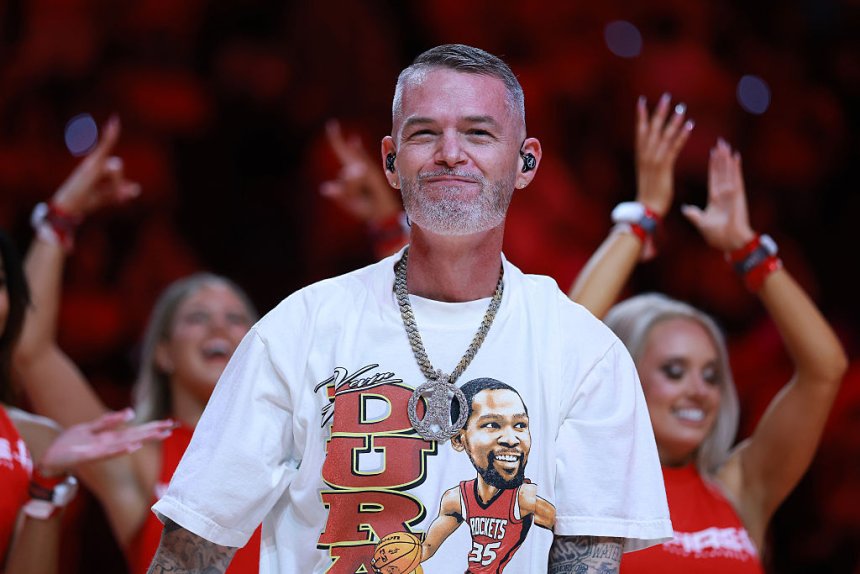

The Houston rapper reflected on being rejected by some fellow white people while finding community in the Black culture that shaped his career.
Paul Wall says the racism he has encountered throughout his life did not come from the Black community whose culture helped shape his career. According to the Houston rapper, it came from fellow white people.
During a wide-ranging appearance on Cam Newton’s “Funky Friday” podcast, the “Still Tippin'” rapper opened up about race, belonging and the reactions he received from white people who did not accept his connection to Black culture.
“The only racism I ever, in my life, ever experienced was from white people,” Wall told Newton, adding that they were “very unaccepting” of him for a long period of his life.
The conversation was part of a nearly two-hour episode released July 31, in which Wall also discussed Houston’s hip-hop history, fatherhood, marriage, grief and caring for his mother.
Wall’s admission adds another layer to his unusual position within hip-hop. For more than two decades, the rapper has been asked how he gained acceptance in a Black-created art form, as though his race should have automatically made Black listeners suspicious of him. Yet Wall said the rejection he experienced came from people who shared his racial background, not the Black and brown communities surrounding him in Houston.
The “Sittin’ Sidewayz” rapper did not expand extensively on the specific incidents he considered racist in the circulating clip. He did, however, connect the hostility to white people being uncomfortable with who he was and the culture in which he felt at home.
Wall grew up in Houston and entered the city’s influential mixtape scene alongside artists including Chamillionaire and Slim Thug. During the conversation, he said he had known Chamillionaire since he was 5 years old and that the two pursued their rap ambitions together before eventually separating on bad terms.
While their partnership did not last, Wall continued building a career closely associated with Houston’s Black music culture. He emerged during the city’s mid-2000s mainstream breakthrough, appearing alongside Mike Jones and Slim Thug on “Still Tippin’” before releasing hits including “Sittin’ Sidewayz” and “Girl.”
His major-label album, “The Peoples Champ,” reached No. 1 on the Billboard 200 in 2005.
Still, Wall does not believe his success should be framed as an inspirational story about a white man overcoming racial barriers in hip-hop.
“I don’t know if I’ve ever in my life mentioned in a rap something about being white,” he said.
Wall described it as “silly” when white rappers complain that their race makes succeeding in the genre especially difficult.
“It’s so hard for me to come up as a white rapper,” he said, imitating that familiar complaint. “What are you talking about? It’s hard to make it as a rapper, period.”
His comments push back against a narrative that can allow white artists to center themselves as outsiders while benefiting from a genre built by Black people. Wall did not suggest that whiteness made him a victim within hip-hop. Instead, he acknowledged that acceptance was never something Black audiences owed him.
When Newton asked what advice he would give an emerging white rapper hoping to gain acceptance from Black culture, Wall said there was no formula he consciously followed.
“For me, it was not something I chased,” he explained. “But I think it boils down to respect.”
That respect also extended to the language he chose to use.
Wall said he grew up attending church and did not curse during his early years as a rapper. His mother, who worked as a schoolteacher, would challenge him to find more creative ways to express himself.
“She would always challenge me,” he recalled. “‘You gonna say those words? You’re not creative enough to say something different?’”
Although Wall did not judge other artists for using profanity, he said certain language was never acceptable in his home.
“My mama would have whooped my ass if she ever heard me say the N-word,” Wall said, adding that no one was permitted to use the slur in their household, regardless of race.
Wall’s remarks arrive amid an enduring conversation about white participation in Black culture. Hip-hop has repeatedly watched white performers adopt Black sounds, language and aesthetics, sometimes receiving greater commercial access while distancing themselves from Black communities when doing so becomes inconvenient.
Wall’s career does not make him exempt from that larger discussion. However, his comments suggest he understands that cultural acceptance is not a reward white artists can demand or manufacture.
More than 20 years after his mainstream breakthrough, Wall still appears less interested in presenting himself as the exceptional white rapper who conquered Black skepticism. Instead, he says the people who rejected him were white, while the culture that welcomed him only asked that he approach it with respect.
Share
What's Your Reaction?
 Like
0
Like
0
 Dislike
0
Dislike
0
 Love
0
Love
0
 Funny
0
Funny
0
 Angry
0
Angry
0
 Sad
0
Sad
0
 Wow
0
Wow
0