Niecy Nash opens up about the weight of caregiving, a reality many Black families know all too well
“It is not for the weak.” As more Black families take on caregiving, Niecy Nash speaks out about the emotional

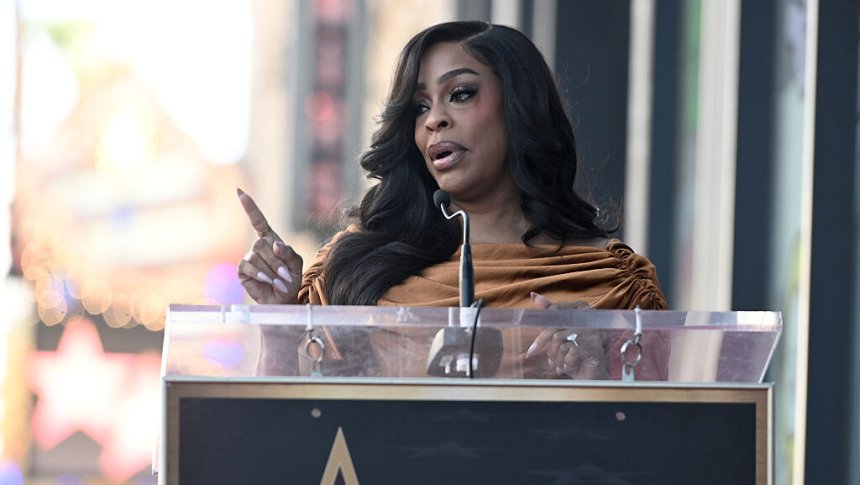

“It is not for the weak.” As more Black families take on caregiving, Niecy Nash speaks out about the emotional and financial toll.
“The Lion King” taught a whole generation about the circle of life. But it never showed us the part where the roles reverse, and the child has to start caring for the parent. For Niecy Nash, that moment came all at once.
Recently, actress Niecy Nash opened up about her experience stepping in as a caregiver not only for her father but also for her father’s twin, her uncle. In a conversation with Oprah Winfrey, the “All’s Fair” actress explained how one trip to visit her father, after learning he fell, catapulted her into the role of caregiver. Originally planning to visit her father’s home where he lived with his brother and make sure all his documents were in order, Nash discovered her uncle’s condition was worse than her father’s.
“I couldn’t even cry in the moment because it was so jarring to see. And I knew that if I didn’t hold it together, I was not going to make it through,” she recalled to Winfrey. “I was with my makeup artist. She took one look at my uncle and tears started streaming down.”
At 56, Nash is assuming a role many adults her age have taken on in their own families. A recent poll by the University of Michigan National Poll on Healthy Aging found that nearly a third of Americans over 50 are responsible for the regular care of an adult or relative with health or disability needs, and 20% of these caregivers provide this care without support from family members or close friends. In Nash’s case, the responsibility for her father and uncle’s care fell on her shoulders, especially after her cousins said they wanted to handle the process. Though she acknowledges the privilege her career has given her, she emphasizes the grace and support caregivers need.
“It is not for the weak,” Nash stressed. “And I wish that the world had more grace and more financial resources for people who step into these situations. It’s expensive. And the better the care, the more expensive it is. But if you want to throw your loved one in a rat shack, you can pay $2 or $3, but that’s not going to give them the care that they need. So I pray for anyone who steps into that place.”
“You get to a point as a caregiver…and this is the thing in Black families and other cultures: we going to keep our people,” Actress Yvette Nicole Brown told Tamron Hall, reflecting on the weight of serving as her father’s caregiver for many years.
Studies have shown that Black family caregivers have the highest prevalence of caregiving in the U.S. And just as researchers have noticed an uptick in older caregivers, others have spotlighted the growing number of young people and middle-aged adults taking on the responsibility of caregiving, which could increase as Trump’s One Big Beautiful Bill Act (OBBBA) begins to take effect. In 2025, Trump signed OBBBA, which includes major cuts to Medicaid that will cause nearly 11.8 million Americans to lose critical coverage, including Medicaid Home Care-Based Services like in-home care. With Medicaid being a primary payer for nursing homes, long-term care, and home care, the impact of these government cuts is expected to amplify the financial and mental struggles caregivers face, as many may lose the little support they do have. And as with most things in America, Black communities often get hit the hardest by the trickle-down effect of these decisions
“We were not being recognized. We’re the hardest hit,” Dr. Bashir Raheem Easter, founder of the dementia advocacy nonprofit, Melanin Minded LLC, told Capital B News.
“I had so much anxiety and so much emotional turmoil within myself [stepping into that role],” Nash shared.
Similarly, “P-Valley” star Brandee Evans opened up about the anxiety she faces as the primary caregiver for her mother, who is living with multiple sclerosis.
From burnout to depression and anxiety, individuals who take on the responsibilities of caring for others often get so wrapped up in the needs of others that they don’t have the capacity to tend to their own physical and mental health. And as Winfrey noted in her conversation with Nash, the nuances of caregiving can be amplified when a child is forced to care for someone who may have failed to show up for them as a caregiver in their childhood.
“The truth is the truth. [He did not get] not a school jacket, not a pair of shoes, not a thing. And now everything that you need, I have to supply,” Nash admitted. “So there is a part of you that has to accept it for what it is. Because when you start to continue to replay what it should be, you automatically are going to be out of order with yourself.”
Understanding that no child, regardless of how old or young can ever fully be prepared to step into the role as caregiver, Nash encouraged anyone in that position to find safe spaces where they can go and talk through the weight of this responsibility. Whether it be therapy through programs like The Loveland Foundation, respite care, or building a community of other caregivers via organizations like The Binti Circle or Melanin Minded, let this be a reminder that caregivers need care, too.
So, if you’re reading this between pharmacy runs, doctor’s visits, or a late-night call from a parent who needs you, this is your reminder to give yourself some of the grace you give everyone else
Share
What's Your Reaction?
 Like
0
 Dislike
0
 Love
0
 Funny
0
 Angry
0
 Sad
0
 Wow
0