Mississippi, it’s about time
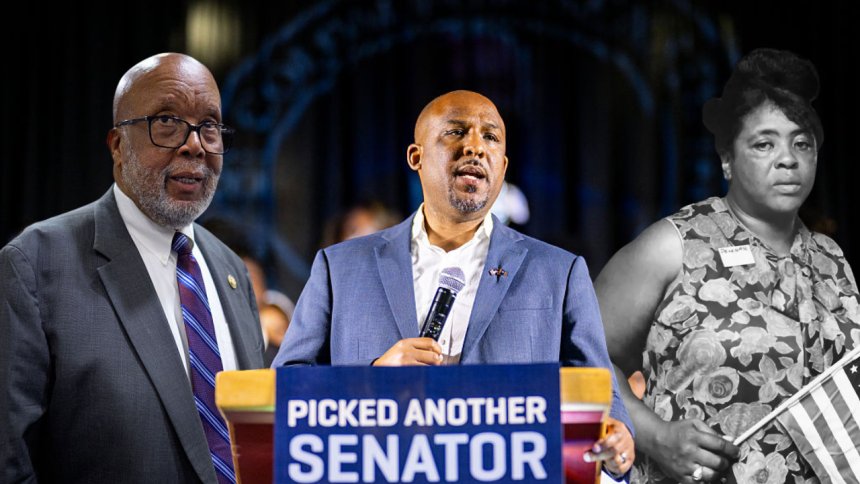
OPINION: Finally witnessing the Mississippi race called for Scott Colom is so much bigger than a single candidate or a

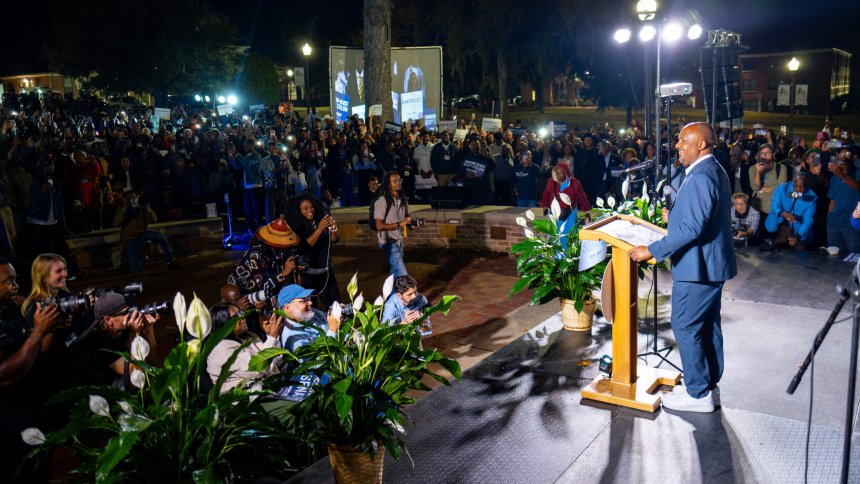

OPINION: Finally witnessing the Mississippi race called for Scott Colom is so much bigger than a single candidate or a single state.
Editor’s note: The following article is an op-ed, and the views expressed are the author’s own. Read more opinions on theGrio.
Voter suppression has been a problem in the United States for decades. There is probably no greater example of targeted attempts to disenfranchise Black voters than in Mississippi.
In 1946 a World War II veteran tried to vote in Decatur, Mississippi. He was turned away by an armed white mob. His name was Medgar Evers , the first state field secretary for the NAACP in Mississippi, murdered by a member of the Ku Klux Klan in his front yard in Jackson Mississippi. As an activist he organized voter registration drives and led marches to fight for the right to vote.
In 1963, Fannie Lou Hamer was returning from a voter education workshop when she was arrested with others based on allegations that she and the other activists sat in the white section of a Greyhound bus. She was viciously beaten and tortured in Winona, Mississippi, as white jailers ordered two African American prisoners to beat Hamer with loaded blackjacks until she lost consciousness. She sustained permanent injuries, but she continued the fight for voting rights.
Mississippi is no stranger to disenfranchising Black voters. Instead of beating and killing voters, white supremacist have tried to exhaust them instead. In Hinds County, where approximately 70% of the county’s population is Black, thousands of voters were surprised to learn they had been removed from the voter-rolls.
Rather than utilizing traditional data from the U.S. Postal Service, the Secretary of State turned to Experian, a credit-reporting company, to deactivate voters. By the recent midterms, an estimated 230,000 voters were deactivated in Mississippi.
Removing voters from voter rolls is not about election security, it’s about voter suppression, plain and simple. The United States has had an ugly past of systematically trying to disenfranchise Black voters. In 2016 the Fourth Circuit Court of Appeals called out a North Carolina voting law as targeting “African Americans with almost surgical precision” and found the law was “passed with racially discriminatory intent.” That decision should have been an alarm bell for all Americans, regardless of party affiliation. Instead, many of these tactics have been presented as a way of preventing voter fraud, a persistent claim with minimal evidence.
To be sure, voter fraud is a threat to democracy and should be punished, but voter fraud is rare. Voter suppression, however, is not rare and has been widely documented. For example, in Texas, there was a mid-decade congressional redistricting attempt to add five Republican congressional seats, which could also dilute minority votes. Now that Texas has flipped to blue, it is clear that those efforts failed.
As the majority of Mississippians and many throughout the United States celebrate the victory of Senator-elect Scott Colom, we cannot ignore the failures of the Secretary of State and the thousands of disenfranchised voters. Too many people suffered and died for the country to treat voter suppression as just a Black problem. It is an American problem, so the same energy that has been used to prevent cheating through voter fraud should be used to prevent cheating through gerrymandering, voter roll purging, and other forms of voter suppression.
It is validating to see those who were reckless with the voter rolls not get the outcome they were hoping for. Senator-elect Colom’s victory represents the sacrifices of thousands of Americans who waited for hours, sometimes in the rain, only to be told that an unknown person had removed them from the voter rolls because of a credit report. Surely, some voters were discouraged and gave up, but many pressed their way through the bureaucracy and additional lines to make sure they were counted despite the discriminatory roadblocks. It is refreshing to see all of the efforts to tip the scales failed, even in Mississippi.

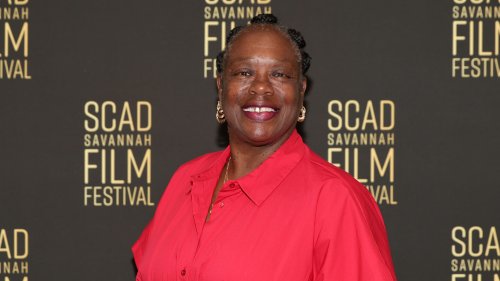
Njeri Mathis Rutledge is a licensed attorney, law professor, writer, entrepreneur, speaker and commentator. She is a former judge and former prosecutor. She graduated from Spelman College and Harvard Law School and has served as a law professor at South Texas College of Law Houston for over twenty years. Her opinion writing has been published with USA Today, The Hill, and BET. She is frequently sought out for her expertise and her interviews have appeared in The New York Times, LA Times, Reuters, Business Insider, NPR, CBS, NBC, MSNBC and other media. She can be reached at https://njerirutledge.com/.
Share
What's Your Reaction?
 Like
0
 Dislike
0
 Love
0
 Funny
0
 Angry
0
 Sad
0
 Wow
0