Killer Mike, Young Thug and others petition Supreme Court in death sentence of man who had rap lyrics used against him in court
The trio of Atlanta rapper were joined by music execs, scholars and more regarding the 2009 case of a man

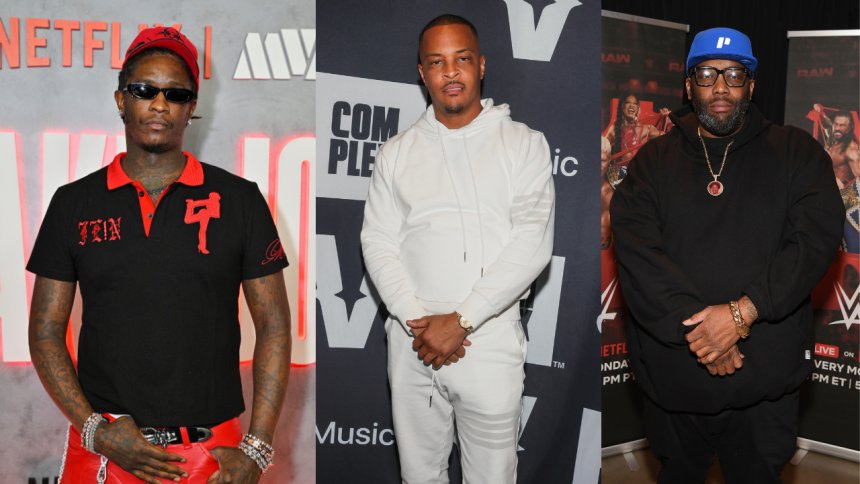
The trio of Atlanta rapper were joined by music execs, scholars and more regarding the 2009 case of a man who was found guilty of capital murder in the deaths of two individuals, then prosecutors used rap lyrics he wrote to sentence him to death.
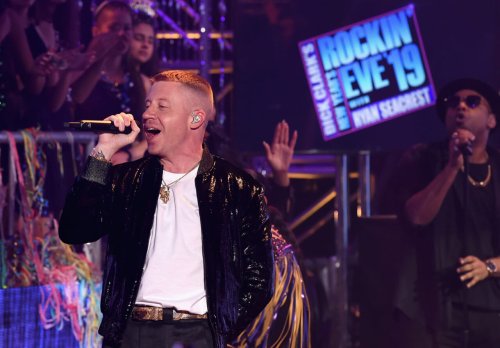
A 2009 murder case has caught the attention of several rappers, including Killer Mike, Young Thug, T.I. and others, as the Atlanta trio have attached their name to a petition calling for the Supreme Court to halt a man’s execution, believing rap lyrics the man wrote contributed to him receiving the death penalty.
The brief alleges James Broadnax, who was 19 at the time of his sentencing, had his First Amendment rights violated and that “taking rap music out of context subjects the entire genre to prosecution.”
Broadnax was convicted of capital murder in 2009 in the deaths of two individuals outside of a recording studio in Texas. As he had an all white jury during his trial, prosecutors presented 40 pages of rap lyrics attributed to him as evidence during his sentencing phase. Due to the subject matter of the lyrics, Broadnax was sentenced to death by lethal injection as opposed to life without parole.
Broadnax, now 37, is scheduled to be executed on April 30.
In his brief, which Howard University faculty member Erik Nielson joined, Killer Mike wrote the court, “This case exemplifies the racial prejudice that infects a criminal proceeding when the State uses a defendant’s rap lyrics to capitalize on anti-rap bias, the misinterpretation of rap lyrics, and anti-Black bias triggered by rap music.”
“The State used Broadnax’s artistic expression to portray him as young Black super-predator without redeeming qualities who must be executed to protect the community,” the brief continued. “The State’s use of Broadnax’s artistic expression to trigger racial and anti-rap fears and biases was a dangerous circumvention of constitutional guarantees that must not be allowed to stand.”
The legal move is not the first one for the Atlanta rapper. In 2015, he filed a brief to the Supreme Court in support of a high school student in a First Amendment case where the student wrote a rap song accusing two coaches of sexual assault in 2011. “The government punished a young man for his art — and, more disturbing, for the musical genre by which he chose to express himself,” the brief read at the time.
The Supreme Court ultimately declined to hear the case.
Atlanta rappers have been among the more vocal individuals when it comes to lyrics being used in court cases. In 2022, it was featured heavily in the RICO case against Young Thug and his YSL record label.
Share
What's Your Reaction?
 Like
0
Like
0
 Dislike
0
Dislike
0
 Love
0
Love
0
 Funny
0
Funny
0
 Angry
0
Angry
0
 Sad
0
Sad
0
 Wow
0
Wow
0