Kenya Barris finds the humanity behind the legend in ‘Jerry West: The Logo’
In his first documentary as a director, Barris explores legacy, vulnerability, and the emotional weight of greatness. When Kenya Barris

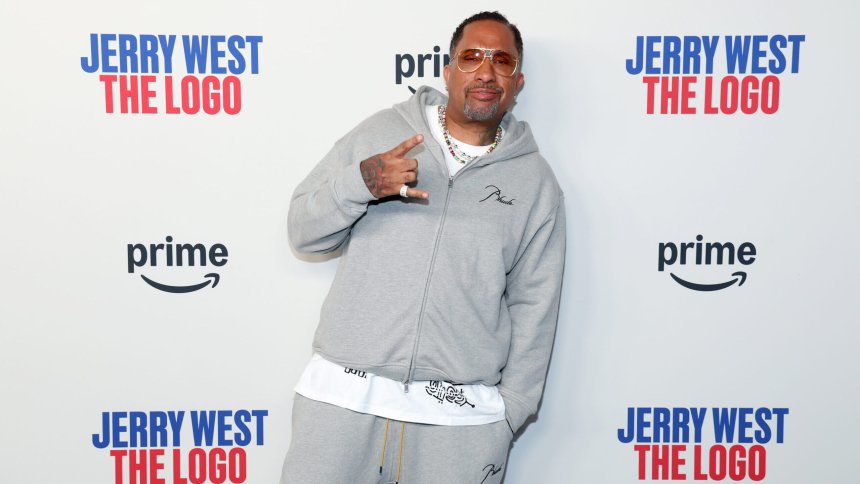
In his first documentary as a director, Barris explores legacy, vulnerability, and the emotional weight of greatness.
When Kenya Barris first set out to direct “Jerry West: The Logo,” he thought he was telling the story of a basketball icon, but what he found instead was something far more human.
“I wanted people to feel like they went on a little bit of the journey that I went on,” Barris told theGrio. “I hope people feel that they learned something about the sport and about the man that they didn’t know before.”
That journey, as it turns out, is an emotional one.
Sports have always carried a certain emotional weight, but Barris leans into that reality in a way that feels more intimate than expected. The film doesn’t just chronicle wins and losses—it explores identity, pressure, and the personal cost of greatness.
For Barris, that emotional depth wasn’t entirely anticipated.
“It plays heavy,” he admitted.
Rather than mythologize Jerry West, Barris wanted to humanize him—pulling back the layers of a man often reduced to a symbol.
“The thing that I took away… was how funny he was,” Barris said. “He was sweet to his grandkids, but he was also just one of the funniest people I’ve ever met.” 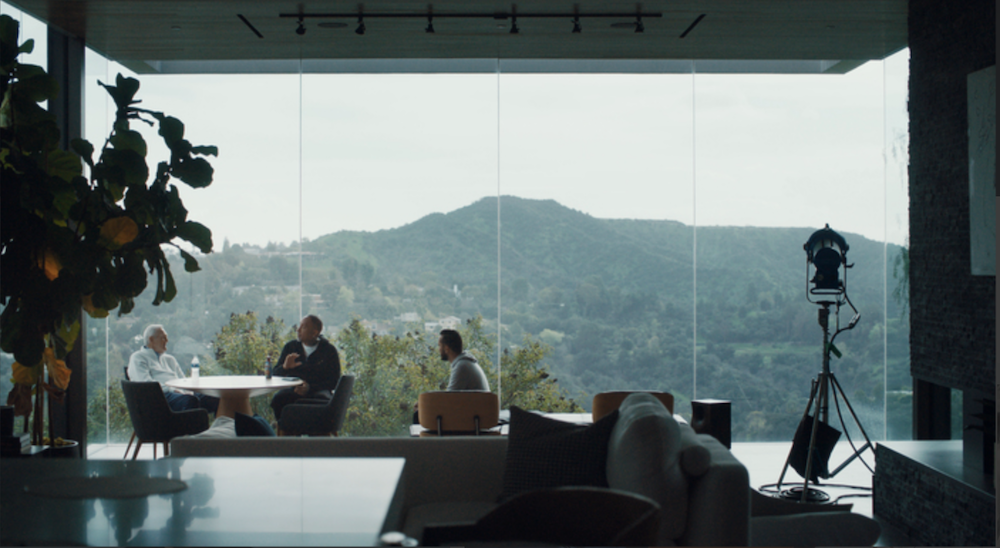
One of the film’s most noticeable creative choices is Barris himself. He appears on screen at select moments, asking questions and guiding conversations—a decision that adds a layer of intimacy to the storytelling.
“It was not in any way… a self-servicing thing,” he said.
Instead, Barris drew inspiration from Spike Lee, who has used a similar approach in past documentaries.
“I wanted to humanize and make this more conversational… about me and Jerry and the friendship that was developing,” Barris explained.
That same personal touch extends to the film’s visual language. Barris’ handwriting appears throughout the documentary, framing key narrative moments and even appearing in the credits.
“I wanted it to feel like a personal essay,” he said.
That approach allows West’s journey to be revealed in layers, including his painful upbringing in West Virginia. West’s childhood was marred by poverty, abuse, and his older brother’s death.
While the film gives a glimpse of his past through old photos, some of the most difficult moments are re-enacted through animation.
“We had an amazing animator, Mark Davis, a longtime friend, who did far and above what we could afford, because he’s so attached to the story,” Barris said. “We wanted it to be really stripped down. He really nailed it.”
Despite the film’s title, Barris makes a deliberate choice to hold the story of West as the NBA’s logo until the very end.
“I wanted to prove over the course of the documentary that he absolutely earned it,” Barris said.
That approach also allowed Barris to wrestle with his own initial questions about West’s place in basketball history—questions that ultimately deepened his understanding of the man behind the legacy.
The documentary features an impressive lineup of voices, including Magic Johnson, Michael Jordan, Shaquille O’Neal, and Jeanie Buss.
According to Barris, much of that access came down to West himself.
“The most exciting one was Michael Jordan,” Barris said. “I was blown away when it happened. But to be honest, Jerry’s presence got a lot of yeses really quick.”
Still, not every conversation came easily.
“The hardest person to secure was Jeanie,” he added, noting initial concerns about how the story would be told. “Obviously, there was a sort of ‘is this a gotcha moment?’ But she did it, and I really appreciate it.”
For Barris, the process of making the film came with its own emotional stakes.
“I felt so vulnerable,” he said. “You may have to think about it… everyone’s going to get something different from it.”
Best known for scripted work rooted in culture and identity, Barris says directing a documentary unlocked something new creatively.
“Purity in story,” he said.
Unlike scripted projects, documentaries require a different kind of discipline.
“You create a hypothesis. You cannot make that documentary into your hypothesis—it kind of forms into its own thing,” he explained.
That unpredictability is exactly what excites him.
“I think this has become one of my favorite… I would like to do more of it,” Barris said.
In the end, “Jerry West: The Logo” is less about basketball and more about what it means to carry greatness—quietly, imperfectly, and often at a cost.
And if Barris has his way, audiences won’t just walk away knowing more about Jerry West.
They’ll walk away feeling something, too.
“Jerry West: The Logo” is streaming now on Prime Video.
Share
What's Your Reaction?
 Like
0
Like
0
 Dislike
0
Dislike
0
 Love
0
Love
0
 Funny
0
Funny
0
 Angry
0
Angry
0
 Sad
0
Sad
0
 Wow
0
Wow
0