Juneteenth And Pride Were Never Separate Stories [Op-Ed]
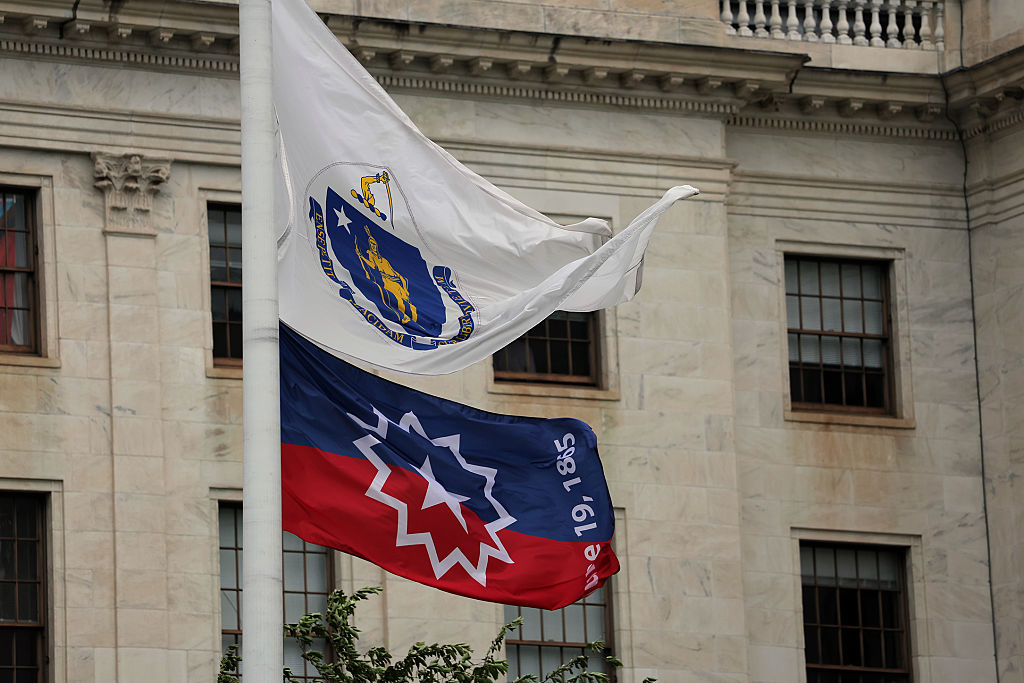
Source: Boston Globe / Getty Every June, America asks me to celebrate two freedoms at once. As a Black trans woman, I have never understood why so many people insist on treating them as separate stories. Juneteenth marks June 19, 1865, when Union troops arrived in Galveston Bay, Texas, and announced freedom for enslaved Black [...]

![Juneteenth And Pride Were Never Separate Stories [Op-Ed]](https://i2.wp.com/newsone.com/wp-content/uploads/sites/22/2026/06/17818858987405.jpg?w=1024&strip=all&quality=80&ssl=1#)
Every June, America asks me to celebrate two freedoms at once.
As a Black trans woman, I have never understood why so many people insist on treating them as separate stories.
Juneteenth marks June 19, 1865, when Union troops arrived in Galveston Bay, Texas, and announced freedom for enslaved Black people more than two years after the Emancipation Proclamation. Pride Month is celebrated in June to honor the 1969 Stonewall Uprising, a moment that became a flashpoint in the modern gay liberation movement.
One freedom marker reminds us that liberation can be delayed, announced before it is delivered, and celebrated while the work remains unfinished.
The other reminds us that visibility is not the same as safety, and that the right to name ourselves is still being contested.
Five years ago, I wrote for Global Citizen that Juneteenth must be about liberation for all Black people, including Black trans, queer, gender-nonconforming, and system-impacted people. At the time, I was writing from a deeply personal place. I was thinking about incarceration, survival, abolition, Blackness, transness, and the ways Black queer and trans people are so often asked to leave pieces of ourselves outside the room in order to be embraced by our own people.
I was asking Black people, especially straight and cisgender Black people, to understand that Black liberation cannot be real if it requires Black queer people to disappear.
Five years later, I do not believe that less.
I believe it with more evidence.
This past weekend, during a White House UFC event connected to Donald Trump’s 80th birthday and the 250th anniversary of the United States, fighter Josh Hokit won his match and used his post-fight interview to target Michelle Obama. The Independent reported that Hokit shouted, “Michelle Obama is a man,” after winning his bout at UFC Freedom 250. Business Insider described the event as a $60 million production on the White House South Lawn, wrapped in spectacle, patriotism, celebrity, money, violence, and applause.
But Hokit is not the story.
He is evidence.
He is evidence of what happens when white political power, anti-Blackness, misogynoir, and transphobia are allowed to sit in the same room and call themselves patriotism.
And that matters because Josh Hokit is a white man. Donald Trump is a white man. The White House is not just a building. It is a symbol of a country that has spent most of its existence defining citizenship, safety, femininity, masculinity, family, and freedom through whiteness.
So when a white male fighter stands on the White House lawn, in front of a white male president, during a spectacle wrapped in American exceptionalism, and uses Michelle Obama’s womanhood as a punchline, we cannot pretend this is only about one man being crude.
This is about power recognizing itself.
It is also about how power recruits fear.
I do not believe we can understand the presidency we have without naming how racism and transphobia became a powerful political cocktail. ABC News reported that Trump and Republican allies spent millions on anti-trans messaging in the final stretch of the 2024 election. The Associated Press reported that Trump and JD Vance made anti-transgender attacks central to their campaign’s closing argument.
That was not accidental messaging; it was strategy.
It asked people to believe that trans people, who make up about 1% of people ages 13 and older in the United States, were somehow powerful enough to destroy families, schools, sports, bathrooms, prisons, womanhood, childhood, and the country itself.
That is how scapegoating works.
It takes a small, vulnerable group and turns them into a national threat. It takes people with limited institutional power and frames them as the reason everyone else is unsafe. It convinces people that their fear is evidence, that their discomfort is wisdom, and that their cruelty is protection.
Black people know that playbook.
We know what it means to be blamed for the country’s decline while being denied access to the country’s promises. We know what it means for white fear to become law, policy, policing, spectacle, and violence. We know what it means for white people to fear being eclipsed by the very people they have spent generations othering.
That is part of what this current culture is: a ricochet of white fear.
Fear that Black people will no longer stay in the place white supremacy assigned us. Fear that the people once treated as property, labor, threats, and exceptions might actually define freedom for themselves. Fear that the people America tried to other might one day refuse to be managed by the country’s imagination.
And layered into that is the weaponization of fear around trans people.
The fear that gender is not as fixed as people were taught. The fear that womanhood and manhood cannot be fully controlled by the state, the church, the school board, the campaign ad, or the crowd. The fear that people who have been told to disappear are still here, still naming ourselves, still building language, still demanding safety.
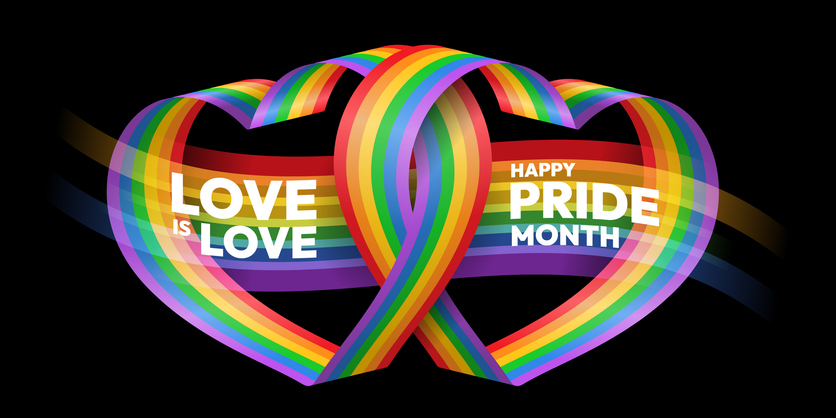
That is why Juneteenth and Pride matter together.
For Black people, the attack on Michelle Obama touched an old wound. Black women have never been fully allowed inside this country’s definition of femininity. Not without negotiation. Not without suspicion. Not without being asked to prove softness, beauty, motherhood, respectability, desirability, and womanhood against standards that were never built with Black women in mind.
Michelle Obama has always carried that tension in public. She was a First Lady, a mother, a wife, a lawyer, a thinker, and one of the most admired women in the world. Still, her body, her tone, her arms, her beauty, her confidence, and her femininity have been treated as available for public debate. Scholarship on Michelle Obama and Black motherhood has explored how her role as First Lady challenged long-standing stereotypes and misrepresentations of Black women and mothers.
So when a man stands at the White House and calls Michelle Obama a man, Black people understand why that hurts.
We understand why it feels like more than disrespect.
It is part of a long national habit of stripping Black women of softness, protection, and dignity, then pretending their pain is an overreaction.
But as a Black trans woman, I felt another layer at the same time.
I felt the anger of watching our forever First Lady be disrespected. I felt the grief of watching Black womanhood be dragged into the same old machinery that has always tried to masculinize, animalize, and dehumanize Black women.
And I also felt the discomfort of knowing that the insult was designed to work because so many people still believe being associated with transness is humiliating.
That is the part we have to be brave enough to name.
The attack on Michelle Obama was not only designed to degrade her as a Black woman. It was also designed to make transness itself feel degrading. It only works if the crowd believes that being perceived as trans is shameful. It only lands if people believe that womanhood becomes less valuable when it is associated with trans people.
It relies on the lie that calling a cisgender Black woman trans is the ultimate humiliation.
That is where the conversation becomes complicated.
And that is exactly why we need each other.
We should be able to defend Michelle Obama without treating transness as the insult. We should be able to say clearly that Michelle Obama is a Black cisgender woman whose dignity should never be up for debate, and we should be able to say with the same clarity that trans women are women whose dignity should never be up for debate either.
If our defense of Black women requires us to shame trans women, then we have not disrupted the harm.
We have only moved it.
This is why intersectionality is not just language we use to sound informed. It is a survival tool. Kimberlé Crenshaw has described intersectionality as a lens for seeing where power collides, interlocks, and intersects. It is not simply that there is a race problem over here, a gender problem over there, and a queer or trans problem somewhere else. The point is that some people live where these systems meet.
Black queer and trans people live inside that meeting place.
We know what it means for Blackness to be criminalized, for queerness to be pathologized, for transness to be mocked, for womanhood to be policed, and for survival to be mistaken for danger. We know what it means to process harm in layers while the public processes it in fragments.
That is why what happened at the White House matters to this Juneteenth and Pride conversation.
It was racist.
It was sexist.
It was misogynoiristic.
It was transphobic.
And it was all of those things at once.

Moya Bailey’s work on misogynoir names how anti-Black and misogynistic representations shape broader ideas about Black women, especially in visual culture and digital spaces. That language matters here because the attack on Michelle Obama was not random. It was part of a culture that has always made Black women fight to be seen as fully human and fully woman.
But the transphobic layer matters too. Not because Michelle Obama is trans. She is not. It matters because the insult depends on the idea that trans people are something shameful to be mistaken for. It depends on people laughing at the possibility of transness. It depends on people treating trans womanhood as counterfeit womanhood.
And if we are not careful, our outrage can become a hodgepodge of pain that reproduces the very harm we are trying to resist.
We can be angry for Michelle Obama and still refuse to make transness the punchline.
We can protect Black cisgender women and still protect Black trans women.
We can name misogynoir and transphobia in the same breath because that is how many of us experience the world.
I felt this same lesson again this past weekend in Baltimore.
There was a huge park where, on one side, there was Trans Pride. On the other side, there was Gay Pride. And while I understand the history, organizing, safety concerns, and community-specific needs that can shape how these spaces are created, I could not ignore what it felt like in my body to witness that separation during the very month we claim as a celebration of collective liberation.
Because this is also part of the truth we have to tell.
There are gay, lesbian, and bisexual people who believe they can offload trans people in order to get closer to their own liberation. There are people who believe that if they can prove they are not like us, not as disruptive as us, not as politically inconvenient as us, then maybe power will reward them with safety.
But history has already taught us what happens when marginalized people try to purchase acceptance through concession.
Power does not liberate the people it can still use.
And true liberation will never require us to sacrifice the most oppressed people within the very spectrum of identities we are fighting to free.
That is not only happening inside queer community.
There are Black people who believe there are certain kinds of Black people we can leave behind on the way to liberation. The Black incarcerated. The Black poor. The Black person without a degree. The Black person who has been criminalized. The Black teen who did not respond perfectly. The Black parent who could not afford what their child needed. The Black person whose story does not make us feel respectable enough in front of the world.
We saw a painful version of this in the recent Mississippi case involving 1-year-old Kohen Wiley. People reported that Kohen was killed after police fired on a vehicle while responding to an alleged shoplifting call at a Walmart in Senatobia, Mississippi, with witnesses describing diapers as part of the encounter. The Associated Press reported that the Mississippi Bureau of Investigation said the driver allegedly moved the vehicle toward officers before an officer opened fire. The investigation is still unfolding, and facts matter. But even as facts are gathered, the question sits heavy: How does an alleged shoplifting call connected to something as basic as diapers become a child’s death?
That is not just a policing question.
It is a poverty question. A reproductive justice question. A state violence question. A question about what happens when this country punishes people for having children while refusing to build the conditions that allow families to live with dignity.
And we see another version of the respectability bargain in the public conversation around Karmelo Anthony. ABC News reported that Anthony was sentenced to 35 years in prison after being convicted of the fatal stabbing of Austin Metcalf at a Texas high school track meet. The case is tragic. A young person is dead. Another young person will spend decades in prison. Multiple families have been broken open.
But what has disturbed me in the public conversation is how quickly some Black people moved from grief and complexity into performance.
People started talking about what kind of Black boy they are raising. What he should have done. How he should have de-escalated. How he should have made better decisions. And yes, accountability matters. Harm matters. The loss of life matters. But there is a difference between accountability and building the perfect version of a marginalized person that society might finally decide is worthy of mercy.
That is the trap.
We are trying to create the perfect Black victim. The perfect Black child. The perfect Black woman. The perfect queer person. The perfect trans person. The perfect poor person. The perfect incarcerated person. The perfect person whose suffering will not make the rest of us uncomfortable.
But liberation cannot be built around perfect people.
It has to be built around real people.
People with needs. People with fear. People with trauma. People who make mistakes. People who are surviving inside systems designed to limit their choices and then punish them for the choices that remain.
This is where Juneteenth and Pride continue to speak to each other.
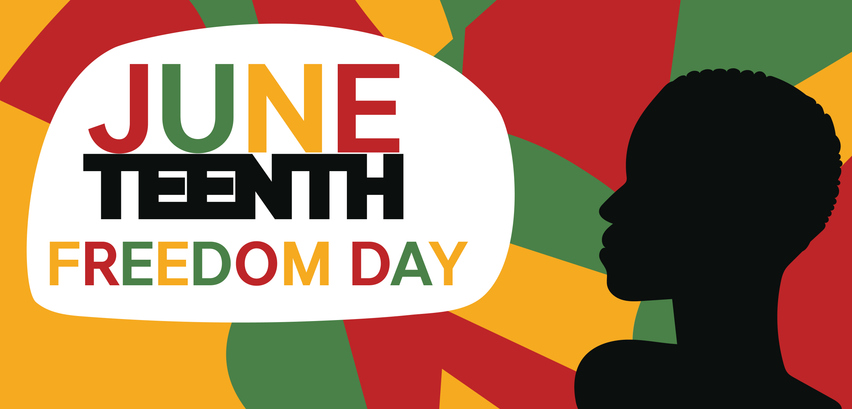
Because the same way some gay, lesbian, and bisexual people believe they can offload trans people to get closer to acceptance, some Black people believe they can offload the Black poor, the Black incarcerated, the Black uneducated, or the Black person accused of harm to get closer to respectability.
But respectability is not liberation.
Respectability is a negotiation with power that requires somebody else to be disposable.
There are no real solutions that can be created without investigating these intersections. And those intersections cannot be investigated without community.
Black people need queer and trans people in the room because anti-Blackness does not only target straight, cisgender Black people. Queer and trans people need Black people in the room because anti-queerness and anti-transness have always been shaped by race, class, gender, religion, and respectability.
And Black queer people are not theoretical bridges between these struggles.
We are living proof that the struggles were never separate.
That is what Juneteenth and Pride reveal when we stop treating them like calendar events and start treating them like freedom lessons.
Juneteenth reminds us that the announcement of freedom is not the same as the practice of freedom. Pride reminds us that visibility without safety is not liberation. Together, they ask a harder question: What kind of freedom are we building if the most intersectional among us are still being asked to wait?
Too often, marginalized communities are pushed into competition with one another. We are told to choose which part of ourselves matters most. We are told to wait our turn. We are told that our liberation will become more possible if we make ourselves easier to understand.
But I do not believe freedom is built by amputating ourselves for public comfort.
I believe freedom is built when we tell the truth about how power works.
Power studies our intersections. It studies where Blackness, queerness, transness, womanhood, poverty, disability, incarceration, and migration meet. It studies which wounds are available. It studies which communities can be separated from each other. It studies which insults will make us turn on each other before we turn toward one another.
So liberation has to study our intersections too.
Not as theory alone.
As strategy.
As practice.
As community.
And here is the beauty of this conversation: we do not have to ask our oppressors for permission to care for each other.
We do not have to wait for the White House, the campaign ad, the police report, the court system, the corporate Pride float, or the history textbook to tell us we are worthy of protection. We can build solutions that ensure our health and wellness as community because that is what liberation has always required.
We can feed each other.
Defend each other.
Tell the truth for each other.
Create safety for each other.
Refuse to let our pain be weaponized against one another.
Refuse to defend one part of the community by sacrificing another.
Five years ago, I wrote that Juneteenth must be about liberation for all Black people. Today, I believe that even more deeply. But I also believe that Black queer people are not simply asking to be included in the story of freedom.
We are helping reveal what the story of freedom actually requires.
It requires us to defend Michelle Obama without making trans people collateral damage.
It requires us to love Black women without narrowing womanhood to what white supremacy has allowed.
It requires us to honor Pride without forgetting that Black and Brown queer and trans people have always carried some of the heaviest costs of visibility.
It requires us to honor Juneteenth without pretending Black liberation can be complete while Black queer and trans people are still being debated, discarded, or told to wait.
If liberation requires abandonment, it is not liberation.
It is assimilation with better branding.
And if our liberation requires a perfect representative, it is not liberation either.
It is another audition for humanity.
I am no longer interested in auditions.
I am interested in freedom.
The kind we build together.
The kind we practice before permission is granted.
The kind that knows the most intersectional among us are not the complication in the work.
We are the evidence that the work is real.
Because if oppression studies our intersections, liberation has to organize there too.
SEE ALSO:
SCOTUS Just Erased The LGBTQ+ Community With One Ruling
104: What An Angel Number Between Freedom And Fire Reveals About Black And Queer Survival
Share
What's Your Reaction?
 Like
0
Like
0
 Dislike
0
Dislike
0
 Love
0
Love
0
 Funny
0
Funny
0
 Angry
0
Angry
0
 Sad
0
Sad
0
 Wow
0
Wow
0





![Movie Trailer: ‘Clarissa’ [Starring Sophie Okonedo, Ayo Edebiri & David Oyelowo]](https://thatgrapejuice.net/wp-content/uploads/2026/10/clarissa-trailer-tgj-scaled.png)