Javits Was Supposed to Be Here
Eight years after Junior, the Bronx is burying another 15-year-old. “Crime is down” is not an answer. I walked the

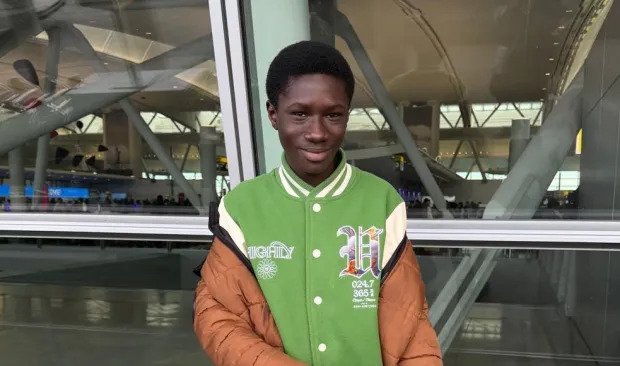

Eight years after Junior, the Bronx is burying another 15-year-old. “Crime is down” is not an answer.
I walked the same Bronx streets that Javits Frimpong walked. Throughout my teenage years, I understood that my life could be in danger at any moment, or that my freedom could be threatened by a choice I might be forced to make.
When you grow up surrounded by that reality and survive it, something dangerous can happen: You begin to normalize it. You convince yourself it wasn’t that bad, that things will eventually get better.
That is the lie I want our young Black men to unlearn. The sickness that has eaten at our communities is not who we are. We are worth something. Life is worth living. And there is more out there than what this country has conditioned us to believe, more than the brutal environment too many of our neighborhoods are left to endure.
I’m not going down a rabbit hole today. I’m educated enough to know that the history of this nation stacked the deck against us from the start, and that the messages in our films, our music and even our school curriculums can keep the hatred and violence going.
But understanding how we got here cannot become an excuse to accept where we are. At some point, we have to ask ourselves what we can do to change what our children are inheriting.
We have more access to knowledge, history and opportunity than any generation before us. Our children deserve to know the greatness of the people who came before them, the sacrifices that made their opportunities possible and the standards of excellence they are capable of carrying forward. They deserve to grow up knowing that their circumstances do not define their potential.
That is why this week hit so hard.
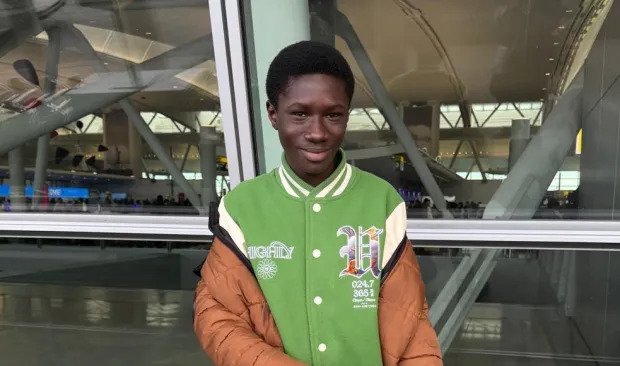
On Thursday morning, Javits Frimpong, 15, was shot near East 171st Street and Crotona Place in the Bronx while walking to school. He had come from Ghana a year earlier. Those who loved him say he wanted to become a doctor. Police are looking for three teenagers, and as of Friday, no arrests had been reported. His father has said his son was being bullied, while police say the motive is unclear.
Fifteen years old. A child who should have been worrying about homework, making friends, figuring out who he wanted to become.
A child who dreamed of putting on a white coat and saving lives. Instead, the people who loved him are left with a question no parent should ever have to ask: How does a child leave home for school and never make it back?
We spend so much time telling our children to dream big, to work hard and to believe they can become anything. What happens when a child never gets the chance to find out if those dreams could come true?
We have been here before. In 2018, Lesandro “Junior” Guzman-Feliz, also 15, was killed in the same part of the Bronx. He wanted to be a detective. Thousands came to his wake, and a corner was named for him.
We said never again.
Eight years later, another family is grieving a 15-year-old boy with a dream.
And once again, we are reminded of how quickly a child’s future can become a community’s memorial. How many times will we gather to mourn a life before we confront what it will take to protect the ones still living?
We hear that crime is down. New York recorded its fewest shootings on record in 2025 but 14 percent of the victims and 18 percent of the shooters were under 18.
Statistics have a way of making us forget what the numbers actually represent. Behind every percentage is a child, a parent, a family and a future that may never look the same again. A city can celebrate declining crime while parents in the Bronx are still afraid to let their children walk to school. Both realities can exist at the same time.
Yes, we need public safety. We need safe routes to school, accountable policing and real investment in the neighborhoods where our children are growing up. But public safety cannot begin and end with responding after something terrible has happened. We need community organizations, mentors, educators and trusted adults who are present in children’s lives before a moment of anger, fear or desperation changes the course of their futures.
A 2025 report from the New York City Comptroller’s Office estimated that community violence intervention programs contributed to 1,567 fewer shootings between 2012 and 2024. That finding matters because it demonstrates something we should never lose sight of: violence is not inevitable. Prevention works. Investment matters. And protecting our children requires more than our outrage after another tragedy.
But there is another part of this conversation I don’t want us to overlook: what our boys get to see when they look around and imagine their futures.
Javits wanted to be a doctor. Somewhere in the Bronx, a 15-year-old boy was imagining a future in which he could heal people,save lives and make a difference. He had a picture of the man he wanted to become. I don’t want us to remember Javits only for how his life ended. I want us to remember that he had a life he was looking forward to living.
Our boys need to see Black men living out those possibilities. Not just on television, not just in the pages of a magazine, not just as names attached to awards and accomplishments, but in their classrooms, community centers, barbershops and neighborhoods. They need to sit across from a Black surgeon and hear about medical school. They need to meet an attorney who can explain what it took to get there, an engineer who can show them what he builds, and an entrepreneur who can tell them what it means to create something of their own. They need to see these men not as distant figures of success, but as people they can know, learn from and perhaps one day become.
Representation matters because it gives a young person permission to imagine more for himself. It makes an unfamiliar future feel attainable. And sometimes, seeing one person who looks like you doing something you never thought possible is enough to change what you believe about your own life.
This is not about asking anyone to feel guilty for succeeding, moving away or building a better life for their family. We should celebrate every Black man and woman who has broken barriers, created opportunities and reached heights that previous generations could only dream of. But I hope we also recognize that success can mean even more when it becomes something the next generation can witness, learn from and build upon. The doors we worked so hard to open should not become invisible to the children coming behind us.
To the Black professionals reading this: find one young Black boy and let him see what is possible. Volunteer at a school. Speak at a career day. Mentor a teenager. Invite a student into your workplace. Tell a young person the story of how you got where you are, including the setbacks, the doubts and the doors that didn’t open. You don’t have to save the world. You just have to make sure a child can see a future beyond the one immediately in front of him.
Don’t underestimate what that one introduction, conversation or afternoon of your time can mean to a child who is still figuring out who he can become.
Our boys are watching. And they deserve to see more than the pain, the violence and the limited expectations that too often surround them.
I keep coming back to those Bronx blocks I walked as a teenager. I think about how many young people are still walking them today, carrying dreams that deserve the chance to become something. I think about the parents who send their children to school believing they will see them again that afternoon. I think about Javits and the doctor he wanted to become.
We cannot bring Javits back. We cannot undo what happened to Junior. But we can decide what these losses will mean for the children who are still here.
We cannot allow the only time our communities come together around our boys to be when we are mourning them. They deserve our attention while they are growing, our guidance while they are finding their way, and our presence while they are still dreaming. Let us give them examples worth following, people worth learning from and futures worth protecting.
Javits was supposed to be here. He was supposed to have the chance to grow up, go to college, become a doctor and live the life he imagined.
Our boys deserve more than to be remembered after they’re gone. They deserve to see what’s possible while they’re still here. Every single one of them.
About the Author:
Jonathan Conyers is the author of the acclaimed memoir I Wasn’t Supposed to Be Here. He is also a respiratory therapist, writer, and producer, as well as the owner and investor of several successful business ventures. Through his storytelling and work, Conyers continues to amplify underrepresented voices and create impact across industries.
Share
What's Your Reaction?
 Like
0
 Dislike
0
 Love
0
 Funny
0
 Angry
0
 Sad
0
 Wow
0