In ‘Ricky,’ Stephan James shows what it’s really like to start over after incarceration
Once again, Stephan James turned in an emotional performance that just stays with you. In Ricky, the 2025 Sundance Film Festival award-winning drama directed by Rashad Frett, James stars as the titular character. The story follows a 30-year-old man navigating a post-incarcerated life in East Hartford, Connecticut. James’ Ricky has been locked up since he [...]

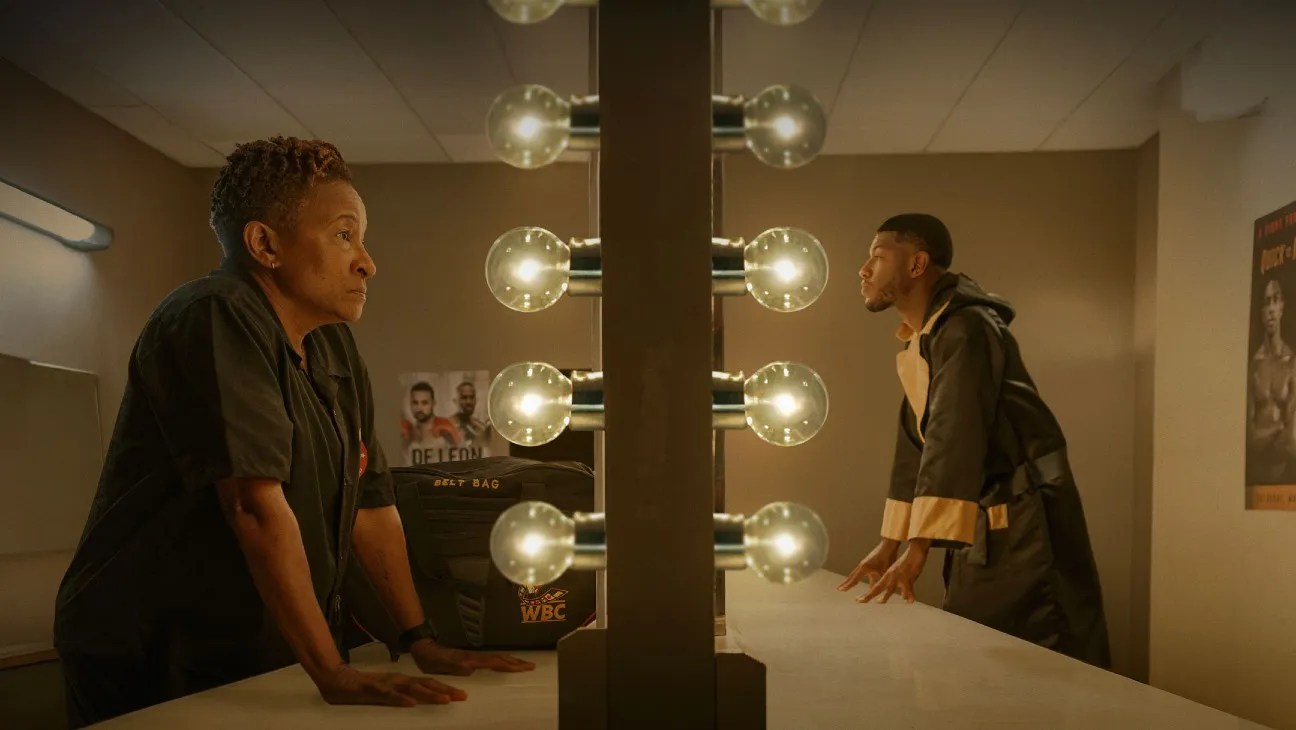
Once again, Stephan James turned in an emotional performance that just stays with you.
In Ricky, the 2025 Sundance Film Festival award-winning drama directed by Rashad Frett, James stars as the titular character.
The story follows a 30-year-old man navigating a post-incarcerated life in East Hartford, Connecticut. James’ Ricky has been locked up since he was 15, and the world has changed significantly in the years since he’s been gone.
The film is completely unapologetic in painting a view of life on the outside for the newly released; there is no filter.
It’s raw, and somehow feels as if we’re watching a documentary crew getting unprecedented access to his story. That’s how deep in the character James gets, and it’s also a testament to the scripting and directing choices that Frett gives us.
The film, with facilitation by Blue Harbor Entertainment and in partnership with Spark Features, is being self-distributed, with filmmakers still holding the rights as they gear up for the project’s long-awaited theatrical release.
Recently, we caught up with James to chat about the film, which is being championed by former NBA star Matt Barnes.
This interview was edited for length and clarity.
Ricky was incarcerated at 15 and reenters the world at 30. How did you begin to understand the emotional gap between who he was and who he’s expected to be now?
I think you have to understand what being in a predicament like that — what being introduced to the system at 15 years old … I think you have to understand what that takes away from your life. That’s where you start. And I did that by speaking with inmates.
There were inmates literally in the cast of this film. Or former inmates in the cast of this film. People in my own circle who I knew had done time. And then surprisingly, balancing that with hanging out with kids. It’s going to sound funny, but 14- and 15-year-old kids — I’m 32 now, so I have to wind the clock back a bit and get back to remembering what those days were like.
The things that I remember being into, how my personality even really wasn’t realized yet. And so I think that there’s so much that’s taken away from you as a 15-year-old young man. I wanted to really understand where life stopped for him and where life started on the other side.
The film doesn’t just show reentry. It really sits in it. What felt most important to portray authentically about that transition back into society for you?
That it’s hard. It’s hard that there’s constant trials and tribulations, that you feel alone a lot of the times. You feel misunderstood. And in a weird way, you almost wonder if it was easier just being locked up.
I think it’s not only the journey that you go on for yourself, but also your family members, your friends, how that changes them internally as well. I think it becomes a community effort, when you look at the process of reacclimating to civilian life. It’s not something that anybody who spends 15 years in prison can do alone. It really is a team effort. You need people checking for you. You need people helping you find a job, getting on a path, helping you with your mental health. And so I think I took that approach when I looked into just like, where does Ricky fit in the world now?
Spark Features
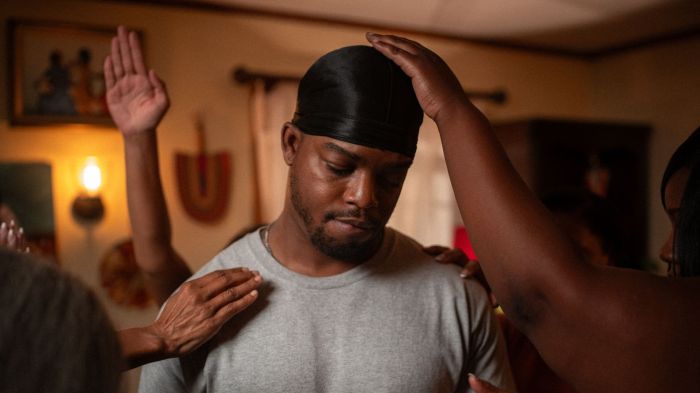
When I first screened this film, it was a small theater that former NBA player Matt Barnes co-hosted, and there was a post-showing conversation about reentry and about the judicial system — there was a lot of intentionality there. You not only star in this, but you’re an executive producer. What were you most intentional about protecting in Ricky’s story that might’ve been overlooked otherwise?
I think the truth. I think the innocence. I think oftentimes the world writes you off as a statistic once you’ve been through the situation that Ricky’s been in. And I think that for me, there’s a level of humanity that exists in all these people beyond the statistics. I really wanted to bring that to the forefront. I don’t think everybody who’s been in a position Ricky’s been in, that had to do some time in jail … that doesn’t make them a bad person. You go back to what you were doing at 15 years old. Maybe we all weren’t making the smartest decisions back then. For me, I think that there’s an element of challenging one’s moral compass when you see a film like this. Is he really a bad guy, or did he make a bad mistake as a kid?
What did the system do to help him? That’s what I wanted to tap into. I think if Ricky could be likable or relatable to the average person, then you’re in a better position to receive a story like this.
He’s navigating this world that’s moved on without him: technology, relationships, even identity. Were there any moments in the film that hit closest to home for you personally?
I think there’s a few. I think the relationship with his brother and what that’s meant to him and how he realizes very much how they’ve grown in different directions during Ricky’s time in jail. I think one of the most profound moments in the film to me is the courtroom scene where Ricky takes accountability for himself. And in the same breath, he’s turning the attention off of his brother. I think that it’s a very palpable moment for me, because accountability is real and we all make mistakes. I think there’s an element of grace and understanding that I wanted people to feel for him.
The narrative about redemption isn’t new, but this film feels more complex than that. How do you define Ricky’s journey? Is it redemption? Is it survival, or is it something else entirely different?
In my mind, Ricky’s story continues. It might never be a linear path, and it’s certainly not going to be a clear upward path either. There’s going to be ups and downs for Ricky. After the film ends, his life isn’t going to be perfect. There’s a lot of trials and tribulations that he’s still going to have to face. There’s a whole world that now sees him as this ex-con. The burden of that will forever be on his back.
You have portrayed real-life figures before, obviously Jesse Owens in Race is one, but Ricky is fictional. Did that freedom make the role more challenging and more liberating for you?
Obviously when you’re playing somebody like Jesse Owens, while I didn’t have to answer to him, I had to answer to his daughters, his granddaughters, his family. And in a way, the rest of the world who he was beloved to. I think with a story like Ricky’s, it wasn’t lost on me that we were making a very specific film and that we were speaking about people in a way narratively that we don’t see in cinema every day. You’re putting a spotlight on people who have never seen a stage, much less a spotlight. And so for me, I took that personally … like, maybe I’m speaking for people who can’t speak for themselves. In a weird way, that comes with its own pressures.
Let’s stay in the sports world for a little bit. If Ricky’s comeback story were framed like a sports narrative, what quarter or what inning do you think he’s in when we meet him, and what does it take for him to stay in the game?
I’ll say as a 15-year-old, I really think that Ricky went into prison after the first quarter of life, and he didn’t see a second quarter. So he went into the game as a rookie and everybody makes rookie mistakes. We all know what that comes with. And then he got benched and just never got to play for 15 years. And we see what that does to athletes in real life. What would that do to human beings? What does that do to a young man who’s not even fully developed, doesn’t even fully know themselves? I think that the rest of this film to me looks like what [was] meant to be Ricky’s third quarter of life is really his second quarter of life.
It really feels like at the end of this movie, it’s essentially halftime and there’s going to be a break, and there’s going to be some coaching, and there’s going to be some adjustments. And then he’s going to have the opportunity to get back into the world and finish strong.
After living with this character, both as an actor and also as a producer, what stayed with you the most once filming wrapped?
Gratitude for the experience. I feel in a weird way that I was chosen to be a part of this and to be a vessel for so many people who couldn’t speak themselves. I feel a profound sense of pride in the community. Community is so important. Community and rehabilitation — the chance for real rehabilitation, the chance to have a second chance, I think is super, super important.
And just the way that people came out to support and stand behind a story like this — community [support] has been invaluable.
The post In ‘Ricky,’ Stephan James shows what it’s really like to start over after incarceration appeared first on Andscape.
Share
What's Your Reaction?
 Like
0
Like
0
 Dislike
0
Dislike
0
 Love
0
Love
0
 Funny
0
Funny
0
 Angry
0
Angry
0
 Sad
0
Sad
0
 Wow
0
Wow
0