Here’s what Nina Turner and Tamika Mallory say is next for the Target boycott (and lessons learned)
In an exclusive theGrio interview, the “Strike For All” co-leaders discuss Pastor Jamal Bryant ending his “Target fast”—and why they

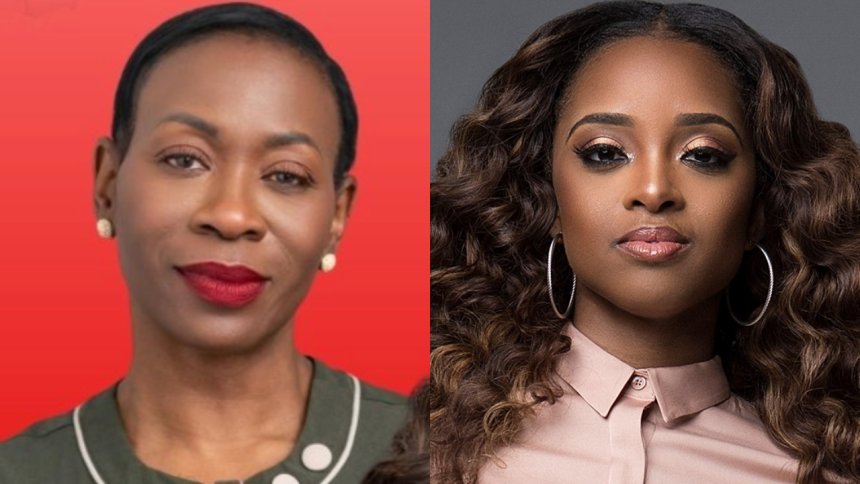
In an exclusive theGrio interview, the “Strike For All” co-leaders discuss Pastor Jamal Bryant ending his “Target fast”—and why they won’t stop until Target apologizes.
When Nina Turner announced a national boycott of Target on January 25th, a day after the company rolled back its DEI promises, the call to action was clear:
“Yesterday, @target announced that they are rolling back diversity, equity, and inclusion initiatives. Understand, this moment is a test. Corporations are testing us to see if we care enough about each other to stand in solidarity together. When companies like Target decide to eliminate initiatives focused on carrying products from Black or other minority-owned businesses, they’re testing us. Let’s pass the test and demand better of the places we shop.”
Turner, a former Ohio State Senator and progressive activist, wasn’t alone in her impulse to make Target pay for what many in the Black community saw as a direct betrayal. A local group based in Target’s Minneapolis headquarters, led by lawyer-activist Nekima Levy Armstrong alongside activists Monique Cullars Doty and Jaylani Hussein, also organized immediately. Levy Armstrong posted on Instagram that same day: “I know that a number of you are upset or at least bothered by Target’s decision to roll back progress. But the question is, what should we do about it? Please respond with any personal action you plan to take and thoughts on what we should do collectively to challenge/address this slap in the face.” On January 29th, Levy Armstrong announced there would be a press conference the following day with details about a boycott kicking off February 1st.
Other local groups moved just as quickly. Boycott Target DC, co-led by Makia Green, committed to protesting outside Target daily until the company reversed course on DEI.
The desire to hold Target accountable was widespread. People got to work and sustained collective action for over a year, hitting Target’s bottom line hard, contributing to a $20 billion drop in market value in 2025.
But when Pastor Jamal Bryant, a co-leader of Turner’s coalition, announced that the Target “fast” he’d been leading was ending because “3 of the 4” demands of the movement had been achieved, anger and disappointment spread through the Black community just as fast.
What made it more confusing was that Bryant was delivering a different message than his co-leaders. Both Turner and activist Tamika Mallory pledged to personally continue boycotting Target.
So what happened — and where does the portion of the movement led by Turner, Mallory and formerly Bryant go next? TheGrio spoke with both Senator Turner and Mallory in separate phone calls about the fallout and what comes next.
On “That” press conference and the appearance of disagreement
TheGrio: Did you know Bryant was going to call off the fast? Or were you just in a different place without knowing what he’d say?
NT: I think people were confused. What he said was that the Target fast is done. Because people had already conflated boycott and fast, I can understand why people thought, ‘Oh my God, he called off the boycott.’ I knew that Pastor Bryant was going to talk about the Target fast and where he felt that portion stood. I did not know that people were going to conflate the fast with the boycott.
TheGrio: You, Tamika, and Bryant were all going into that press conference in different places. Why wouldn’t the three of you have given the report together?
NT: The announcement on Wednesday, was only supposed to be an update, which if you look through my timeline again, and Strike For All, we have been updating the community all along. But we felt after 400 days, that it was vitally important that we do something public and we update the people through a press conference.
People conflated that press conference with being Pastor Bryant’s press conference. It was not his press conference solely. It was our press conference. Like with any movement any action, we had differences of opinion. I felt as though Target most certainly has not done enough. Pastor Bryant who, it was his idea for the Target Fast, which is an action [a tactic based in the faith community], felt like they did. So we said, you know what? Let’s just get out there and tell the people where we are.
TheGrio: Were you caught off guard by Pastor Bryant’s announcement?
TM: No, I was not caught off guard that he was going to suspend the fast and move on to other projects — it has been a heavy load to carry for the last year. Pastor Bryant’s creativity is part of why you have hundreds of thousands of people signed up through the Target Fast website. He held multiple events at his church where he allowed Black businesses to showcase their products to the community. He attended press conferences and rallies. He basically started something that would have been a 40-day activity and extended it to over 400 days.
But I do think the lesson is that sometimes we believe because we’ve said something a million times that everybody understands — and what we found out is that there are so many people who were very confused. You’ve got to explain things very clearly many times in order for even half of the people you’re trying to reach to get the message.
Q: Do you understand the people who were caught off guard and hurt by his announcement — or do you feel like they just don’t understand the load?
TM: I understand everyone. I understand Pastor Bryant and what he contributed to this movement. I understand the local organizers who want to be acknowledged for their work — Minnesota has been through many iterations of the fight for justice, and they deserve to be acknowledged.
I also understand the larger community who demands we get our acts together and make sure our personalities don’t stop us from at least being able to sit at the same table. I think the ask for complete unity is unrealistic because we were all born singularly, which means we have different thoughts and ideas.
But I do understand the demand for those of us who are before the people as voices and as leaders, to put our feelings and personality challenges to the side and do what is best for the people and the movement. I understand everyone’s frustration — and I think all of it deserves its own conversation and its own lessons. But I also say with 100% certainty that all of it needs to be done with respect. 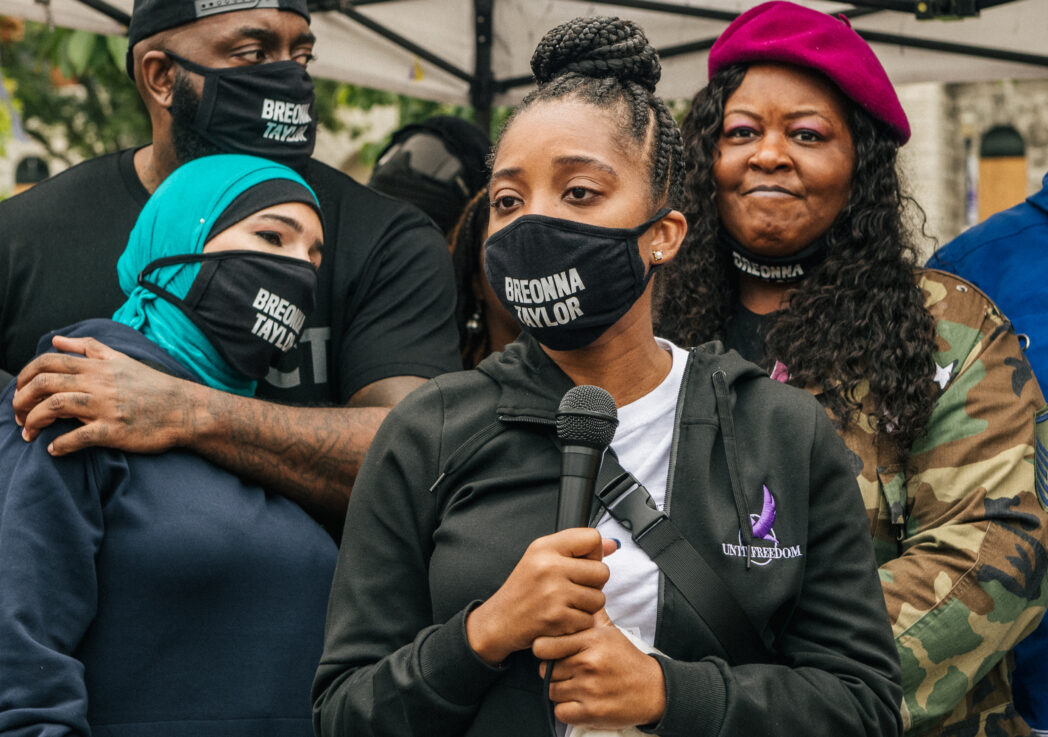
On the challenges of organizing in the social media age
TheGrio: The Montgomery Bus Boycott had the Montgomery Improvement Association, an elected spokesperson. Do you think the decentralization of social movements and the internet changed things? What makes this more complicated?
NT: The quick answer is yes. People can take half-truths and misinformation and just fly with them. And then everybody becomes a so-called expert if people don’t take the time to do the research and connect the dots.
On the other hand, that same social media can also be used in a positive way, which is to get the message out broadly and quickly. But in this case, absolutely — our foremothers and forefathers did not have social media to disrupt what they were planning to do. They had to be face-to-face. They had to make copies. They had to pick up the phone to talk to one another. And sometimes things can be lost in translation.
Social media makes it worse. Texting is a gift and a curse — sometimes you need to hear somebody’s voice and look in their face. If people are willing to use the tool in disruptive ways, it can really hurt a movement like this.
TM: I would say it’s pretty challenging. The risks we see in recent movements are not new — I’ve received so many calls from people who are students of history, some who have actually lived through it, sharing moments when similar things took place in various movements. It’s not new that people haven’t been able to work together. It’s not new that local voices feel suppressed by national input. The difference today is that social media allows anyone to turn their microphone on, and the sausage-making process becomes public versus something that’s worked out behind the scenes. I was raised in a time where conflict took place, but there were many more knock-down, drag-out conversations behind the scenes that helped people either come out working alongside one another — or go their separate ways without a constant barrage of insults and attacks.
On the media calling Bryant the ‘founder’ of the movement
TheGrio: I was watching interviews where journalists would call Bryant the founder of the Target Boycott movement and there was no correction. Do you think that when that happens to Black women leaders, there’s a sense of wanting to protect and not divide — so you just let it go?
NT: It’s extraordinarily hard. Leader Mallory and I, we care more about the work. This movement means more to us than getting credit. We were more about the work than necessarily correcting every reporter who got it wrong because if we spent all our time doing that, we wouldn’t have been able to get anything else done. More times than not, women will sacrifice their names and sacrifice their bodies for the greater good.
TheGrio: Do you think the media gravitated toward Pastor Bryant because he was a Black man, or was it something else?
TM: The news cycle is moving so quickly, it has put more pressure on journalists to get their stories out fast, and that does not allow for real investigative reporting. They don’t necessarily take the time to listen and understand vs. taking the best story and pushing it out as fast as possible.
This whole conversation around who started the boycott — I’m now receiving calls from many reporters saying, ‘Wait, I thought you all literally heard the local organizers’ announcement and then came out with something similar.’ That’s not what happened, and we have the documentation to prove otherwise.
As for gender,I’ve worked with strong male leaders with charismatic voices for a long time, and I certainly think there is a degree of favor the media shows them. However, I don’t want to make this more about gender than it is about activity. Pastor Bryant did many things and was very active around the boycott, and to some degree he was deserving of a platform to lay out the work.
But I would also like the media to cover the folks who were outside of a Target every week in Washington, D.C. There’s enough critique to go around about how the media handles these types of movements.
On what’s next for the Target boycott movement
TheGrio: What can we expect from you and your organization, We Are Somebody, going forward? Will there be more conversations with Target? How is the organizing piece moving forward?
NT: I’m not so sure Target has proven itself. They don’t want to turn this around. They have told us for over a year how they feel about Black people and Black consumers. It shouldn’t have taken over a year for them to come to the table and try to have some type of conversation about how they have misrepresented and betrayed the Black community.
I’m certainly old enough to remember when Cracker Barrel took the old man off the rocking chair, and a certain community was in an uproar — and Cracker Barrel reversed course right away. When it comes to Black people, we’ve got to continue to beg and prod.
With the D.C. Boycott Coalition (the only group in the country to physically go out in front of a Target for over a year), Target representatives told the D.C. Boycott Coalition that diversity, equity, and inclusion was ‘toxic”… and that the only thing they had done wrong was fail to communicate what they’d been doing.
They also said they were going to strategically meet with stakeholders all across the country, because that way they don’t have to come out and give a public apology. Rather than apologize, they want to pick people off. 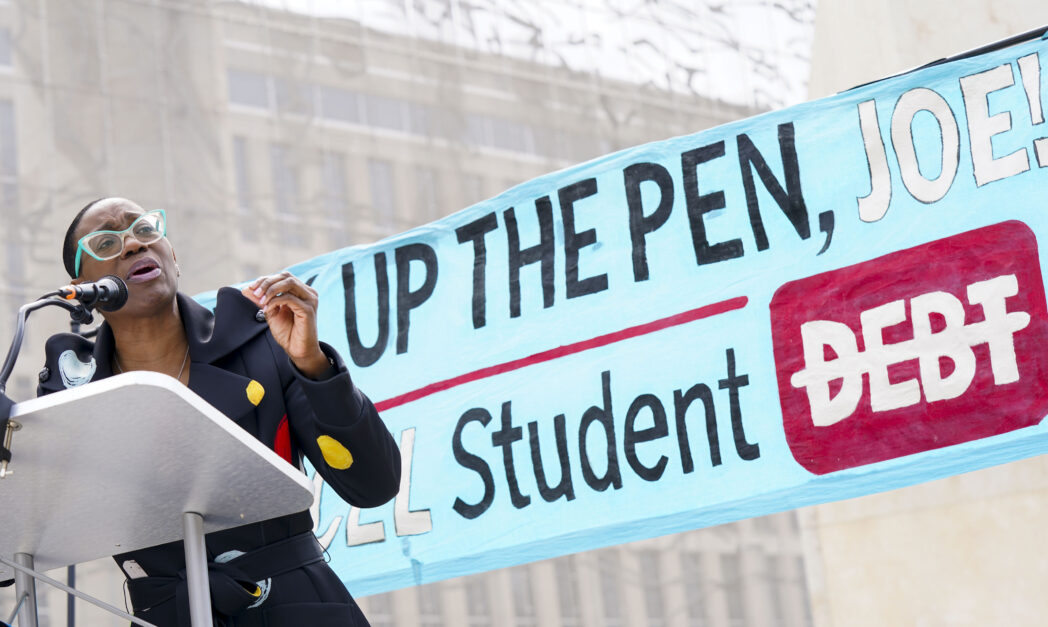
TheGrio: So does this mean you and Leader Mallory are moving forward and still actively boycotting Target? Or has Target shown itself to not be a partner worth negotiating with?
NT: I made it clear: Target needs to publicly apologize to the Black community. They are going to continue to be boycotted until they fulfill that and many other things on that list. If Target wants to come to the table again, that’s fine — but their show of faith, if they’re serious about redeeming themselves, needs to be public.
You cheated on us in public. You divorced us in public with your pronouncements that DEI is no longer a priority for your corporation — and then on January 10th you donated a million dollars to President Trump’s inauguration fund. You divorced us in public, so you need to apologize and throw yourself on our mercy in public. Until Target does that, I personally will continue to boycott them, and my organization will continue the boycott.
We are always open for a conversation, but the conversation needs to be about what date and time Target is going to apologize to the Black community and what else they are going to do to make this right. Leader Mallory has been very clear that Target owes her mama — she said that in the press conference — an apology. And I would overlay on that: they owe all the other mamas and daddies and everybody else an apology too.
Q: Is Until Freedom continuing the boycott? Are you still working with Nina? What should people expect going forward?
TM: We’re still working through what the next phase will be. We are absolutely not going to abandon the fight for Target to, at best, have a very direct conversation with the community about where they stand on diversity and their new initiatives — as well as to acknowledge the harm that was caused. I stated that directly to the CEO.
As it relates to what the actions will be, we’ve been meeting with a council of individuals for a year to help us think about what the best course of action is. We’re recalibrating and we’re listening — to the larger community, to people who have been very clear about their feelings, and also to vendors whose businesses were impacted by Target’s DEI announcement.
The one thing we have learned through this listening process is that whatever we do, we can’t assume anything. We have to make sure our communications are such that at least the majority of our people are very much aware of what we’re doing and the motivation behind all actions.
On the legacy of the Target boycott
TheGrio: What do you want people to focus on when they look back at this boycott?
NT: That although I started this boycott, it doesn’t belong to me. It is a movement. It doesn’t belong to anybody else who’s trying to claim that it’s theirs. It really belongs to the people who provided the fuel to keep this thing going — hundreds of thousands to millions of people.
Because anytime you impact market share and foot traffic, that means there’s a whole bunch of us participating. Target was the first. They will not be the last. We are going to continue to look at corporations and how they’ve bent to bigotry and expose them, and try as much as we can to build on the greatest, most successful boycott in 70 years.
The last one was the Montgomery Bus Boycott, which was contained in one city. This is national. When conscious-minded people move, we can change things. The change might not always happen at once, we might not get everything we want — but we got people’s attention. Their foot traffic went down, their stocks went down, their reputation has gone down.
And anybody who participated in this boycott for over a year has already built a habit. And as the experts say, it doesn’t take six days to build a habit. Their habit is not to go to Target.
This is the first in a series of interviews theGrio is conducting about DEI and Black boycotts of companies who rolled back their DEI promises. Follow theGrio on Instagram and YouTube for the latest.
Natasha S. Alford is SVP & Chief Content Officer at TheGrio. A recognized journalist, documentary filmmaker, and TV analyst, Alford is also the author of the award-winning book, “American Negra.” (HarperCollins, 2024) Follow her on Twitter and Instagram at @natashasalford.
Share
What's Your Reaction?
 Like
0
Like
0
 Dislike
0
Dislike
0
 Love
0
Love
0
 Funny
0
Funny
0
 Angry
0
Angry
0
 Sad
0
Sad
0
 Wow
0
Wow
0