For the first time ever Miss America’s crown sits atop a Black woman’s natural hair
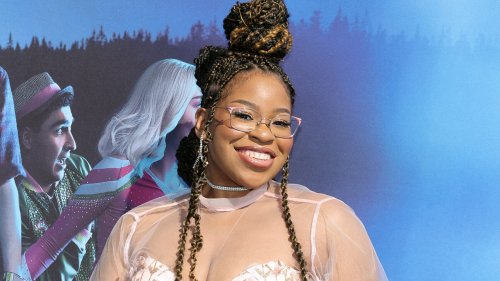
25-year-old Regan Hutsell of Texas made history when she was was crowned Miss America 2027 while rocking her natural hair.

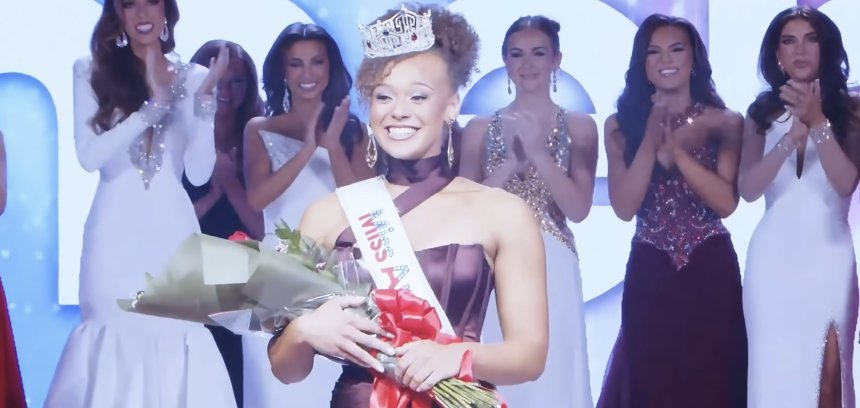

25-year-old Regan Hutsell of Texas made history when she was was crowned Miss America 2027 while rocking her natural hair.
There was a time when it was hard to imagine a Black Miss America, and now one has just been crowned while wearing her natural hair.
On Sunday. Sept. 6, 25-year-old Regan Hustell was crowned Miss America 2027 during the Miss America pageant at the Palm Beach County Convention Center and The Kravis Center for Performing Arts in West Palm Beach, Florida, becoming the 10th Black woman to win and the first to win while rocking her natural hair.
After the group, decked out in their world-class glam, had been whittled down to just two, Hustell stood in a satin wine-colored column gown with a corset bodice and a thin wrap around her neck that dangled delicately down her back, her natural curls swept up into a bouncy pineapple-style high ponytail with a curly bang, when her name was called. Visibly shocked and emotional, she hugged the runner-up, who mouthed, with a giant smile, “I’m so happy for you!” before Hustell was properly crowned and the rest of her fellow beauty queens surrounded her in a loving, celebratory embrace as red, white, and blue confetti and streamers rained down on the stage.
Her win includes a $50,000 scholarship ahead of a year of service under the title launching next year.
In a voiceover that played as she walked out during the competition’s introduction, Hustell reflected on a quote by Maya Angelou: “If you’re always trying to be normal, you’ll never know how amazing you can be.”
“Her words are a reminder that if you’re always trying to be the person next to you, it only creates a limited version of who you are,” she said.
“I spent years trying to fit what I thought the standard of beauty was around me, trying to shape things like my body and my hair into what I saw in those closest to me,” her voiceover continued. “But the moment I learned to embrace myself is when I found my own magic. Life has been not about measuring success based on how well you fit into stereotypes, but by owning and embracing every unique, natural, and innate quality that you already possess.”
More than forty years after Vanessa Williams became the first Black woman to be crowned Miss America, and after nine others followed her, Hutsell’s curls mark yet another milestone in the pageant’s long and complicated history with Black women. Arriving at an especially complicated moment for Black women in this country, her win also raises an interesting question about what the woman wearing America’s crown in 2026 says about Black womanhood and American womanhood at large.
Hailing from Texas, Hustell has made quite a name for herself in the dance world after becoming a Radio City Rockette at just 18 and dancing professionally with companies including the Birmingham Royal Ballet, all things she said during her remarks, she was told she was too tall to ever do. She’s also studying health sciences with plans to become a physical therapist. Her community service initiative, “Your Body Is Your Home,” is inspired by her own recovery from an eating disorder and encourages healthier relationships with our bodies, specifically the idea that our value isn’t determined by how we look.

Speaking to People magazine, she said when she first entered pageantry, she wasn’t sure whether she should straighten her hair or wear it naturally, especially after years spent in the dance world. She eventually tried straightening it, only to find that her hair “didn’t bounce back” the way it used to. So rather risk further damage, she decided, “I’m going to wear it as is.”
Of course, it took generations of Black women challenging what a Miss America could look like to even get here. When Miss America first launched in 1921 in Atlantic City to extend the Labor Day tourist season, it was all-white. It would remain that way for almost 50 years, until 1970, when the first Black woman, Cheryl Browne, competed in the pageant, two years after the first-ever Miss Black America pageant was launched in 1968. Lencola Sullivan became the first to place among the top five in 1980, and three years later, Williams famously broke the mold, becoming the first Black woman to win the crown.
For generations, Black women have had to navigate beauty and professional standards that treated proximity to whiteness as the ideal, with our hair becoming one of the most persistent battlegrounds. Natural hair has since gone from something routinely deemed unpolished or inappropriate to appearing on red carpets, magazine covers, and in boardrooms, to being protected by legislation in some states, and now, rightfully, under the Miss America crown.
Now, Black women certainly do not need Miss America to tell us our natural hair is beautiful. What has changed is the institution doing the crowning. Miss America went from excluding Black women entirely, to allowing us to compete, to crowning its first Black winner, to crowning nine more, and now, more than a century after the competition began, choosing a Black woman who decided she didn’t need to straighten her hair to look the part.
Hutsell isn’t even the only Black woman currently challenging the idea of what the winner of one of America’s biggest beauty pageants can look like. Less than two weeks before her win, 31-year-old Justus Kelley was crowned Miss USA 2026, making history as the competition’s first married winner, first mother to win, and first winner in her 30s. To be clear, all three of those attributes would have rendered Kelley ineligible for the title just a few years ago, before Miss USA began allowing married women and mothers to compete in 2023 and later eliminated its upper age limit.
During the final question of the competition, Kelley made the significance of those changes part of her answer, arguing that women shouldn’t have to choose between ambitious careers, families, and pursuing their wildest dreams. Then she won. So, within days of each other, essentially America’s foremost and largest beauty pageants both said the same thing: the ideal American woman isn’t anything we’ve seen before.
Pageants like Miss America have spent generations attempting to package and sell an idealized version of American womanhood, one that has evolved over the years from physical beauty and poise to include ambition, talent, community service, leadership, and a genuine sense of purpose. The woman wearing the Miss America crown is still, in some sense, being held up as an answer to the question of what an exemplary American woman looks like.
In 2026, that answer looks like Hutsell. It also looks like Kelley. After generations of Black women pushing against the narrow boundaries of beauty, femininity, ambition, respectability, and even who gets to be considered representative of America in the first place, perhaps the most fascinating thing about these wins is what it means that, right now, we’re the women being chosen to represent the ideal.
Because, step outside the pageant world, and you’ll find that being a Black woman in America in 2026 tells a completely different story. Black women have been disproportionately pushed out of jobs, diversity programs meant to address longstanding inequities are being dismantled, and natural hair discrimination remains real enough that advocates are still fighting for legal protections against it. Meanwhile, some of the country’s most visible Black women have spent the year facing attacks that strike directly at their race and womanhood, from Michelle Obama once again being subjected to the racist and transphobic lie that she is a man to a pregnant Rep. LaMonica McIver facing federal prosecution while far-right activist Laura Loomer publicly hurled racist and misogynistic slurs at her and other Black women.
It all makes for a really strange contradiction, no? At a moment when Black women are being reminded in very real ways that our jobs, authority, femininity, and even our right to simply show up as ourselves are up for debate, two institutions that spent decades—and we mean decades—being criticized for excluding us and perpetuating some of the narrowest ideas about what women should look like are holding Black women up as their ideal. There’s still plenty about the pageant world worth interrogating, but who would have thought that in 2026, the beauty pageants might be the ones waiting for the rest of America to catch up?
During the question-and-answer portion of the competition, Hustell was asked what she wanted her win to leave for the young women who would follow, and she said, “hope.”
“I stand on this stage today, hoping to be a voice of hope for this nation,” she said. “I am living proof that you can go for dreams that people tell you you can’t accomplish. You can stand on the other side with two feet and use your voice to be proud. I hope to encourage Americans everywhere to use their voice and to never let anybody stop them or hold them back from their dreams.”
Share
What's Your Reaction?
 Like
0
Like
0
 Dislike
0
Dislike
0
 Love
0
Love
0
 Funny
0
Funny
0
 Angry
0
Angry
0
 Sad
0
Sad
0
 Wow
0
Wow
0