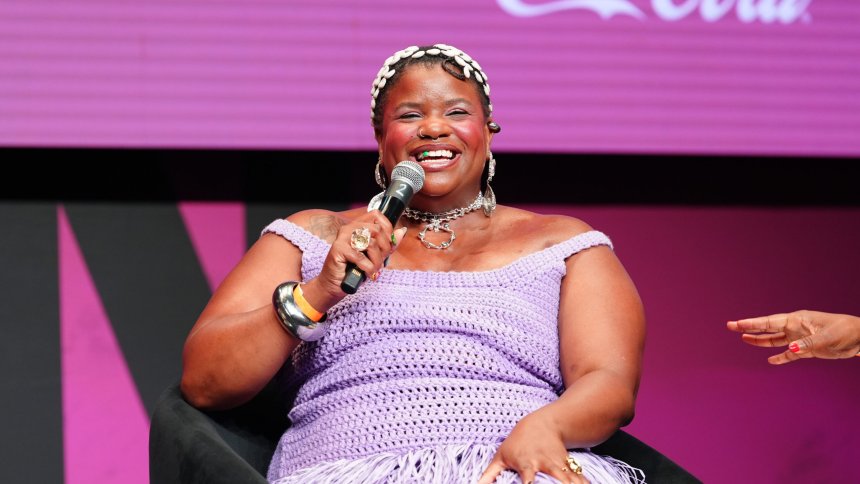
Ericka Hart reveals stage 4 colon cancer diagnosis more than a decade after breast cancer battle
She revealed her stage 4 colon cancer diagnosis, 12 years after her 2014 diagnosis. Learn about symptoms and screening guidelines.


She revealed her stage 4 colon cancer diagnosis, 12 years after her 2014 diagnosis. Learn about symptoms and screening guidelines.
Ericka Hart, the New York City-based queer cancer survivor, activist and sexual educator, was 28 when she faced one of the toughest moments in her life: in May 2014, she was diagnosed with bilateral breast cancer. After overcoming that battle, she revealed another personal health update more than a decade later.
On Tuesday, Hart shared in an Instagram video that she was recently diagnosed with stage 4 colon cancer. She began to explain how she was shocked and blindsided by the news, as she initially blamed the “bloating, stomachaches and fatigue” she experienced on tour on “regular perimenopausal changes.”
“A colonoscopy repeat revealed that I have colon cancer and it has spread,” Hart said in the video. “I’m just asking that you lift me and my family up in prayer and support. I’m gonna fight this. I have no other choice. I will be here for my kid and my family.”
She continued, “I thank ya’ll for supporting me all these years, and I’m just asking for continued support.”
Hart shared her Venmo and PayPal information in the post’s comments for those willing to provide monetary support during this difficult time.
“You can support if it works for you,” she said. “It would certainly make a difference for us, that’s for sure. So I can rest and take care of myself without the looming concern of where’s the gig? How am I gonna work and [not necessarily] having that stressor would be incredible.”
Hart asked her supporters one thing as she continues to navigate another cancer diagnosis: not to share their own stories of family members or friends who passed from disease.
“Right now, I cannot hear stories like that; it’s just a boundary for me. I would love to hear what you’re watching on television. I would love to hear some gossip. I wanna be distracted,” she said.
“I will keep you all posted on next steps. I really appreciate ya’ll and this was really hard to record,” she added.
According to the American Cancer Society, which groups colon and rectal cancers together, the disease disproportionately affects the Black community. African Americans have the highest rate of colorectal cancer of any racial/ethnic group in the United States. They are 20% more likely to be diagnosed with the illness and 40% more likely to die from it.
Colorectal cancer symptoms can include persistent changes in bowel habits, rectal bleeding or blood in the stool, abdominal pain or cramping, feeling that the bowel hasn’t fully emptied, fatigue, weakness and unexplained weight loss, the organization states.
While the American Cancer Society recommends that most people begin screening at age 45, it’s important to recognize potential symptoms of colorectal cancer at any age, particularly for those at higher risk.
Share
What's Your Reaction?
 Like
0
 Dislike
0
 Love
0
 Funny
0
 Angry
0
 Sad
0
 Wow
0