EEOC moves to end 1966 rule on racial data collection that would ‘resegregate’ America
Andrea Lucas, the Trump-appointed chair of the EEOC, says the decades-old rule encourages employers to discriminate against white men. The

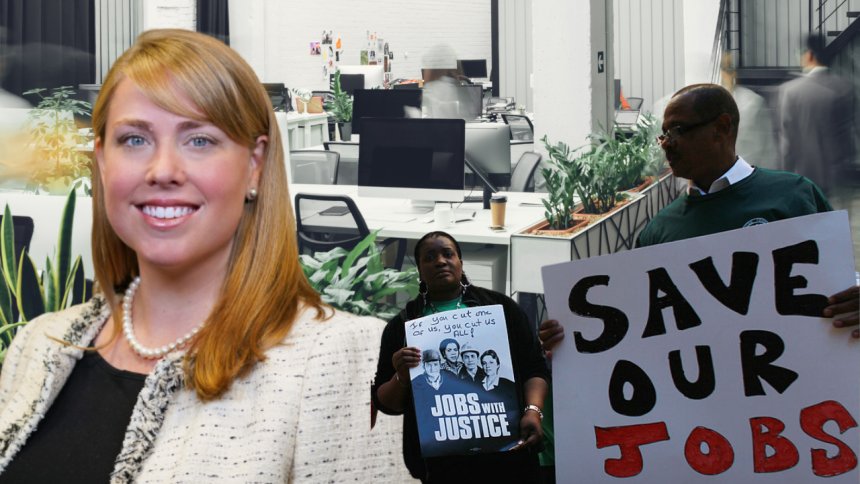
Andrea Lucas, the Trump-appointed chair of the EEOC, says the decades-old rule encourages employers to discriminate against white men.
The Equal Employment Opportunity Commission (EEOC) voted on Tuesday to rescind a rule dating back to the 1960s that requires large employers to collect and share data on the race and gender of their workforce. The move, as part of the Trump administration’s broader anti-DEI efforts, would make it harder for Black workers, as well as women and other marginalized groups, to make claims of workplace discrimination.
In a 2-1 vote on party lines, the EEOC advanced a proposal to end a 1966 rule requiring all companies with 100 or more employees to report data on the race and geneder of their workforce. The data that comes from the reporting requirement, known as an EE0-1 form, has been used by both the government and individual workers as a tool to prevent, combat or remedy racial or gender discrimination in workplaces.
EEOC Chairwoman Andrea Lucas, a Republican appointed by President Donald Trump, argued that the data reporting requirement ran afoul of civil rights law and the Equal Protection Clause under the 14th Amendment, because it encouraged employers to discriminate against workers who are not a protected group, or in other words, white men.
The EEOC, which was established by the Civil Rights Act of 1964, is responsible for enforcing the landmark law’s anti-discrimination statute, Title VII, in the workplace. Under the Trump administration, for the first time since its creation, the EEOC has reversed course on its decades-long mission of enforcing rules intended to protect Black, brown and women workers.
“It appears that it is all to advance a political agenda to resegregate the American workforce,” said Deborah J. Vagins, senior vice president of advocacy and programs at The Leadership Conference on Civil and Human Rights. Vagins told theGrio, “It’s all part of their whitewashing of data across the administration.”
The EEOC under Trump has taken other actions like eliminating its workplace harassment guidance and rescinding affirmative action guidelines dating back to 1979. Vagins, who worked as a chief of staff at the EEOC, said this latest move by the federal agency will only lead to more discrimination, only now it could be happening in the dark without proper oversight.
“Eliminating data about the demographics of the workforce will not obviously eliminate discrimination,” she told theGrio. “Instead, what it’s doing is obscuring the disparities that currently exist, making the discrimination people are facing in the workplace harder to address, and they are essentially getting rid of a valuable tool that has helped them since 1966 target enforcement efforts, prioritize their resources, ensure equal opportunity in the workplace.”
The move comes as Black workers are already experiencing a steadily increasing unemployment as result of a tightening workforce and massive layoffs due to factors like anti-DEI rollbacks encouraged by the Trump administration and President Trump’s own massive cuts to the federal government. 
If the EEOC’s new rule recision is implemented, a Black, or brown or female worker experiencing discrimination by an employer, including in hiring, will soon have less data to help their cases.
“If you’re in litigation…the data to helps bolster cases where the EEOC would be on the side of the plaintiff,” Vagins explained.
The data is also meant to help the EEOC in its efforts to root out workplace discrimination in specific industries, whether it be tech or construction. And without that data, Vagins warns, the agency will have “no visibility into disparities and trends” and will then ultimately use that as a “justification for why they are not supporting Black workers in discrimination cases.”
She told theGrio, “If you can’t measure something, you can’t fix it, and that’s what they want. They don’t think that fixing discrimination against workers of color and women is a priority, and they don’t want the data to show it.”
Ironically, or maybe not so ironically, the EEOC has shifted its focus to concerns of workplace discrimination against white men. In December 2025, Chair Lucas issued a PSA to white men encouraging them to seek the EEOC’s services if they believe they have been victims of racial discrimination.
Critics pointed out that the data doesn’t support the idea that white men are disproportionately facing discrimination in employment. In fact, white men have the second lowest unemployment rate (3.5%) of any group, only after white women at 3.1%. It is also lower than the national unemployment rate, which is 4.2%.
“White men have every right to bring civil rights claims but all the data that exists shows that that is not where the majority of discrimination cases are happening and then they are eliminating the data to prove that,” noted Vagins.
Businesses would typically have to complete and submit EEO-1 data collection forms annually, which advocates say helps employers assess themselves through a mandated audit that encourages them to be proactive about ensuring they are not discriminating in the workplace.
However, the rule is not yet final. Under the federal rulemaking process, the public will have 30 days to provide public comment in support or opposition of the proposal.
Even if the recision is ultimately carried out, businesses are still encouraged to continue collecting the data independently because anti-discrimination laws still exist under federal law, whether the Trump administration fairly enforces it or not.
Similarly, Black and other workers who may be discriminated against, can and should still seek legal redress. Vagins says as “disheartening” the latest actions may be, it’s important that workers of color and women in the workplace don’t believe they “can’t still have protections under the law.”
As for next steps, The Leadership Conference says it will be submitting comments in opposition to the proposed recisions and will, as an organizing tool, be helping the public do the same.
“It is their clear reprioritization of how they want to bring cases and on behalf of whom,” said Vagins. “The EEOC may not be in their corner anymore, and that is a very that is a very sad thing to say.”
Share
What's Your Reaction?
 Like
0
Like
0
 Dislike
0
Dislike
0
 Love
0
Love
0
 Funny
0
Funny
0
 Angry
0
Angry
0
 Sad
0
Sad
0
 Wow
0
Wow
0