Does your favorite online wellness ‘guru’ actually know what they’re talking about?
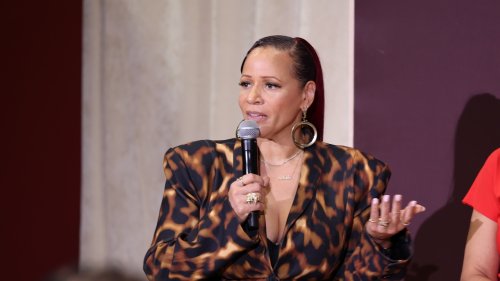
Dr. Cheyenne Bryant’s recent comments around credentials has sparked a hot debate online around the dearth of “experts” out there.


Dr. Cheyenne Bryant’s recent comments around credentials has sparked a hot debate online around the dearth of “experts” out there.
In today’s landscape, it’s not hard to find a wellness “guru” or a subject matter expert if you scroll online long enough. Determining whether they are actually properly credentialed to give the advice, guidance, or care they are sharing appears to be the real challenge.
Dr. Cheyenne Bryant has been raising eyebrows and sparking discourse while promoting her new release, “Live Your Promise: Escape Your Wilderness, Heal Your Pain, So You Can Manifest the Life You Want,” after revealing she doesn’t have a therapy license, in part to avoid having to deal with insurance companies.
“Just to educate some folks a little bit, a license is really only needed so you can bill insurance,” she said in a recent interview on “The Joe Budden Podcast,” later adding that she prefers operating privately because she is “not binded by” ethics boards and regulations.
She has also doubled down in more recent appearances and in responses to the backlash online.
“I don’t need a license because I’m not a therapist. I’m a Psychology Expert and Life Coach,” she wrote on social media. “I don’t understand what’s so hard for people to grasp about that. Coaches do not need a license… My bio does not say therapist, and my website does not say therapist anywhere on it.”
Those reacting in outrage have been calling out why that perspective is problematic—whether or not she actually obtained a doctorate has come under scrutiny online—the discourse speaks to a much broader issue around credibility in the age of influencers and internet expertise.
“We give a lot of onus to social capital, to a level of following, but we can’t do that,” Dr. Raquel Martin, who has been vocal in criticizing Bryant’s comments, told theGrio earlier this month. “There are a lot of times where celebrity and expertise overlap, but that’s not always the case.”
Former First Lady Michelle Obama recently said she’s confused about what the standards are anymore, and while she was speaking specifically about politics, the sentiment increasingly applies across culture. More and more, audiences are placing trust in charismatic personalities with vague or unverified backgrounds while dismissing the value of traditional training, oversight, and professional accountability.
“There are bad professionals in every single profession,” Dr. Martin said, before adding a caveat. “And every single time I have a conversation about therapy versus coaching, I always say, ‘having a license does not mean that you don’t harm just like, not having a license doesn’t mean that you can’t help.’”
In wellness and self-help spaces, “gurus” can now be found everywhere, from meditation circles to motivational coaching to viral “healing” content promising transformation in a matter of weeks. And the metaphysical industry has become particularly crowded with influencers, AI-generated spiritual advice, and self-proclaimed experts hawking everything from tarot readings to trauma recovery.
The confusion around therapists, coaches, and wellness personalities has become so widespread that even celebrities like SZA have mistakenly believed they were seeing a therapist when they are actually working with a life coach.
Whether it’s spirituality, psychology, or self-help, many of these practices have long histories, professional standards, and trained practitioners behind them. Licenses, certifications, degrees, and apprenticeships exist for a reason. It’s not about gatekeeping. It’s about recognizing that mental health, healing, and wellness should not be treated with the same casual trust people give influencers selling a lifestyle online.
Platforming, profiling, following, and financially supporting unqualified figures can ultimately cost people more than money. It can waste time, exploit vulnerability, and potentially interfere with the quality of care or healing someone is actually seeking.
“You have to look at the credibility of the individual,” Dr. Martin said.
For consumers trying to determine who is actually qualified, Dr. Martin said critical thinking matters more than ever. In many cases, legitimate professionals can be verified through licensing boards, educational institutions, or professional directories. If someone presents themselves as a doctor, therapist, or practitioner, there should typically be some way to confirm their background, credentials, or training.
Dr. Martin also encourages audiences to be wary of anyone offering overly simplistic answers to deeply human issues.
“I tell people to look for over simplifications when it comes to mental health and well being,” she said. “There is no black or white.”
She continued, “A lot of times I tell people to look at that. Is that an oversimplification? Did they sum this up by saying, as long as you do this, this problem will end. That’s not possible.”
Instead, Dr. Martin said audiences should approach wellness content with the same discernment they would use anywhere else online.
“Do you go around telling your social security number to everybody? No, because you got some sense, you don’t trust everybody,” she said. “When it comes to media, do the same thing.”
Despite the way the situation has unfolded online, Dr. Martin told theGrio her criticism was never about tearing anyone down. It was about accountability and protecting Black communities seeking credible care.
“It’s also important to understand that as Black people challenging inaccuracies, whether the person is Black or not, does not make you anti-Black,” Dr. Martin said. “My Black love is also accountability, and as many times as people want to pit individuals against each other, we are deserving of credible care, and we are allowed to challenge each other.”
Share
What's Your Reaction?
 Like
0
Like
0
 Dislike
0
Dislike
0
 Love
0
Love
0
 Funny
0
Funny
0
 Angry
0
Angry
0
 Sad
0
Sad
0
 Wow
0
Wow
0