Bomba y Plena: The Black rhythms of Bad Bunny’s ‘Debí Tirar Más Fotos’
“Puerto Rico has a mix of races, and we like to defend our African roots,” said Iván “E-van” Ortiz Amaro,

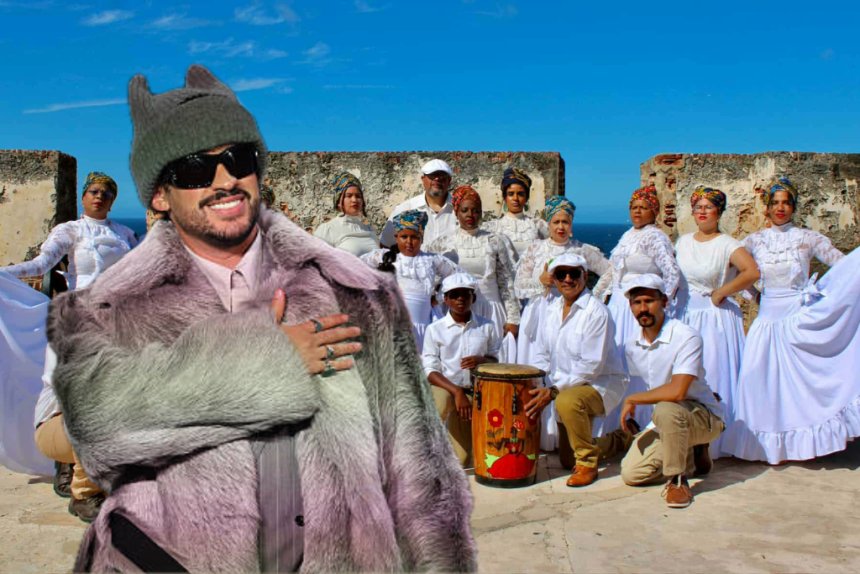
“Puerto Rico has a mix of races, and we like to defend our African roots,” said Iván “E-van” Ortiz Amaro, the director of Bomba con Conciencia.
If Bad Bunny’s highly anticipated Super Bowl halftime show is representative of his 2025 album “Debí Tirar Más Fotos,” and its subsequent “No Me Quiero Ir De Aqui” residency at Puerto Rico’s Coliseo in San Juan, it will likely feature Puerto Rico’s most revered and sacred genres, bomba and plena. And if the music, dancing, and drumming sound African to you, that’s because it is.
The Boricua artist uses and weaves together several Puerto Rican genres such as reggaeton, salsa, and Latin trap throughout his album. The use of bomba and plena can be heard on songs like “Café Con Ron,” featuring Los Pleneros de la Cresta and the titular “DtMF.” Though often used in the same sentence, bomba and plena are two distinct genres developed at different times during the island’s history.
Bomba predates plena by centuries, and has the most direct connection to the enslaved Africans who were brought to Puerto Rico in the 1500s. The evolution of bomba and its many rhythmic patterns, including sicá, cuembe, yubá, and calindá, occurred as they were forced to adapt to a new land away from their ancestral homes. As a result, there is no replica of the genre on the African continent.
“In Africa for drumming, they used a hollowed-out tree; in Puerto Rico, they used the barrels that were used for wine, molasses (sugar), or bacon,” said Iván “E-van” Ortiz Amaro, the director of Bomba con Conciencia, located in Arroyo, Puerto Rico. “They adapted their culture to what they found when they arrived in Puerto Rico.”
The contributions of enslaved Africans from Haiti, brought by slaveowners after the Haitian Revolution ended in 1804, and later freed Africans from islands like St. Thomas and Martinique, are also important to the genre’s development.
Other countries in the Caribbean, as well as those with a Caribbean coast, have their own music inherited from their enslaved population, which uses similar rhythms: palo in the Dominican Republic, rumba in Cuba, and bullerengue in Colombia are some examples. At Congo Square in New Orleans, Louisiana, enslaved people sang and danced to calindá and bamboula.
“We know that they came from Africa, the rhythms themselves, the names of the rhythms, some of the older songs are in Creole or African languages,” Angel Rivera of Cultura Plenera, a nonprofit based in Maryland, said. “A lot of people make the argument that what is practiced now by Puerto Ricans is Puerto Rican bomba. We’ve actually made it more reflective of what we are now.”
Plena was created in the 20th century, after Puerto Rico had developed a national identity. Researchers will describe the genre as Afro-Puerto Rican, crediting the predominantly Black communities on the island that nurtured it. Coming out of Puerto Rico’s southern region, the town of Ponce is known to have popularized the genre. It is believed to have been developed by workers on sugarcane plantations.
Narrative storytelling is key to plena, and singers often invoke topics of news, politics, and commentary in its lyrics. Unlike bomba, plena just has one constant rhythmic technique, but there are some similar elements to bomba, including call and response, improvisation, and drumming being central to the instrumentation.
Rivera said that Bad Bunny did not stray far from the source when incorporating bomba and plena on his album, “Debí Tirar Más Fotos,” and its accompanying residency last summer in Puerto Rico.
“If you know bomba, you hear when he’s actually switching between rhythms, switching between holandé, yubá, and sicá,” Rivera said. “He did add some things to make your body vibrate a little bit more. But he did that without taking away from the authentic aspect of both of those.” 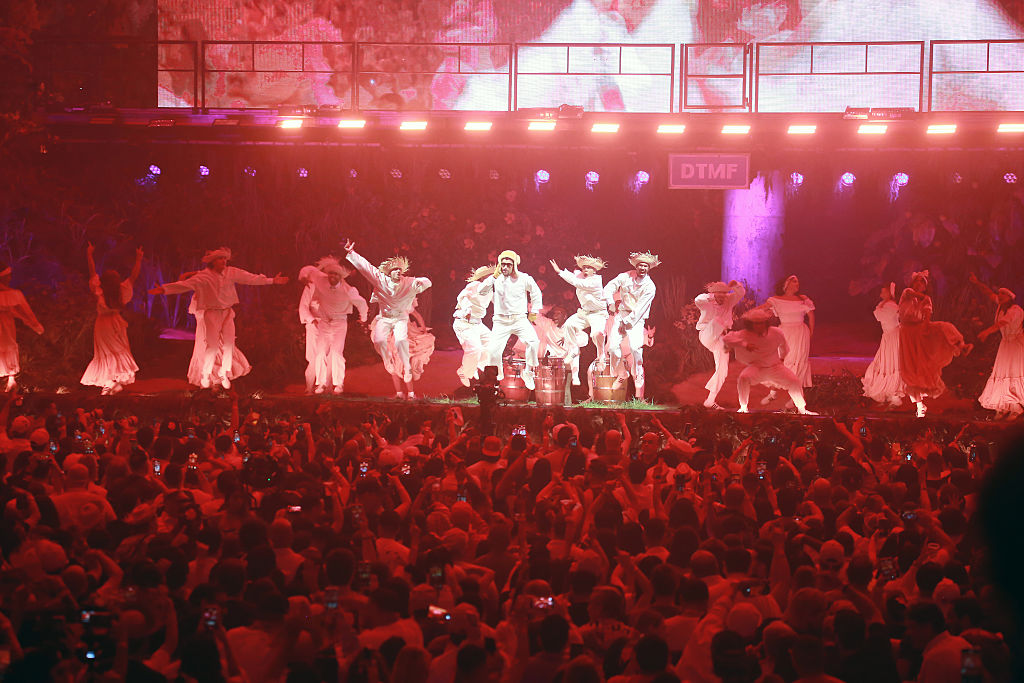
Rivera explained that while the Grammy-winning album features a range of Puerto Rican music, he believes bomba and plena are the “most pure form.”
“I’m not taking away from other rhythms. Like la musica jíbara, we’ve made it our own, but you can trace it back to Spain, he said. “Salsa, we made it through our influence in Puerto Rico and in New York in the melting pot, and everything else. But if you trace back salsa, which is really an umbrella term for a lot of different rhythms, they came from Cuba. From musical rhythms that are authentic, that are really born in Puerto Rico, that represent us as people, bomba and plena are it.”
Boricuas of all colors grow up knowing these types of music and even learning its dances and instrumentations at a basic level. Every Christmas season, it’s a common practice to go door-to-door in the neighborhood to sing, dance, and play plena music with the community in a parranda. At protests, plena is used to sing the anthems of resistance.
Bomba has been preserved for centuries due to Afro-Puerto Rican families continuing the practice among themselves, often in secret. The practice stayed this way until families like the Cepedas and the Ayalas opened institutions in the 20th century that cultivated it along with plena and other art forms. Ortiz Amaro and Rivera agree that it is a miracle that Puerto Ricans have the tradition today. 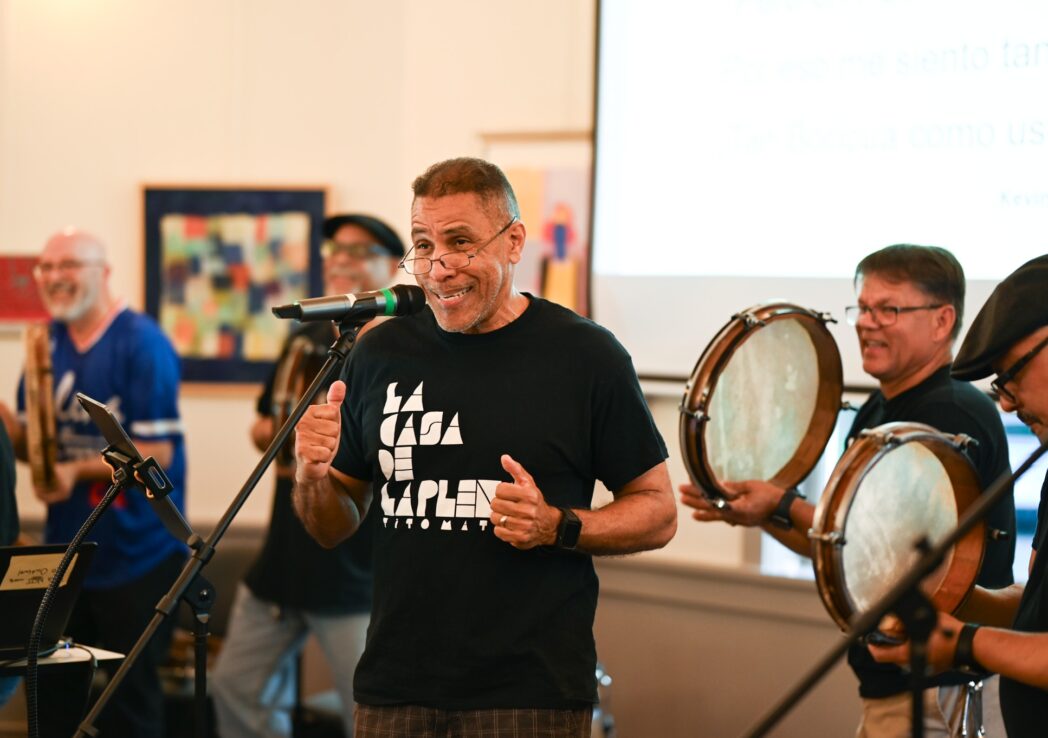
“We are very protective because we learned from our teachers to take care of it and respect it. There was a time in Puerto Rico when playing bomba was illegal. People were imprisoned for playing bomba, slaves were killed for playing bomba,” Ortiz Amaro said. “It was a music that developed in the communities of Black and poor people.”
Sometimes, what is lost to those who are unfamiliar with Puerto Rico is that there are Black people, as well as predominantly Black communities, on the island. Bomba and plena belong to the Puerto Rican people, and it is generally known that the genres would not exist without Afro-Puerto Ricans.
“Puerto Rico has a mix of races, and we like to defend our African roots,” Ortiz Amaro said. “Puerto Ricans value our African roots, as we also value the Spanish, the [Taino Indigenous], the Arabs, the Chinese roots in Puerto Rico. But we like to defend our African roots.”
He continued, “We are proud of our history that has made us strong. That strength that we inherited from our African ancestors, of fighting and not giving up, is what identifies the Puerto Rican.”
Share
What's Your Reaction?
 Like
0
Like
0
 Dislike
0
Dislike
0
 Love
0
Love
0
 Funny
0
Funny
0
 Angry
0
Angry
0
 Sad
0
Sad
0
 Wow
0
Wow
0