Black voters are mobilizing for the midterms. A recent study revealed how impactful sitting out can be
The Ohio Legislative Black Caucus discovered through a recent study that over 600,000 Black eligible voters in the state sat

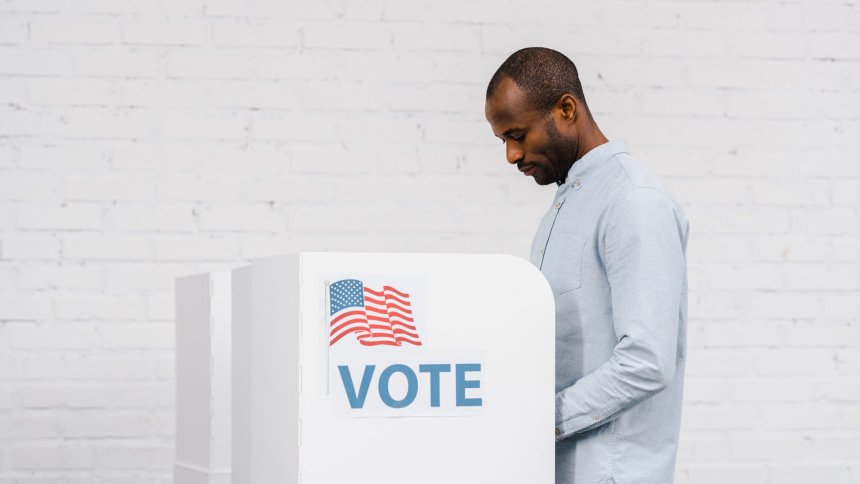

The Ohio Legislative Black Caucus discovered through a recent study that over 600,000 Black eligible voters in the state sat out the midterms in 2022.
Early voting is underway in several states across the country ahead of the November 3 midterm elections. As voters across the country look to make their voices heard about the current state of the country, recent statistics show that sitting out elections, even when the president is not on the ballot, has consequences.
In Ohio, which President Trump won in 2024 with 55 percent of the vote, his Vice President, JD Vance, won his Senate seat with only 52 percent of the vote when he ran in 2022. It was considered a “vast underperformance” by several Republican insiders compared to Ohio Governor Mike DeWine, who trounced his opponent by 25 points.
The numbers, in terms of turnout from the Ohio Legislative Black Caucus Foundation, reveal that over 600,000 of Ohio’s eligible Black voters sat out the 2022 midterm election, enough voters that could have altered Vance’s Senate race, and in effect, altered his chances of becoming Vice President.
To put the figure in context, the 603,000 eligible Black Ohioan voters who didn’t vote in 2022 would make up the second-largest city in the state.
Voters in Ohio said the state was similar to Texas, which has been a Republican-led state for more than a generation, and that apathy had grown.
“To say the situation is disheartening is an understatement,” Kikit Brown wrote. “That said….Ohio is purple DOWN, and we’ve only gone red because of the gerrymandering.”
Another Threads user added, specifically breaking down gender performance in elections, “It’s frightening to see because these [Black] men just don’t see the power they could potentially wield.”
Nationwide, eligible Black voters experienced a historic drop in turnout in the 2022 midterms compared with 2018. The Washington Post reported that 42 percent of eligible Black voters voted in the 2022 election, compared to a record 51 percent in 2018. According to Michael McDonald, a turnout expert and University of Florida Associate Professor, the decline likely cost Democrats a Senate seat in Wisconsin and impacted major races in Florida.
Since that pivotal 2022 election, the Republican-led state legislature has enacted a new voter ID law that the Ohio ACLU argued would create “severe deteriorations to our election process,” creating chaos and confusion for voters. Groups like Cleveland VOTES are trying to change the stigma around sitting out elections to Black voters in the region, many of whom recently told MS NOW that they don’t feel heard.
“We as a country have gotten way too hyperfocused on the electoral cycle versus thinking about the holistic nature of community building,” Cleveland VOTES co-founder Erika Anthony said. “There are policy decisions being made every day, locally, countywide, statewide and at the federal level. And if we’re only talking to folks two weeks, three weeks before an election and just expecting them to magically open their eyes and see why this is valuable to them. [By] then, we’ve already missed the boat.”
However, there may be a signal that the tide is turning.
Last week, students at UNC Greensboro, North Carolina A&T, and Bennett College went viral for marching 45 minutes from campus to their polling location and back after the polling location each school had during the 2024 general election was denied to them. In Texas, eligible voters in Houston and Dallas are holding contests to boost turnout as a matter of both civic pride and city pride.
Whether the impact will be seen following November 3 will be worth monitoring, especially as attention turns to the 2028 general election.
Share
What's Your Reaction?
 Like
0
 Dislike
0
 Love
0
 Funny
0
 Angry
0
 Sad
0
 Wow
0