AI Error Highlights Lowered ICE Recruitment Standards, And That’s Not The Half Of It
Source: UCG / Getty Maybe there’s a reason immigration and Customs Enforcement (ICE) agents are in the streets behaving like packs of rabid attack dogs in every major city they’re deployed to. Perhaps there’s a reason the Trump administration — and specifically the Department of Homeland Security — is forced to spend so much time [...]


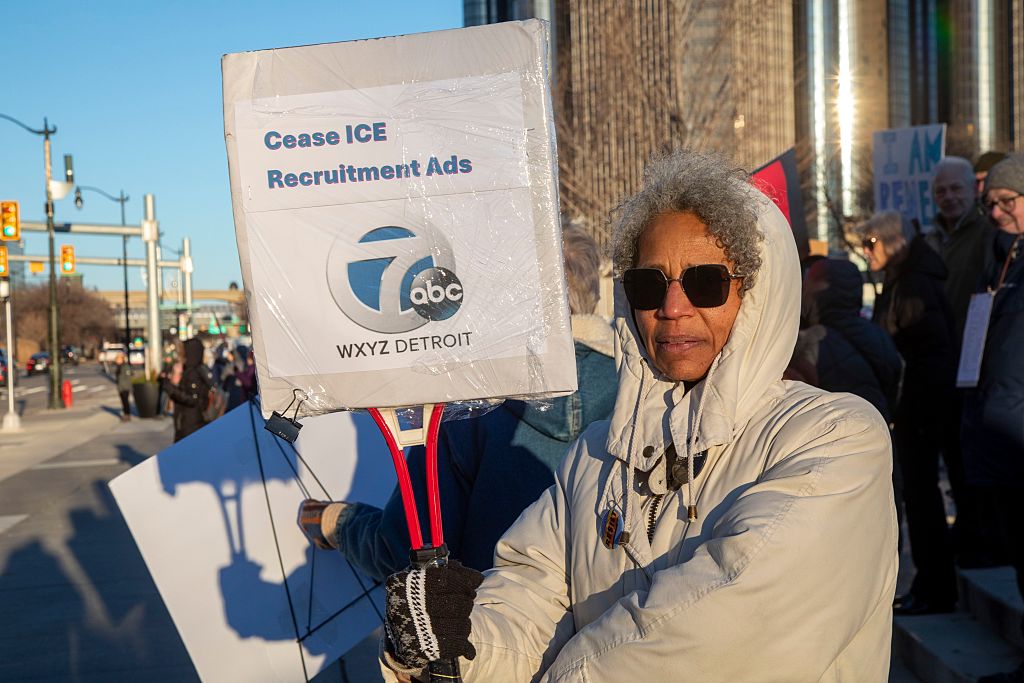
Maybe there’s a reason immigration and Customs Enforcement (ICE) agents are in the streets behaving like packs of rabid attack dogs in every major city they’re deployed to. Perhaps there’s a reason the Trump administration — and specifically the Department of Homeland Security — is forced to spend so much time getting creative with media spin, as its officials scramble to craft narratives, depicting violent and volatile agents as innocent men trying to do their jobs, and protesters who are tired of watching their communities be terrorized as the violent attackers.
Perhaps the agents simply aren’t well-trained, and this ghettoized federal government — which has made it a point to demonize DEI as an effort to lower education and hiring standards — keeps lowering the bar for ICE recruitment, to the point where there isn’t much of a standard at all.
According to NBC News, ICE officials have been clamoring to add 10,000 new officers to the force, and in their haste to hit that hiring quota, they overlooked an error made by an artificial intelligence tool used to process applications, resulting in many new recruits being sent into field offices without proper training.
From NBC:
The AI tool used by ICE was tasked with looking for potential applicants with law enforcement experience to be placed into the agency’s “LEO program” — short for law enforcement officer — for new recruits who are already law enforcement officers. It requires four weeks of online training.
Applicants without law enforcement backgrounds are required to take an eight-week in-person course at ICE’s academy at the Federal Law Enforcement Training Center in Georgia, which includes courses in immigration law and handling a gun, as well as physical fitness tests.
“They were using AI to scan résumés and found out a bunch of the people who were LEOs weren’t LEOs,” one of the officials said.
The officials said the AI tool sent people with the word “officer” on their résumés to the shorter four-week online training — for example, a “compliance officer” or people who said they aspired to be ICE officers.
The majority of the new applicants were flagged as law enforcement officers, the officials said, but many had no experience in any local police or federal law enforcement force.
Mind you, the Trump administration has confirmed that it significantly reduced the number of days new recruits must train before hitting the streets. How much that standard was lowered varies from report to report, but most reports indicate that, before President Donald Trump’s second term, ICE recruits spent between 16 weeks and five months before they were sent to the field, so, at best, the length of time new agents with no prior law enforcement experience spend training — even without the reported AI error — has been cut in half.
Not to mention the fact that, last August, DHS Secretary Kristi Noem announced her department was waiving age limits for new applicants, and she even tried to sell it by absurdly claiming, “We’re taking father/son bonding to a whole new level.”
It’s also worth mentioning that, on Tuesday, journalist Laura Jedeed, a reporter for Slate, published a report recounting her visit to an ICE Career Expo event at the ESports Stadium Arlington near Dallas, Texas, last August, how recruiters were offering on-the-spot hiring for deportation officers, and how she was offered a job after a six-minute interview and “sloppy” vetting.
Jedeed — a U.S. Army veteran who joined the military fresh out of high school and was deployed to Afghanistan twice with the 82nd Airborne Division — claimed the recruitment process was a cakewalk, during which she was asked only her name, date of birth and age, whether she had any law enforcement or military experience, and about the circumstances in which she left the service.
Jedeed noted in her report that a quick Google search would have revealed her as the anti-ICE and anti-Trump journalist and advocate that she is.
“In short, I figured—at least back then—that my military background would be enough to get me in the door for a good look around ICE’s application process, and then even the most cursory background check would get me shown that same door with great haste,” Jedeed wrote.
Notably, she even told the recruiter at the event, which she described as sparsely attended, that she would be fine with a desk job, but was told, “Just to be upfront, the goal is to put as many guns and badges out in the field as possible” — which would certainly be telling.
To make a long story short, Jedeed wrote that she left the expo expecting not to hear back from anyone, but to her surprise, she received an email on Sept. 3, which suggested she was being made a “tentative offer” and instructed her to sign into a jobs website and return a number of attached forms. She said she didn’t fill out any of the forms or follow the steps outlined in the email, yet she still received a follow-up email three weeks later thanking her for proceeding and asking her to submit a drug test.
“Somehow, despite never submitting any of the paperwork they sent me – not the background check or identification info, not the domestic violence affidavit, none of it – ICE had apparently offered me a job,” she claimed.
So, again, maybe there’s a reason Trump’s mass deportation agenda has been the chaotic, human rights-violating mess that it has been for the last year.
And maybe the federal government’s recruitment process is only continuing to show these people don’t really care about merit.
SEE ALSO:
Southern California Cop Intervenes As Plainclothes ICE Agent Pulls Gun On Civilian Driver
Share
What's Your Reaction?
 Like
0
Like
0
 Dislike
0
Dislike
0
 Love
0
Love
0
 Funny
0
Funny
0
 Angry
0
Angry
0
 Sad
0
Sad
0
 Wow
0
Wow
0