Anderson .Paak’s new film ‘K-Pops!’ is reigniting the conversation about the ways Black and South Korean culture blends
“K-Pops!” starring Anderson .Paak and his 11-year-old son, Soul Rasheed, showcase Black culture’s influence in K-pop music. Anderson .Paak’s directorial

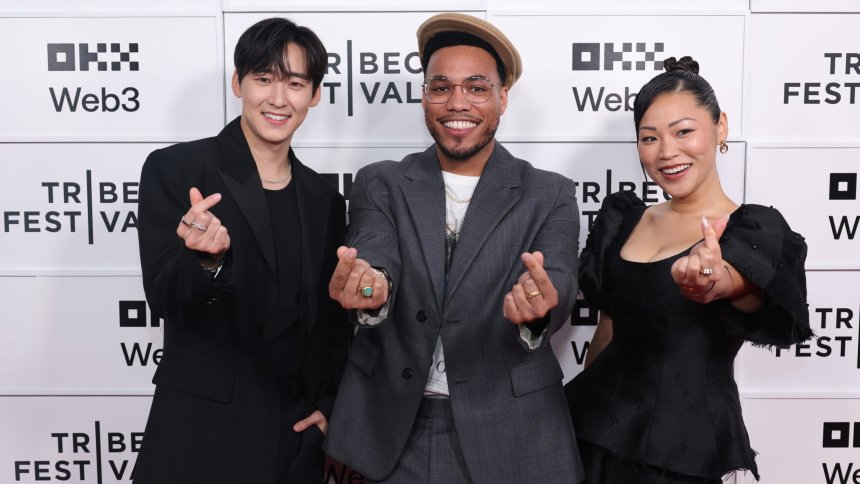
“K-Pops!” starring Anderson .Paak and his 11-year-old son, Soul Rasheed, showcase Black culture’s influence in K-pop music.
Anderson .Paak’s directorial film debut is reigniting conversations about how Black American and South Korean cultures blend.
“K-Pops!” — released Feb. 27 in AMC theaters and starring the 40-year-old Grammy-winning R&B star alongside his real-life 11-year-old son, Soul Rasheed — sends Paak on a music-filled father-son journey across Seoul that taps into his own South Korean heritage.
“I’m glad that we were able to, you know, have something different,” the “Come Down” singer told Complex about the family-friendly film. “I could have pulled from like a lot of traumatic things in my life, but it was important for me to have something that was joyous and something where you could see the families connecting together, a father and son connecting on screen.”
In the film, the “Why Lawd?” artist plays a failed musician still holding out hope he’ll make it big who finds himself in Seoul performing in a band during a K-pop competition.
Along the way, the story also highlights how deeply Black American music has influenced the genre — and how the “Might Be” singer’s own background gives him a unique perspective to explore those connections. The musician, born Brandon Paak Anderson, is part Korean on his mother’s side and shares his two sons with his former wife, Jae Lin Chang, who is from South Korea, and he credits her with helping him reconnect with that side of his heritage.
“I grew up in a Black household, Black culture. I didn’t know anything about my Korean side,” he told The Hollywood Reporter. “My mom was adopted from Korea in the ’50s and is half Korean, but she didn’t grow up with that in the house. She had Black adoptive parents, and that’s how I was raised. But I was reintroduced to the Korean heritage through my two sons’ mom and brought into that whole world.”
The film ultimately explores the overlap between those worlds, arriving at a moment when conversations about Black music’s influence on K-pop have become increasingly louder. The genre’s polished pop sound and group choreography often trace inspiration back to Black pop groups of the 1990s and early 2000s.
At one point in the movie, the connection is summed up with a cheeky line: “The Jacksons walked so BTS could dance.”
Speaking to Complex, Paak acknowledged that borrowing and blending influences is nothing new in the music industry — but he believes there’s a responsible way to approach inspiration.
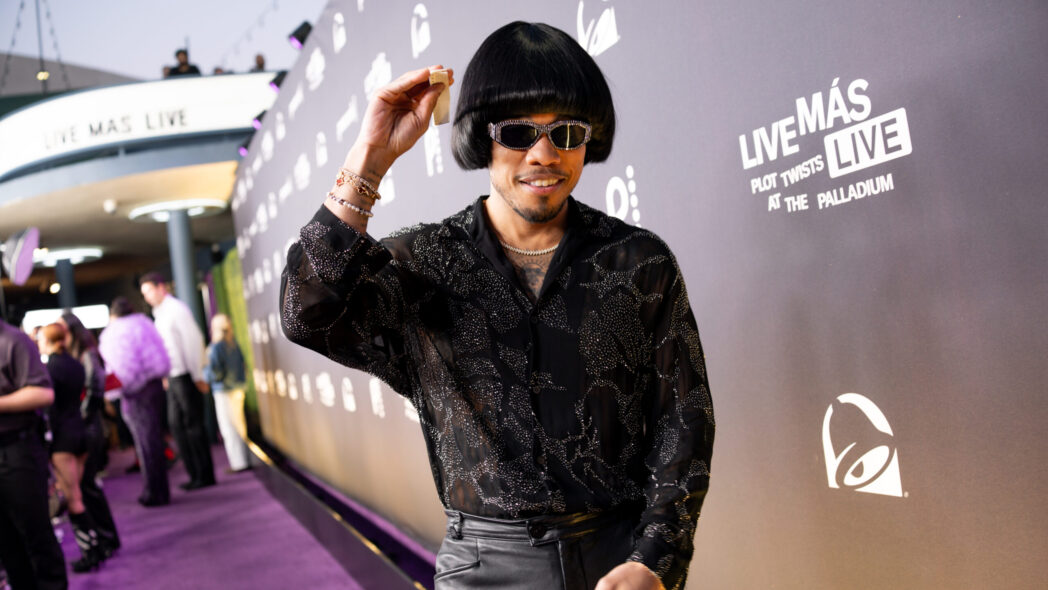
“What you can do is learn from [the original],” he said. “In order to really take care of the genre and to have respect for it, you learn about it and that’s going to make it to where you’re not appropriating — where you are appreciating.”
For Paak, watching the rise of K-pop immediately reminded him of the groups that shaped his own musical upbringing.
“It immediately made me think of groups that I came up with like New Edition, TLC, SWV and then even Motown,” he told THR. “How they had an assembly line, and they had a whole incubation system; how they put groups together. I thought it was very similar to that. It’s very similar to Beatlemania, when The Beatles are doing Black music and blues music. But it’s somehow different when they do it. I thought these were all interesting things that could be shared in the movie, and it’s tricky to put that in without it being preachy or anything. But I thought it could be fun to have K-pop work as a sandbox for all these different things [and] these different ways to bond with my son.”
That bond with his son is ultimately what sparked the project in the first place. Paak told the Toronto International Film Festival, which screened the film, that watching Soul fall down the K-pop rabbit hole during the pandemic on YouTube inspired the idea for the story.
When describing the experience of finally getting to watch it together, he said, “It was surreal, even quite sensational.”
Share
What's Your Reaction?
 Like
0
Like
0
 Dislike
0
Dislike
0
 Love
0
Love
0
 Funny
0
Funny
0
 Angry
0
Angry
0
 Sad
0
Sad
0
 Wow
0
Wow
0