7 ways the Black Panther Party’s impact is still felt 60 years later
Sixty years after its founding, the Panthers’ influence can still be seen in policing debates, mutual aid, community health, education

Sixty years after its founding, the Panthers’ influence can still be seen in policing debates, mutual aid, community health, education and Black political organizing.
By 1966, the civil rights movement in the United States had ushered in several sweeping victories, including the end of segregation through the Civil Rights Act of 1964 and landmark voting protections secured with the Voting Rights Act of 1965.
However, the promise of a better day in America for Black people still felt painfully out of reach. Black people continued to experience disenfranchisement and discrimination as their neighborhoods continued to be plagued with poverty and police brutality.
In cities like Oakland, California, a fledgling generation of activists was growing tired of waiting and wanted to make change happen themselves. Among them were Huey P. Newton and Bobby Seale, who had met years earlier at Merritt College. Inspired by the revolutionary teachings of Malcom X, they had grown increasingly frustrated with the conditions their communities faced. They believed Black people deserved real progress, the power to protect themselves from police brutality, the ability to determine their own futures, decent housing, and more.
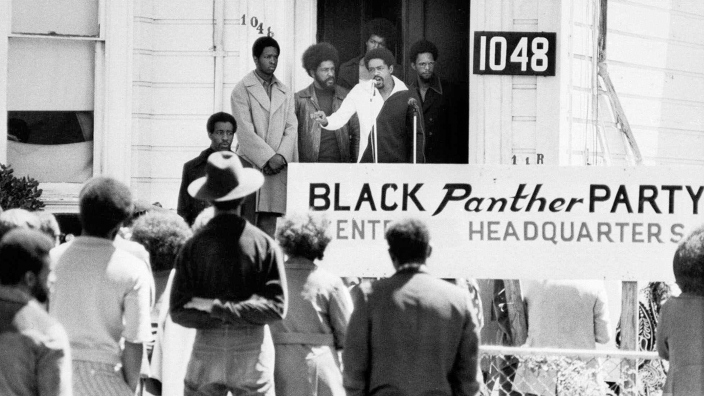
In October 1966, 60 years ago, Newton and Seale founded the Black Panther Party for Self-Defense in Oakland, launching what would become one of the most influential and recognizable forces in American History.
Operating under a philosophy dubbed the Ten Point Program—which, among other things, demanded freedom for Black people, gainful employment, an end to capitalist gain at the expense of their communities, and education that doesn’t hide America’s true history—the Black Panther Party grew into a nationwide movement for Black liberation, with key players including Fred Hampton, Elaine Brown, Kathleen Cleaver, and Eldridge Cleaver helping to expand its reach. At its height, the organization had chapters across the country and established free breakfast programs, community health clinics, and political education initiatives, all while challenging systemic racism, economic inequality, and police violence.
Now six decades later, the party’s legacy—though still oftentimes woefully misunderstood—is deeply woven into modern life, from the way we protest, demand accountability from our law enforcement, to the music we listen to and the way we wear our hair to the ways communities still feed, educate, and care for one another.
Demanding accountability from the police
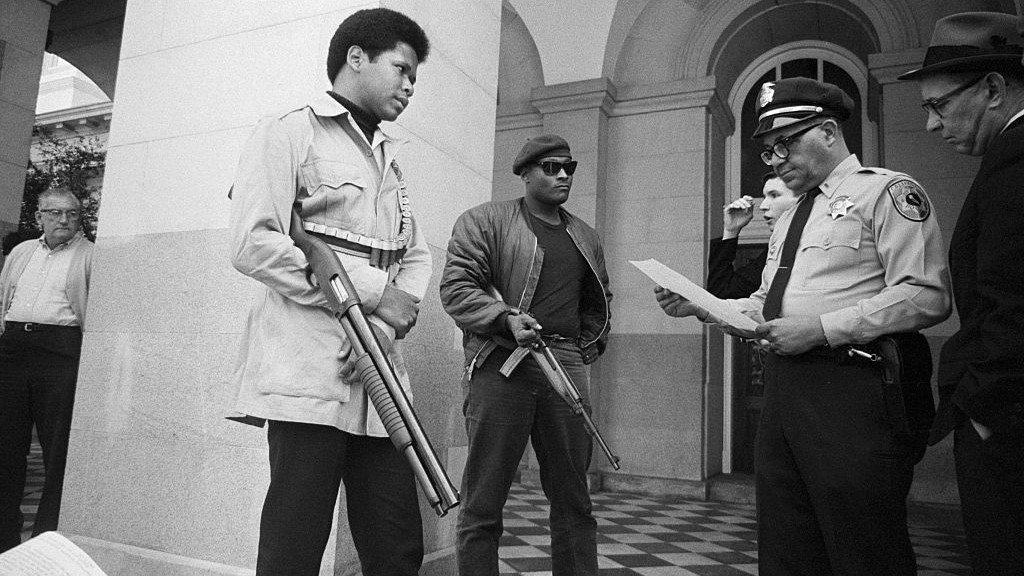
With a demand for an immediate end to police brutality in their Ten Point Program, challenging police brutality was at the heart of the Black Panther Party’s founding. Armed with law books and firearms, members patrolled Oakland neighborhoods to monitor police encounters with Black residents and challenge abuses of power. This same spirit can be felt in many corners of resistance today. From demands for greater police oversight and transparency around the killings of unarmed Black citizens by Black Lives Matter to civilians following Immigration and Customs Enforcement officers and monitoring their interactions with civilians, the Panthers laid quite the foundation.
Understanding the power in your image

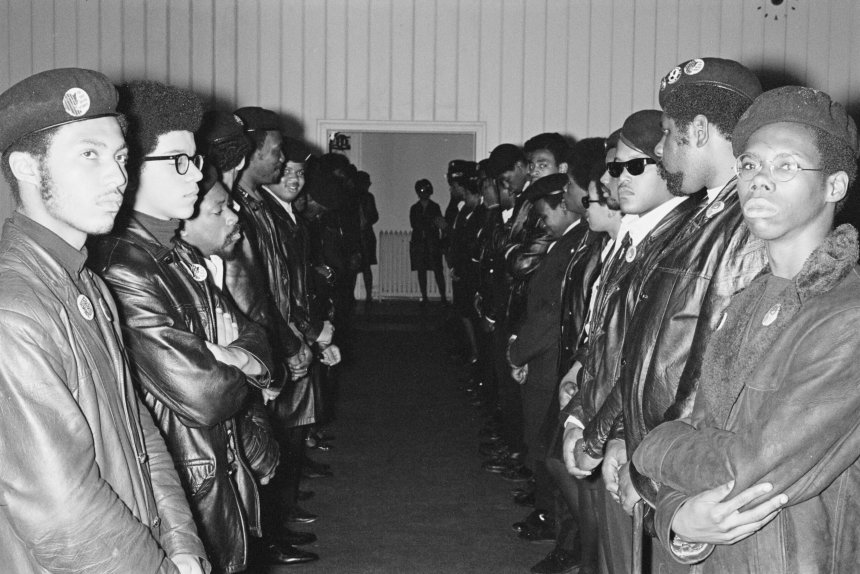
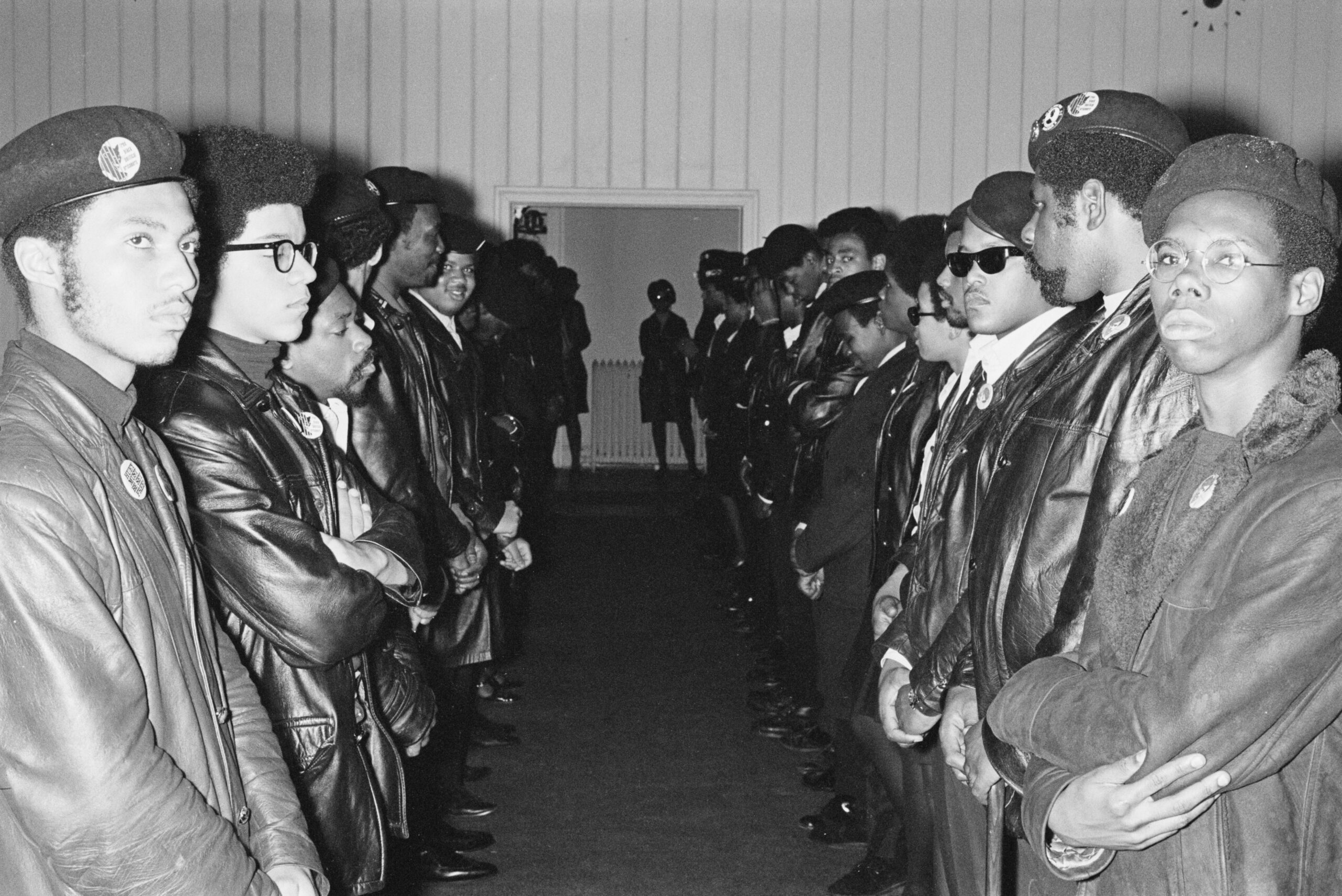
If, when you think of the Black Panthers, images of carefully coiffed afros under berets and black leather jackets over black ensembles come to mind, that’s not by accident. The Panthers, keenly aware of the power of your image, were deliberate in how they dressed and portrayed themselves, from the style that made them look uniformed while celebrating Black pride to the illustrations of artist Emory Douglas in their newspaper, The Black Panther, the organization developed a visual identity as clear as their messaging. In fact, one of the most iconic photographs to come out of the height of their organization, of Newton seated in a wicker chair with a spear and shotgun, was staged by Eldridge Cleaver.
Championing mutual aid
One of the most enduring tenets of the Black Panthers is their role in the rise of mutual aid and public assistance in this country. Rather than just take what the government gave them, the organization launched over 60 community-focused reform initiatives at their height, including: free breakfast for schoolchildren, which fed tens of thousands of schoolchildren daily across the United States; the People’s Free Food Program, which provided groceries to families in need; and clothing and housing co-ops, which included massive clothing drives and the formation of housing cooperatives to better manage tenant rights and beyond.
Spearheading community health initiatives
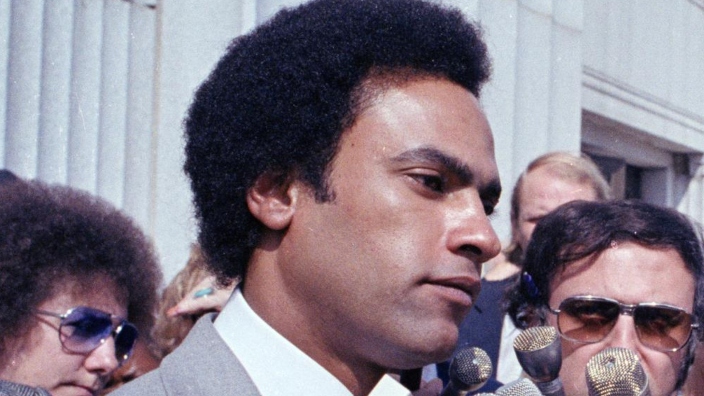
As racial discrimination continued to show up in all corners of modern life, including healthcare, the Black Panthers established the People’s Free Medical Clinics, the nation’s first network of community-run free health centers. Through the clinics, they launched: sickle cell awareness and testing initiatives, which pioneered nationwide screening for the genetic disease in popular places like barbershops; emergency and specialized medical services, which put free ambulance services in cities like Winston-Salem, North Carolina; and launched the People’s Detox program at Lincoln Hospital to treat substance abuse.
Launching Liberation Schools

Point 5 of the Panthers’ Ten Point Program explicitly spelled out a demand for education that “exposes the true nature of this decadent American Society.” To bring this goal to fruition, the organization launched the Liberation Schools, which were free community schools that offered an alternative to an educational system that perpetuated white supremacy and economic exploitation while raising Black consciousness. After the first school opened its doors in Berkeley in June 1969 as a summer and after-school program, the initiative quickly expanded across the country.
Women in leadership

From Elaine Brown becoming chairwoman of the party in 1974 to women eventually making up two-thirds of its membership, we know the names and faces of the women who helped the Black Panther Party just as much as we do the men. Members like Cleaver, Huggins, and Afeni Shakur, the mother of late rapper Tupac, became recognizable faces of the movement all in their own right. Their legacy of Black women organizing, leading, and demanding change lives on in movements like BLM, co-founded by three Black women.
Power to the people

Last, but certainly not least, would be the BPP’s way of leading with and championing, to this day, a message that is loud and clear: “All power to the people!” That rallying cry became the essence of what they were striving for in fighting for a society in which the people have systems of their own design they can rely on, from political organizing to mutual aid. The slogan was also a call to action for the community to keep showing up for one another with love, which is reflected in their strong community focus. Even today, as organizers continue to rally around pressing social issues, there is a growing call for a greater sense of community and the mutual aid that accompanies it, as many remind us that the power truly is with the people.
Share
What's Your Reaction?
 Like
0
Like
0
 Dislike
0
Dislike
0
 Love
0
Love
0
 Funny
0
Funny
0
 Angry
0
Angry
0
 Sad
0
Sad
0
 Wow
0
Wow
0