100 years of remembering, honoring and celebrating ourselves: A brief history of Black History celebrations
How Negro History Week, founded by Carter G. Woodson in 1926, evolved into today’s nationally recognized Black History Month. Black

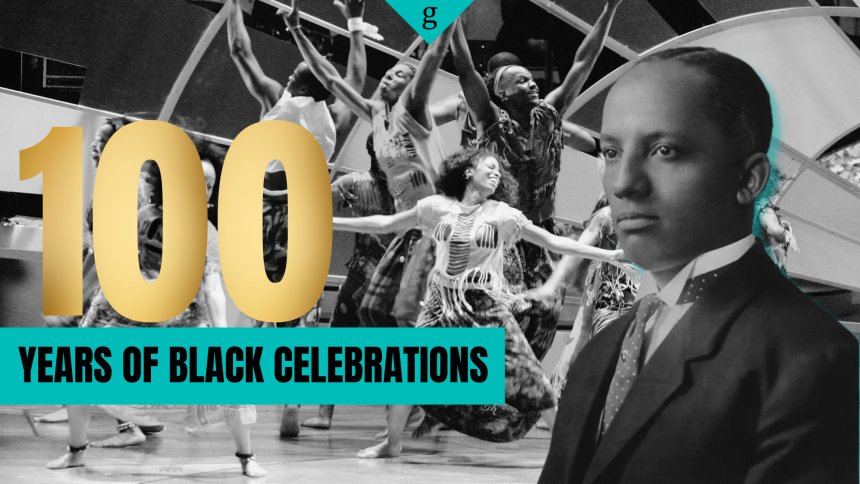
How Negro History Week, founded by Carter G. Woodson in 1926, evolved into today’s nationally recognized Black History Month.
Black history has always existed. The fight has never been about whether it happened, but whether it would be acknowledged, taught, and remembered.
This year at theGrio, our Black History Month theme is “If It Weren’t For Us,” a phrase that reads like a slogan, but reflects a truth we know all too well. It’s a reminder that so much of what defines American culture—its creativity, innovation, language, music, labor, and style—was built by Black people, despite others being rewarded for it. From cuisine to couture, activism to academia, Black brilliance has and will likely always be the blueprint.
And yet, for many of us, Black history has often been introduced in fragments. We learned the names early, Harriet Tubman, Martin Luther King Jr., Rosa Parks, usually squeezed into a February lesson plan, a poster board project, or a short school assembly before things went back to “normal.” But what we didn’t always learn was how Black History Month itself came to be, who fought for it, and why its existence still matters a century later.
So how did Black History Month begin? And why February?
The story starts with Carter G. Woodson. A pivotal figure in African American history, best known for his 1933 book “The Miseducation of the Negro,” Woodson founded the Association for the Study of Negro Life and History (ASALH) in 1915, creating an institutional home dedicated to researching, preserving, and documenting the lives and contributions of Black Americans. Over a decade later, he would go on to launch the first Negro History Week in an effort to spotlight more Black American stories.
Aligning it with the birthdays of Abraham Lincoln (Feb.12) and Frederick Douglass (Feb. 14), two figures who, at the time, Black communities already honored for their roles in the abolition of slavery, the holiday was intentionally celebrated during the second week of February. Negro History was a call to action, encouraging schools, churches, and civic organizations to reflect and teach Black history year-round, not as an aside, but as a cornerstone of American history itself. Woodson believed that Black history wasn’t supplemental. It was essential. That belief would later shape “The Miseducation of the Negro”, a book that critiqued an education system designed to disconnect Black people from their own power and legacy.
Fifty years after the launch of Negro History Weeek, in 1976, during the country’s bicentennial, President Gerald Ford expanded Negro History Week into Black History Month, urging Americans to acknowledge “the too-often neglected accomplishments of Black Americans.” Since then, U.S. presidents have issued annual proclamations supporting ASALH’s themes, a quiet acknowledgment that Woodson’s work had reshaped the national conscience.
Now, 100 years after its founding, Black History commemorations remain both a celebration and a challenge. They ask us not only to honor the past, but to interrogate the present. To recognize how much has been borrowed, remixed, and rebranded without credit. To ask who gets remembered, who gets rewarded, and who gets left out of the archive.
Because if it weren’t for us, there would be no American story as we know it. And if we don’t tell our stories with care, who will?
Share
What's Your Reaction?
 Like
0
Like
0
 Dislike
0
Dislike
0
 Love
0
Love
0
 Funny
0
Funny
0
 Angry
0
Angry
0
 Sad
0
Sad
0
 Wow
0
Wow
0










![Prediction [Billboard 200]: Miley Cyrus’ ‘Bass Persuades’ on Track to Deliver Her Lowest First-Week Sales to Date](https://thatgrapejuice.net/wp-content/uploads/2026/09/miley-cyrus-thatgrapejuice-2026-new-song.jpg)