10 Black scientists whose groundbreaking contributions deserve more recognition
From pioneering medical treatments to innovations in space exploration and climate science, these Black scientists helped change the world. Their

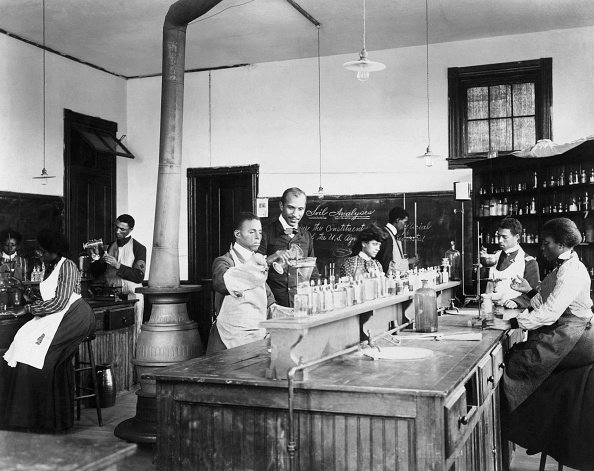

From pioneering medical treatments to innovations in space exploration and climate science, these Black scientists helped change the world. Their achievements deserve a lasting place in the history of science.
Black scientists have helped advance medicine, technology, mathematics, and our understanding of the universe. Yet their contributions have not always received the same recognition as those of their peers.
Some developed technologies we use in everyday life. Others helped scientists better understand the human body, Earth’s climate, and the far reaches of space. Their stories reveal the breadth of Black innovation and the barriers many faced while pursuing their work.
Here are 10 Black American scientists and inventors whose contributions deserve greater recognition.
1. Daniel Hale Williams
Dr. Daniel Hale Williams was a pioneering surgeon who helped advance cardiac surgery during an era when operating on the heart was considered exceptionally dangerous.
In 1893, Williams treated a man who arrived at Chicago’s Provident Hospital with a stab wound to his chest. He repaired a tear in the patient’s pericardium, the sac surrounding the heart. The patient survived and lived for another two decades.
Williams also founded Provident Hospital and Training School in 1891. The institution provided medical care to Black patients and training opportunities for Black physicians and nurses who faced discrimination at other hospitals. His work helped expand access to medical education and care during segregation.
2. Dr. Alexa Irene Canady
Dr. Alexa Irene Canady made history in 1981 when she became the first Black woman in the United States to become a neurosurgeon.
She specialized in pediatric neurosurgery, treating children with complex conditions affecting the brain and nervous system. Canady eventually became chief of neurosurgery at Children’s Hospital of Michigan in Detroit, where she built a career focused on treating young patients.
Her achievement opened doors in a medical specialty where Black women were particularly underrepresented. Beyond her surgical work, Canady became a role model for generations of aspiring physicians pursuing careers in medicine and neuroscience.
3. James Edward West
The next time you record a voice memo, use a microphone or speak through a hearing aid, you may be benefiting from technology developed in part by James Edward West.
West, an electrical engineer, co-invented the electret microphone with German scientist Gerhard Sessler while working at Bell Laboratories. The pair patented their invention in 1962.
The technology made microphones smaller, more affordable, and highly sensitive, helping them become widely used in telephones, recording equipment, hearing aids, and other consumer electronics.
West’s invention transformed sound technology, while his career also included efforts to increase opportunities for women and underrepresented minorities in science and engineering.
4. George Robert Carruthers
Physicist and inventor George Robert Carruthers helped scientists study the universe in ways that had previously been impossible.
In 1972, Apollo 16 astronauts deployed a far-ultraviolet camera and spectrograph that Carruthers designed and built. The instrument became the first astronomical observatory operated from the lunar surface.
The camera captured ultraviolet images of Earth and observations of stars, galaxies, and other celestial objects. Its findings helped researchers study Earth’s outer atmosphere and investigate astronomical phenomena using wavelengths of light that are difficult to observe from the ground.
Carruthers became the first African American scientist to have an experiment deployed on the lunar surface. His work helped expand the possibilities for space-based astronomy.
5. Warren M. Washington
Climate scientist Warren M. Washington helped develop computer models that scientists use to understand Earth’s climate.
Washington joined the National Center for Atmospheric Research in 1963 and became one of the early developers of atmospheric computer models. These simulations use physical principles to represent the interactions between Earth’s atmosphere and other parts of the climate system.
His research helped scientists investigate climate change and improve their understanding of how the planet responds to natural processes and human activity.
Washington also advised multiple U.S. presidential administrations on climate and science policy. In 2010, he received the National Medal of Science in recognition of his contributions to climate modeling and scientific leadership.
6. Euphemia Lofton Haynes
Mathematician and educator Euphemia Lofton Haynes became the first Black American woman to earn a Ph.D. in mathematics when she received her doctorate from The Catholic University of America in 1943.
Haynes dedicated much of her career to education in Washington, D.C., where she taught mathematics and advocated for better opportunities for Black students.
She also chaired the mathematics department at Miner Teachers College, now part of the University of the District of Columbia. Her work connected mathematical scholarship with efforts to challenge racial inequality in education.
At a time when both women and Black Americans faced significant barriers in higher education, Haynes established an important precedent for future generations of mathematicians and educators.
7. Percy Lavon Julian
Chemist Percy Lavon Julian made important breakthroughs in synthesizing medicinal compounds from plant-based materials, helping advance pharmaceutical research.
One of his major achievements involved developing a commercially practical method for producing cortisone-related compounds from plant sterols. Cortisone became an important treatment for inflammatory conditions. Julian also helped develop methods for producing physostigmine, a compound used to treat glaucoma.
His work helped demonstrate how chemical synthesis could make important medicines more accessible. Despite his scientific accomplishments, Julian encountered racial discrimination throughout his career, including barriers to academic positions and professional advancement.
He went on to become a prominent industrial chemist and a pioneer whose research helped shape modern pharmaceutical chemistry.
8. Herman Russell Branson
Physicist and biochemist Herman Russell Branson conducted research that contributed to scientific understanding of protein structure.
Branson worked on mathematical descriptions of the alpha helix, a spiral-shaped arrangement found in many proteins. Understanding protein structures is essential to molecular biology because a protein’s shape helps determine how it functions in living organisms.
His research formed part of the broader scientific effort to understand the structure of proteins, an achievement involving multiple researchers and competing models.
Branson also pursued academic leadership, serving as president of Central State University in Ohio and later Lincoln University in Pennsylvania. His career combined scientific research with efforts to expand educational opportunities.
9. Walter Lincoln Hawkins
Chemical engineer Walter Lincoln Hawkins helped make telephone networks more durable and affordable through his work on protective plastic coatings.
While working at Bell Laboratories, Hawkins helped develop a polymer coating that protected telephone cables from environmental damage. Earlier materials could deteriorate over time, creating maintenance problems and increasing costs.
The improved coating helped telephone cables withstand outdoor conditions, supporting more reliable communications infrastructure.
Hawkins’ work contributed to the expansion of telephone service, including in rural communities. He also advocated for greater representation of women and minorities in scientific and engineering fields.
His achievements illustrate how innovations in materials science can have a lasting effect on everyday life.
10. Alice Augusta Ball
Chemist Alice Augusta Ball developed a method that helped transform the treatment of Hansen’s disease, historically known as leprosy.
Born in Seattle in 1892, Ball became the first Black American woman to earn a master’s degree in chemistry from the College of Hawaii, now the University of Hawaii at Mānoa.
While working as a young researcher, she developed a technique to process chaulmoogra oil into compounds that could be absorbed more effectively by the body and administered by injection. At the time, chaulmoogra oil was used in attempts to treat Hansen’s disease, but its properties made effective administration difficult.
Ball’s method became an important early treatment and remained in use until more effective antibiotic therapies emerged in the 1940s.
Ball died in 1916 at just 24 years old. After her death, University of Hawaii president Arthur Dean published research on the method without initially giving her appropriate credit. The technique became known as the “Dean Method,” and Ball’s contribution was not widely recognized until later historical research helped restore her place in the story.
Her work remains a striking example of a scientist whose contributions were overshadowed despite their impact on medical treatment.
From medicine and mathematics to climate modeling and space exploration, these scientists helped push their fields forward despite the obstacles they encountered.
Recognizing their achievements provides a fuller picture of American scientific history and the innovators whose work continues to influence the world. Their stories also underscore why scientific progress should be remembered not only for the discoveries themselves, but for the people who made them possible.
Share
What's Your Reaction?
 Like
0
Like
0
 Dislike
0
Dislike
0
 Love
0
Love
0
 Funny
0
Funny
0
 Angry
0
Angry
0
 Sad
0
Sad
0
 Wow
0
Wow
0