Why we’re still not over Peggy Scott’s wedding on ‘The Gilded Age’
From the Fisk Jubilee Singers to jumping the broom, the lavish ceremony was a celebration of Black culture. In a

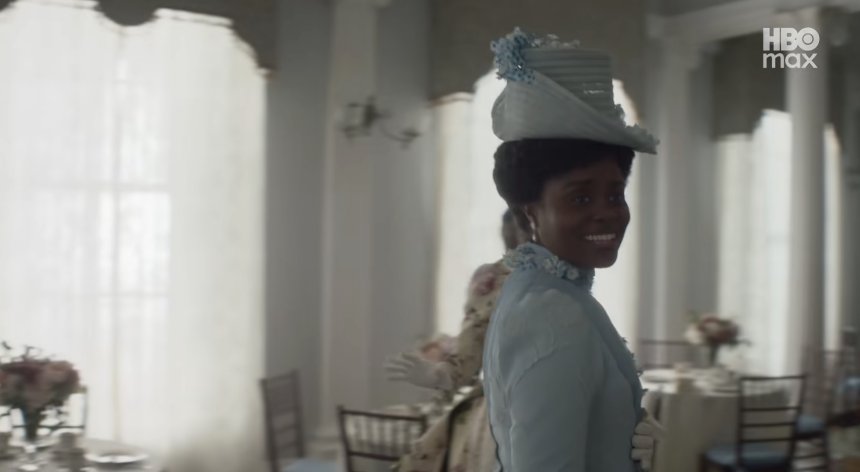

From the Fisk Jubilee Singers to jumping the broom, the lavish ceremony was a celebration of Black culture.
In a glamorous ceremony complete with magnificent floral arrangements, a singing choir, and an abundance of Black love, joy, and culture, Peggy Scott finally married Dr. William Kirkland on “The Gilded Age,” and we’re still not over it.
The highly anticipated nuptials took place during the latest episode of the hit HBO period drama on Sunday, Nov. 15, amid the growing tensions and increasingly complicated affairs of the show’s other characters.
“Being in that church, surrounded by all of that original Tiffany glass, hearing songs written by people from that time, it really felt transporting,” Denée Benton, who portrays Peggy, told TV Insider.
Set to the sounds of the Fisk Jubilee Singers led by Peggy’s cousin Ava (Adrienne Warren) and beneath the glow of historic Tiffany stained glass, in a church sanctuary that was overflowing with elegantly dressed Black guests, Peggy—dressed in an exquisite ivory lace gown with a massive ruffled skirt and sweeping train and matching veil—walked down the aisle on her father’s arm after a particularly touching moment with her mother, Dorothy (Audra McDonald). It all crescendoed when she and William (Jordan Donica) exchanged vows before jumping the broom in a breathtaking slow-motion sequence.
While Sunday has come and gone, the buzz surrounding one of the season’s biggest events is showing no signs of dying down, with social media posts celebrating the wedding and its display of Black culture (including couples sharing footage of themselves jumping the broom and viewers admitting they’ve already watched the ceremony multiple times), fashion spreads dissecting every detail, and interviews revealing what went into making it all happen. And thank goodness, because as we now know, this wedding, like just about every dream wedding, was seriously fought for behind the scenes.
There was a time when the wedding itself wasn’t going to be shown at all. The show’s creators considered simply introducing Peggy and William as an already married couple until Benton, director Salli Richardson-Whitfield, and writer and executive producer Sonja Warfield pushed for the occasion to receive the attention it deserved. In a recent interview with Variety, the actress revealed how she and Richardson-Whitfield became determined to ensure the ceremony wasn’t reduced to a quick montage.
“This needs to be the historical TV moment that it really is,” Benton said in the interview with Variety.
Set in 1886, less than a decade after Reconstruction ended and just 21 years after the abolition of slavery, the wedding also arrives at a time when generations of Black Americans were still navigating the extraordinary and often dangerous business of exercising freedoms their ancestors had been denied.
However, rather than another depiction of Black suffering during the period, audiences were treated to an elaborate celebration of two Black social elites marrying for love, surrounded by family, wealth, beauty, and traditions that acknowledged their connections to enslavement. The wedding was given its distinctly Black flair but done with no less pomp and circumstance than those of their white counterparts.
“They’re seeing something new — not something that didn’t exist, but something that hasn’t been framed,” Benton explained.
Meanwhile, Richardson-Whitfield and Warfield were just as determined to make the occasion worthy of Peggy’s journey. They expanded the ceremony from its original conception to incorporate more Black cultural traditions, including a performance by the Fisk Jubilee Singers, the historic ensemble founded in 1871 by students at Fisk University who toured the country performing spirituals to help sustain their institution.
During an appearance on the recent episode of “Parlor Talk” podcast, in conversation with host Stephanie L. Young and Da Gild fanbase founder Brittany Packnett Cunningham, Warfield explained how much the opportunity meant to the women working behind the scenes, especially when so much of Peggy’s story has involved heartbreak, including the loss of her child, the colorism and class tensions surrounding her relationship with William, and the hurdles of pursuing her career as a writer.
“These aren’t the moments that we get to see with our people, especially in this time period,” Warfield noted.
She added, “What humanizes us is the fact that we live real human lives. So there’s sadness, there’s also joy.”
That commitment to showing the fullness of Black life also extended to the deliberate choices made throughout the ceremony, from the spirituals selected with guidance from historian Erica Armstrong Dunbar to the warm lighting Richardson-Whitfield favored over the cooler tones of another wedding depicted on the series.
Richardson-Whitfield said she kept asking herself, “How can I honor the beauty of their story and us as people?”
Perhaps no choice was more meaningful, or more contentious, than having Peggy and William jump the broom, a custom practiced by some enslaved couples whose marriages were not legally recognized and one that William’s mother, Elizabeth Kirkland (Phylicia Rashad), considers an embarrassing reminder of slavery. Warfield revealed that McDonald suggested the conflict, inspired by her own mother’s reservations to incorporating the tradition into her wedding.
Though the custom had largely fallen out of favor among affluent Black families by the 1880s, making its inclusion in Peggy’s wedding historically unlikely, the decision feels like an enormous and intentional wink at modern-day Black wedding customs and the ways Black Americans have increasingly embraced traditions practiced by their enslaved ancestors, whether in their own weddings or other aspects of their lives, as a way of staying connected to their history and honoring those who came before them.
“She chooses to show us a version of what it means to carry your history with you,” Benton told TV Insider.
That sentiment is truly at the heart of why Peggy’s wedding and her increasingly expansive storyline have been so powerful and so warmly received. She represents a woman who is neither ashamed of her identity nor any part of the history that comes with it, yet remains determined to pursue a life greater than what the common imagination of her time allows. She is the embodiment of our most enduring ancestors and the characterization of a truth about being Black that is as old as time.
“Despite oppression, despite racism, despite everything, you know, our ancestors still had the audacity and just the love to marry when they were not treated as human,” Warfield said.
Share
What's Your Reaction?
 Like
0
 Dislike
0
 Love
0
 Funny
0
 Angry
0
 Sad
0
 Wow
0