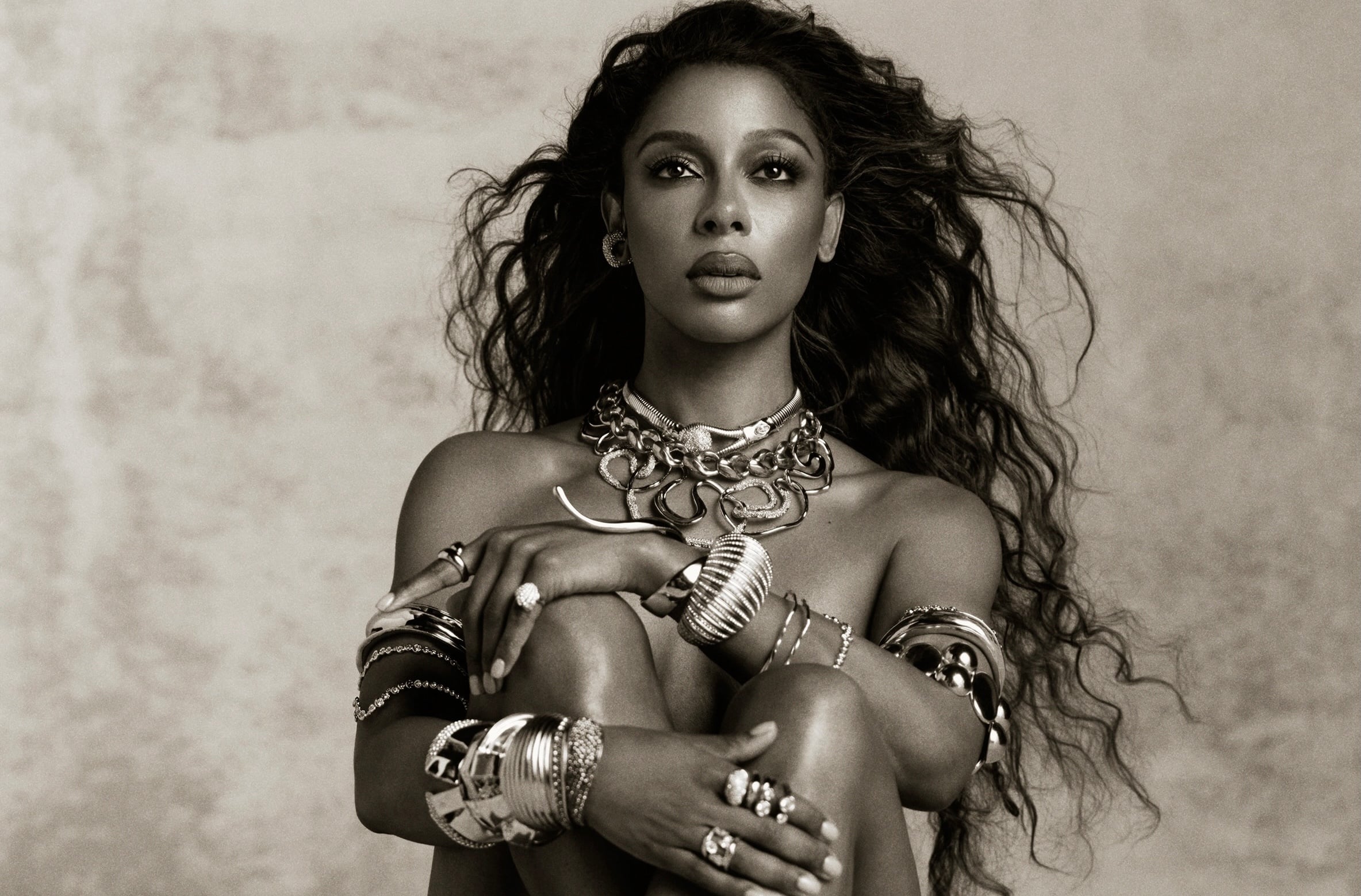
Why Hanifa’s decision to pause production is a necessary reset
Listen to this story Loading the Elevenlabs Text to Speech AudioNative Player… When Savannah James attended the Met Gala last May, she turned to Black-owned womenswear brand Hanifa designer Anifa Mvuemba for her zoot suit-inspired gown. “It was important for me to wear a young Black designer because I am all about elevating and amplifying [...]


Listen to this story
When Savannah James attended the Met Gala last May, she turned to Black-owned womenswear brand Hanifa designer Anifa Mvuemba for her zoot suit-inspired gown.
“It was important for me to wear a young Black designer because I am all about elevating and amplifying my people,” James told Vogue. “I am a No. 1 supporter of anyone who looks like me, who is just trying to be great at what they love.”
Ten months later, Mvuemba decided to cease production of her clothing brand indefinitely. The pause of production underscores the pressure Black woman–owned brands face as they scale — pressure amplified by rapid pandemic-era growth, increasingly unforgiving consumer expectations, and the speed at which online criticism can turn hostile.
In November, Hanifa held its annual “Hanifa Friday,” a major shopping event featuring archival and current-season pieces at deep discounts. Some, but not all, items were sold on presale with the expectation that they would ship before the year ended.
When delivery windows were missed, customers voiced concerns on social media. The complaints quickly intensified into a full-blown pile-on. In early March, Mvuemba announced she would be “pressing pause.”
In a statement to The Cut, she said she didn’t want to rush to prove her resilience. “I don’t want to pretend everything is fine just to keep momentum,” Mvuemba said.
“The years I’ve poured into building this. The time away from friends and family. The moments with my children I won’t get back. Is it all worth it?” she said in the statement. “I’m still sitting with the question. I’m still figuring out what this season means and where I go from here. I don’t know exactly what the future of Hanifa looks like at this very moment.”
Though Hanifa has been in business since 2012, it was Mvuemba’s spring/summer 2021 presentation—staged in May 2020 during the pandemic and featuring 3D models on Instagram Live — that pushed the brand into the mainstream. Growth came quickly after that.
She debuted her first runway show in Washington, D.C., in November 2021; introduced a bridal collection in 2023; expanded into candles, robes and handbags; and built a team of roughly 50 employees, according to LinkedIn. By January 2025, Hanifa had celebrated its 100,000th order.
Throughout all of this, the brand’s evolution has run parallel to Mvuemba’s own life.
“Everything that happens with Hanifa is in sync with everything that I’m going through,” she told Refinery29’s Unbothered shortly after the birth of her first child. “I’m a woman who moves at her own speed.”
Mvuemba welcomed her second child in January, right as backlash over the missed holiday delivery dates reached its height. On Jan. 12, she appeared on the brand’s TikTok to apologize for the delays and explain she had been on maternity leave. Instead of tempering frustrations, the video intensified them. Criticism broadened, sharpened, and spread.
TikTok captured much of the frustration. One user posted a video expressing disbelief that her Hanifa order from November still hadn’t arrived by February. She explained that she’d followed the brand for years and had finally made her first purchase, only to receive a $30 gift card as an apology. When Mvuemba mentioned in her TikTok apology video that she had recently given birth, the user responded bluntly: “Girl, I don’t give a damn.”
The sentiment resonated. One commenter added, “The owner saying she just had a baby would’ve sent me into orbit as well,” reflecting how quickly the conversation shifted from delayed shipping to personal criticism.
What started as isolated complaints about missed delivery dates had spiraled into a broader rejection of the brand, with TikTok videos serving as both customer-service vent sessions and public verdicts on Hanifa’s value.

On March 2, Hanifa announced it would cease production, sharing a video across the brand’s social channels with the caption: “Pressing Pause. Our website is still live; fulfillment will continue as normal, but we won’t be restocking at this time. Customer service remains available. We’ll be back when we’re ready.”
The announcement landed like a reset button. Rather than rushing to patch over the backlash or meet demand at any cost, the pause signaled a deliberate step back — one meant to address the internal strain and recalibrate the systems that had buckled under the brand’s rapid rise.
The reality for many small, luxury, Black fashion brands is that presale delivery delays highlight a much bigger issue in their production and manufacturing. Fragile supply chains can exacerbate limited factory access, financing issues, and even the per-unit cost for customers. British-Jamaican menswear designer Martine Rose just canceled her 2026 production “to ensure her brand’s long-term success.”
Hanifa isn’t the first Black brand to pause in order to regroup. Notably, Telfar shut down its retail website in 2020 when high demand — coupled with bots and resellers — made it almost impossible for customers to shop the new bag drops.
Telfar introduced the “Bag Security” program as a solution: For just 24 hours on a set day in August, customers could preorder any bag in any color or size, with an intended delivery date between December 2020 and January 2021. The program was offered four times, allowing the company time to get ahead of demand.
Pyer Moss similarly pulled back after its ambitious couture show in July 2021. The brand went largely quiet until its 10th anniversary, when Kerby Jean-Raymond re-emerged for what he described as a symbolic “looting” of archival pieces. The pauses differed in scale and circumstance, but both reflected a reality many Black designers face: rapid cultural visibility without the infrastructure or capital to sustain it.
Like Telfar and Pyer Moss, Hanifa built a loyal community through storytelling as much as design. Purchasing from the brand became a way for customers to participate in something larger than a product. That sense of connection can heighten both devotion and disappointment — especially in an economic climate where every purchase feels weightier.
Black fashion enthusiasts understand the weight on the shoulders of front-facing founders. As one customer wrote on X: “HANIFA has been a self funded business for 15yrs…most businesses fail after 3-5. That alone is not an easy task and a huge accomplishment, solely off of the support of her predominantly Black customers. She will go back to the drawing board, get it together and come back.”
This connection between Mvuemba and her customers is partly why the backlash felt so personal, but it’s also why a pause doesn’t read as an ending. It’s an acknowledgment of limits in an era when Black woman–led brands are rarely afforded any.
The pause is humble; Mvuemba wants to do right by the community she spent more than a decade building. She acknowledged the disappointment and the need for new systems, and the pause gives her time to take her foot off the gas, leaving room to be inspired again.
And when she’s ready, there is no doubt those who supported Mvuemba from the beginning will be there with their credit cards out, ready to spend.
The post Why Hanifa’s decision to pause production is a necessary reset appeared first on Andscape.
Share
What's Your Reaction?
 Like
0
Like
0
 Dislike
0
Dislike
0
 Love
0
Love
0
 Funny
0
Funny
0
 Angry
0
Angry
0
 Sad
0
Sad
0
 Wow
0
Wow
0