‘Who’s Your Ma Honey?’ Teri Williams, Suzan McDowell speak on finding strength in your shame
“The idea is to help people really explore this area and find the treasure within it because there truly is


“The idea is to help people really explore this area and find the treasure within it because there truly is treasure,” Teri Williams said of why she launched the “Who’s Your Ma Honey?” podcast.
Some people define success through titles, accomplishments and career milestones. But for Teri Williams, president and chief operating officer of OneUnited Bank, success is also about understanding the experiences that shaped you, even the ones you’ve spent years trying to forget.
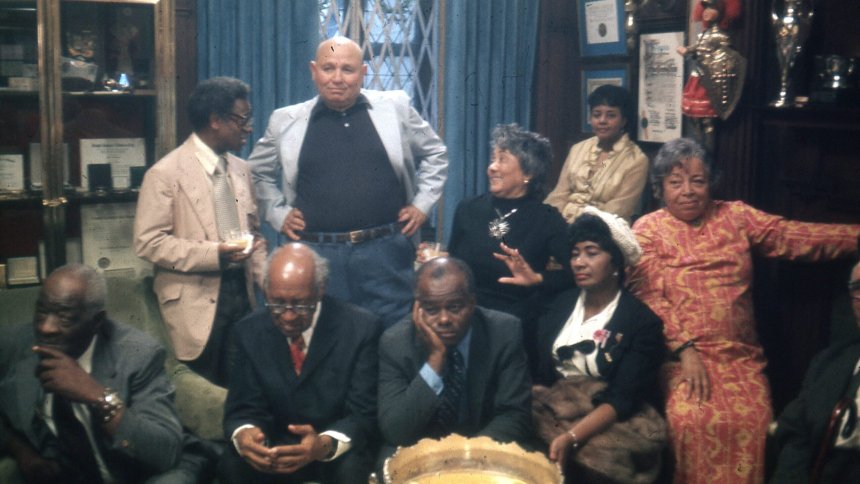
Through her podcast, “Who’s Your Ma Honey?,” Williams asks guests to examine what she calls “undeserved shame,” the experiences, family histories and parts of their identity that made them feel ashamed, even though those same experiences may have helped shape their greatest strengths. The podcast is named after Williams’ great-grandmother, Annie Coachman, affectionately known as “Ma Honey,” a businesswoman who owned multiple ventures in the segregated South and whose influence Williams said she did not fully appreciate until later in life.
Joined by Suzan McDowell, CEO and president of Circle of One Marketing, Williams discussed how confronting shame can build confidence, strengthen identity and even influence financial empowerment. Guests in the inaugural season of the podcast included award-winning journalist, author and publisher Karen Hunter; advocate and mother of Trayvon Martin, Sybrina Fulton; nationally acclaimed muralist and artist Addonis Parker; and others.
Williams and McDowell spoke with TheGrio about the personal stories behind the podcast, the lessons they’ve learned from guests and why they believe many people’s greatest strengths are often connected to the very things they once tried to hide.
For years, Williams said she did not fully understand the influence her great-grandmother had on her life. That changed after a conversation with her father that prompted her to take a closer look at her family’s history and the role Ma Honey played in it.
“The essence of her became more real to me when I talked to my dad,” Williams said. “When I said to him, ‘I think I’m Ma Honey,’ he said, ‘Of course you are.’
As her father shared more details, Williams began connecting childhood memories to the career she eventually built in economics, business and banking.
“When he told me her story, how my great-grandfather worked for Seaboard Railroad, and she used to take his money, give him an allowance and then use it to buy real estate, I realized she was sort of the backbone of the family, the mastermind,” Williams said. “When he passed, I think he was like 45, and she was 41. She had already accumulated enough wealth to support the next three generations.”
The realization ultimately became the foundation of “Who’s Your Ma Honey?” Williams said the question asks people to think differently about the experiences and identities they have spent years avoiding.
“The reason I named the podcast ‘Who’s Your Ma Honey?’ is that I do think that the stories are personal,” Williams said. “People are used to being asked, ‘Who was your mentor?’ or ‘Who inspired you?’ They’re not used to being asked, ‘What are you ashamed of?'”
Williams refers to those experiences as “undeserved shame,” things people were taught to feel ashamed of despite the role they played in shaping them.
“There are a lot of things in life that we could be ashamed of, things that we regret. We yelled at somebody. We did a friend wrong. Those are things we could be ashamed of because [those] are things we did wrong,” Williams said. “But what I’m talking about here is where someone has made you feel ashamed of something that you actually shouldn’t be ashamed of.”
According to Williams, guests often arrive believing they do not have an answer to that question. In some cases, the realization happens during the conversation itself.
“We’ve heard from guests that it has changed their relationships,” Williams said. “In Karen’s case, it changed her relationship with her mom since the podcast. She’s another example. When I talked to her, she was like, ‘I don’t have any shame, so I don’t know if I’m a good guest for you.’ But when she thought about it, she realized that she did.”
McDowell said she experienced a similar moment while reflecting on her identity as both Jamaican and American.
“I really wanted to lean into this Jamaican thing because it’s been a thorn in my side for years, being embarrassed to be so American and to talk like this when you’re really Jamaican,” McDowell said. “Then Americans are like, ‘Ew,’ to Jamaicans. I really understand both sides. I can be both people.”
As the conversation unfolded, McDowell said she began to understand how those experiences contributed to her professional success.
“I realized I could match it up exactly to why I’m successful at this thing that I’ve been fighting with for all these years,” she said. “That’s exactly why I can talk to somebody like Teri. Teri and I understand each other because I’m American and I’m Jamaican.”
For Williams, those discoveries are often tied to confidence, opportunity and even financial empowerment.
“The direct one is that a lot of Americans, not just Black Americans, are ashamed of not being financially literate,” Williams said. “They’re ashamed that they don’t know how to manage money, and therefore, they don’t ask questions. They don’t admit that they don’t know how to manage money. They don’t seek help.”
Williams believes confronting those experiences can help people recognize strengths they may have overlooked for years.
“So it’s sort of like, those are the two ways that I think it impacts financial literacy and us getting over the shame of that,” Williams said. “But also, it emboldens us. It builds our confidence. It makes us recognize that we weren’t born yesterday. We were standing on the shoulders, and the experiences, of those who came before us.”
For those who already know what their own Ma Honey may be but are hesitant to confront it, Williams encourages patience.
“I understand if people aren’t ready,” Williams said. “The idea is to help people really explore this area and find the treasure within it because there truly is treasure. There’s more treasure than shame. Way more.”
Share
What's Your Reaction?
 Like
0
Like
0
 Dislike
0
Dislike
0
 Love
0
Love
0
 Funny
0
Funny
0
 Angry
0
Angry
0
 Sad
0
Sad
0
 Wow
0
Wow
0