Who was Barbara Rose Johns, the Black teen activist whose statue is replacing Gen. Robert E. Lee’s in the U.S. Capitol?
The U.S. Capitol unveils statue of civil rights pioneer Barbara Rose Johns, who protested her Virginia high school’s poor conditions

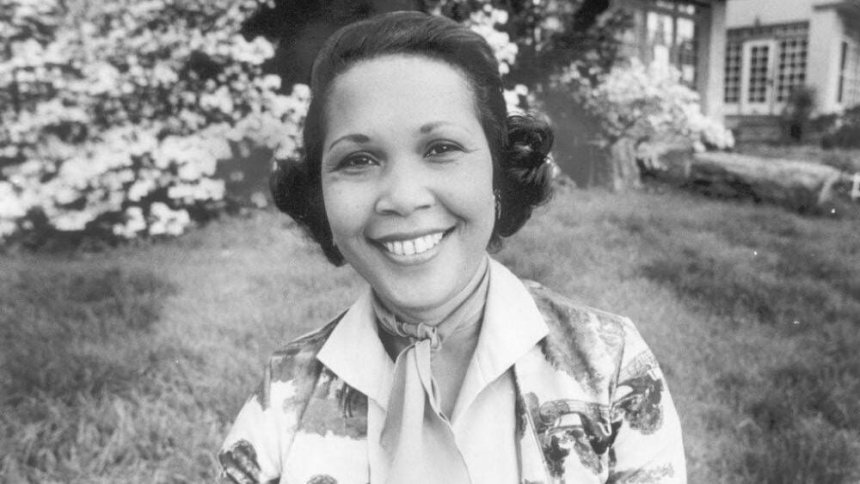
The U.S. Capitol unveils statue of civil rights pioneer Barbara Rose Johns, who protested her Virginia high school’s poor conditions in 1951.
The landmark Supreme Court case “Brown v. Board of Education,” in 1954, declared that racial segregation in public schools was unconstitutional — a watershed moment in the fight for educational equality in the United States. But that historic victory was built on the courage and determination of countless people whose names are far less widely known. The story of one of them will now be permanently honored in the U.S. Capitol.
On Tuesday, Dec. 16, the Capitol will unveil a statue of a teenaged Barbara Rose Johns, a civil rights pioneer representing Virginia, replacing the statue of Confederate Gen. Robert E. Lee that was removed five years ago. Johns was just 16 years old in 1951 when she led a student walkout to protest the deplorable conditions at her segregated high school in Farmville, Virginia. John’s statue is part of the National Statuary Hall Collection, in which each state is allowed to have two statues representing individuals from that state. A statue of George Washington is the other representing the state of Virginia.
The sculpture — a bronze bust depicting Johns as a teenager — was created by Maryland-based sculptor Steven Weitzman. After its unveiling Tuesday afternoon, it will greet visitors in the Capitol’s Emancipation Hall, a space named in honor of the enslaved workers who helped build the Capitol itself.
“I’m thrilled that millions of visitors to the U.S. Capitol, including many young people, will now walk by her statue and learn about her story,” Democratic Sen. Tim Kaine of Virginia told ABC News. “May she continue to inspire generations to stand up for equality and justice.”
Johns was a student at the all-Black Robert Russa Moton High School in Farmville, Virginia, where overcrowded classrooms, inadequate facilities, and crumbling infrastructure stood in stark contrast to the well-resourced schools attended by white students nearby, per Virginia’s Office of the Attorney General. Frustrated by the disparities, she organized a walkout of more than 400 students, demanding better conditions.
The Virginia NAACP took up their complaints, and the ensuing legal challenge eventually became a crucial part of “Brown v. Board of Education,” which was argued in the halls where her statue now stands.
Johns paid a personal price for her early act of courage. Family members have said the attention and pressure that followed the 1951 walkout forced her to grow up quickly, shaping her into someone reserved, unyielding, and fearless.
“She always acted as if she wasn’t afraid of anything,” her sister later recalled in an interview with The Washington Post.
Johns, who was originally born in New York to parents Violet and Robert before the family relocated to Virginia, went on to attend Spelman College in Atlanta and Drexel University before marrying the Rev. William Powell Jr. She later settled in Philadelphia, where she raised five children and spent years working as a school librarian, according to the National Women’s History Museum. Johns died in 1991 at the age of 56 from bone cancer.
Her legacy lives on in schools across Virginia and throughout the country, but the unveiling of her statue comes at a moment of renewed tension around civil rights and education. The Trump administration has increasingly argued that legislation addressing racial disparities is unconstitutional, part of a broader effort to roll back diversity, equity, and inclusion initiatives — including in schools and curricula — prompting concern among civil rights advocates.
Still, many see Johns’ arrival in the Capitol as a powerful symbol of resilience, hope, and progress.
“The notion of one of the founders of our country being paired with one of the saviors of the soul of our country — I think it’s a really, really powerful juxtaposition,” Cainan Townsend, who runs the Robert Russa Moton Museum at the former Farmville high school where Johns led her protest, told The Washington Post. Townsend noted that his own father was locked out of the school system after the Supreme Court’s ruling, when white leaders chose to shut down public schools rather than comply with desegregation.
For Virginia state Sen. L. Louise Lucas (D-Portsmouth), the moment is deeply personal. As a Black girl growing up during the era of Massive Resistance — the organized refusal by white officials to enforce Brown — Lucas said she learned about Johns through relatives.
“You have no idea the pride I feel,” Lucas said, reflecting on seeing Johns’ statue take its place in the U.S. Capitol.
Share
What's Your Reaction?
 Like
0
Like
0
 Dislike
0
Dislike
0
 Love
0
Love
0
 Funny
0
Funny
0
 Angry
0
Angry
0
 Sad
0
Sad
0
 Wow
0
Wow
0