What We Know About Cuba’s Power Grid Collapsing
Source: ADALBERTO ROQUE / Getty – People gather at the Malecon waterfront during a blackout in Havana on March 16, 2026. Cuba was plunged into a nationwide blackout on March 16, affecting the island’s roughly 11 million residents, as the country’s worsening energy and economic crises continue to strain an already fragile power grid. Cuba’s [...]


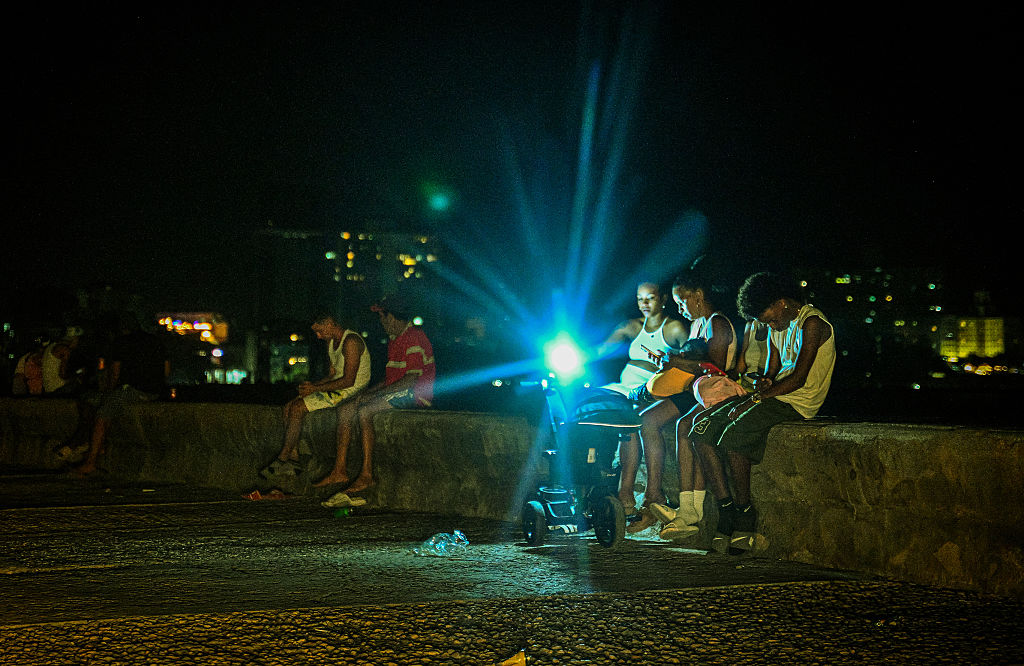
Cuba was plunged into a nationwide blackout on March 16, affecting the island’s roughly 11 million residents, as the country’s worsening energy and economic crises continue to strain an already fragile power grid.
Cuba’s power went out on Monday, residents were warned to “take precautions.”
On Monday, the U.S. Embassy in Havana, Cuba, reported that the national electrical grid collapsed at 1:54 p.m. local time, “resulting in a total power outage” across Cuba and the Havana metro areas. Officials cautioned that there was no clear timeline for when electricity would return, describing the system as “increasingly unstable,” with “prolonged scheduled and unscheduled power outages” now a daily reality across the country, including the capital.
The embassy also urged residents to “take precautions by conserving fuel, water, food, and mobile phone charge,” and to “be prepared for significant disruption.”
According to NPR, Cuba’s Ministry of Energy and Mines said in a post on X that officials were investigating the outage, noting there were no apparent failures in the units operating at the time the grid went down. Lázaro Guerra, the ministry’s electricity director, later told state media that crews were working to bring several thermoelectric plants back online, an essential step toward restoring power.
“It must be done gradually to avoid setbacks,” he said. “Because systems, when very weak, are more susceptible to failure.”
The blackout marked the third major outage in Cuba in just four months.
For many residents, the repeated disruptions have become unbearable. Tomás David Velázquez Felipe, a 61-year-old Havana resident, said the constant power outages are pushing people to consider leaving the country altogether.
“What little we have to eat spoils,” he told NPR. “Our people are too old to keep suffering.”
Electricity has been restored to about 31% for some residents.
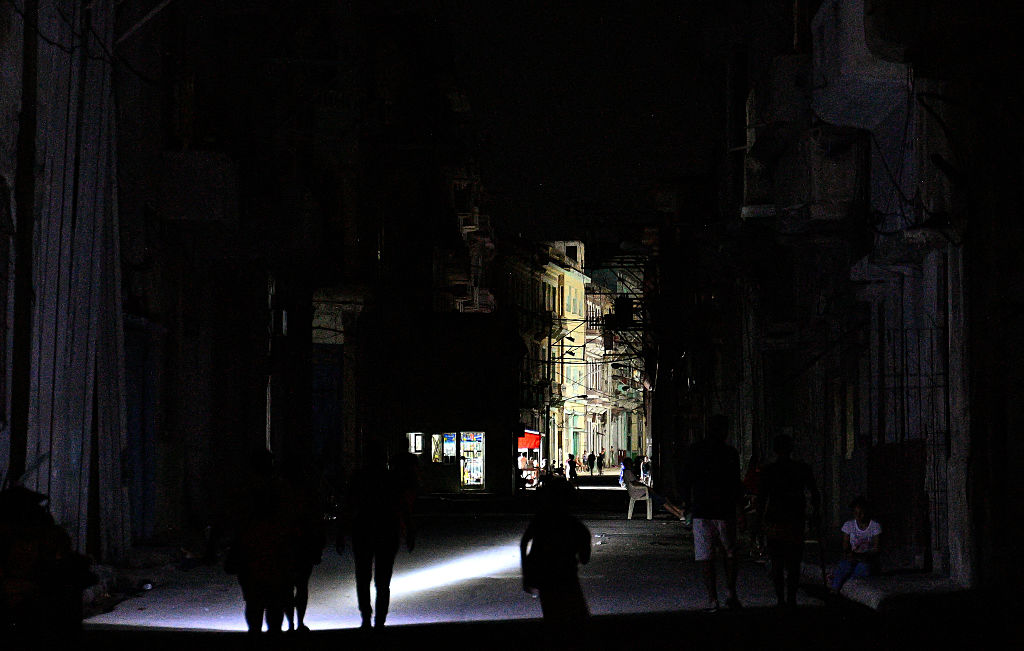
By Monday night, state-run media reported that electricity had been restored to about 5% of Havana, roughly 42,000 customers, as well as to several hospitals nationwide. On Tuesday morning, officials gave another update, stating that 31% of Havana’s power had been restored, NBC News noted.
Authorities said the communications sector would be prioritized next, while warning that the limited circuits restored so far could fail again.
Cuba’s aging electrical infrastructure has deteriorated significantly in recent years, leading to more frequent daily outages and widespread blackouts. The country relies heavily on oil to generate electricity, but securing fuel has become increasingly difficult.
Challenges have intensified following a U.S. energy blockade tied to an executive order issued by President Donald Trump in January, which warned of tariffs on countries supplying oil to Cuba. The administration said the move was intended to protect “U.S. national security and foreign policy from the Cuban regime’s malign actions and policies.”
Cuba’s president said negotiations were underway with the U.S., but Trump recently said it would be “an honor” to take Cuba.
During a March 13 press conference, Cuba’s president said the country is operating on about 40% of the fuel it needs, forcing greater reliance on renewable energy sources, though those reserves are also diminishing as fuel supplies dwindle. He added that Cuban officials are in talks with U.S. representatives to identify “bilateral issues that require solutions,” with hopes of taking “concrete actions for the benefit of the people of both countries.”
However, the Trump administration has described the relationship differently. According to CNN, Trump has called on Cuba to release political prisoners and pursue political and economic reforms in exchange for easing sanctions. He also floated the idea of “taking” Cuba during a March 16 press conference at the White House, calling it “an honor.”
When a reporter asked the president to clarify what he meant by “taking,” Cuba, Trump explained, “Taking Cuba in some form, yeah, taking Cuba — I mean, whether I free it, take it, I think I can do anything I want with it, [if] you want to know the truth. They’re a very weakened nation right now….very violent leaders.”
If the outage continues, conditions on the island could worsen significantly. The blackout has already disrupted daily life, leaving roads largely empty and residents scrambling to preserve food and secure basic necessities. NBC News reported that some women have been forced to give birth in darkened hospitals without electricity, while many Cubans say they are accustomed to having power for only two to five hours a day.
“Beyond the physical exhaustion, it’s the psychological exhaustion that weighs down on us,” said Havana resident Erisander Sánchez, 33. “It’s the uncertainty of not knowing when we will have power … you can’t plan anything.”
SEE MORE:
Share
What's Your Reaction?
 Like
0
Like
0
 Dislike
0
Dislike
0
 Love
0
Love
0
 Funny
0
Funny
0
 Angry
0
Angry
0
 Sad
0
Sad
0
 Wow
0
Wow
0