
What happens when the US stops counting race & ethnicity? Advocates warn against Trump’s Census proposal
The Trump administration’s proposed “color blind” US Census sparks concerns about representation and the future of Black communities. Throughout his

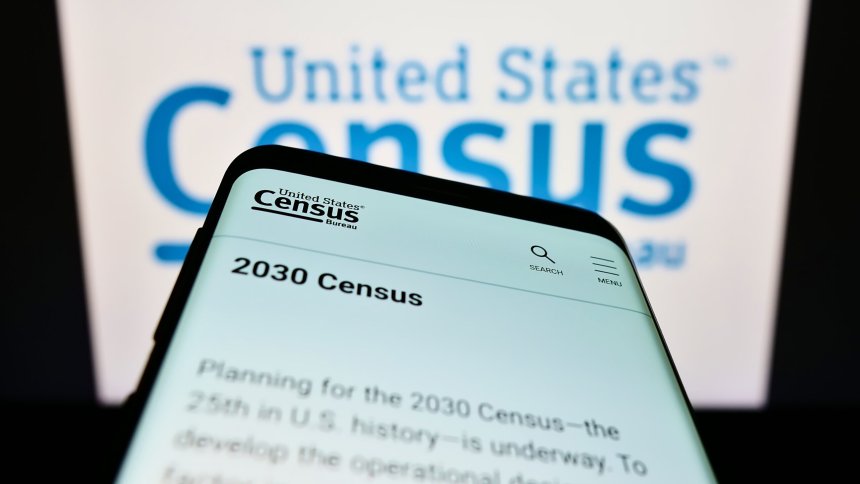

The Trump administration’s proposed “color blind” US Census sparks concerns about representation and the future of Black communities.
Throughout his second term, the Trump administration has made a number of changes across various levels of government, and recently proposed a plan that would make major changes to the 2030 U.S. Census. Recently, the Trump administration proposed a dramatic overhaul of the report that would remove key racial and ethnic data and filter immigrant data based on citizenship status.
“Illegal aliens (among others) should not be included in the apportionment count, as they are not true inhabitants, members of the body politic, or persons with a ‘usual residence’ in the United States due to their lack of a sufficient tie and allegiance to the United States,” the Administration argued in the document, as reported by Time Magazine. “[The census] should be colorblind and should not be distorted in any way by questions about immaterial personal characteristics.”
Having given the public 30 days to comment on the proposed changes, advocates across various communities are pushing back.
“By removing the race count, we’re creating what people claim is a colorblind or race-blind survey,” Josue Perea, the executive director of the Afro Latino Forum, a nonprofit that centers Blackness in conversations about Latinidad, told theGrio. “But what in [the] global census movement is known as statistical genocide. We’re going to erase a population, so you don’t know that those people exist.”
“They have used race to define and limit opportunities for people of color and for Black folks,” Alexsis Rodgers, the managing director of strategy and impact of the Black Futures Lab, noted. “But we have also used race to determine for ourselves how we want to be seen and how we want our communities to be recognized. And so, the Trump administration’s decision to change the way the census works, right, removes the tool that we’ve had to be able to say here are the unique needs and things that are happening within the Black community.”
The recent proposal is not the first time an administration has made changes to the once-a-decade census. In 2024, the Afro Latino Forum and Afro Latino Coalition launched the “Latino is Not a Race” campaign. Perea noted how proposals to combine the race and ethnicity questions are what launched the start of the Afro Latino Forum, and now, years later, they are continuing to advocate against these changes.
“There are some countries that are claiming that they’re moving beyond race, proposing race blindness or color blindness,” he said, referencing European countries like France and Germany, which don’t gather racial data. “But really, what they’re doing is they’re hiding the injustice that racialized groups suffer.”
For Rodgers, the changes in the recent proposal are “a tool that will actually remove power from our communities,” as decision-makers turn to census data to decide which policies will be introduced in local communities, etc.
“The United States Census is a tool of the government to understand our communities. It’s used to determine who gets funding, what gets funded, and frankly, what the priorities are for our communities,” she explained. “At its root, these changes are meant to strip communities of color from the power that we’ve been building over time.”
The removal of these metrics from things like the census then leaves the responsibility to independent researchers, like Black Future Labs’ Black Census Project, to try to identify these statistics. However, as Perea notes, “none of those places will ever have enough power to get an entire count of a population, even in a smaller country, and definitely not in a large country like the United States.” Thus creating what experts call a statistical genocide.
“The idea of statistical genocide is if I don’t count the population, then the population doesn’t have a legal claim to its mistreatment,” the AfroLatino Forum executive director explained. “Worst case scenario, we’re living in a place where no longer do our lives really matter. … And now statistically they don’t matter.”
Reflecting on how these changes would erase hundreds of communities from the census, Rodgers added, “I think about even in the criminal justice reform space how a lot of government entities have stopped reporting on violence within Black communities. They stop putting the data online as many agencies had in the past. … And now they’re saying, ‘Oh, there’s no violence.’ Well, how do we know what’s going on in our communities if they’re no longer required to report to the level of detail and granularity that we’ve seen in the past?”
Both Rodgers and Perea agree that these potential changes should concern everyone. Urging communities to call their local representatives and express their opposition, they each note that one of the most powerful things people can do is vote in the upcoming midterm elections, which could flip the House majority.
“We just need to have it on record, have it on the record that these people are in opposition, that all of these people are in opposition,” Perea noted.
“All Black people should be concerned about it. All people should be concerned about it, because what’s happening to one of us is happening to all of us,” Rodgers shared. “The number one thing that you can do is speak out, and there are a lot of ways to speak out. We don’t have to limit our advocacy to the official government spaces. Talking to your friends at dinner, talking about how you feel about the changes that are happening in your community, really makes a difference, because a lot of times these changes can go under the radar if we’re not talking about it within our friend circles and our networks.”
Share
What's Your Reaction?
 Like
0
Like
0
 Dislike
0
Dislike
0
 Love
0
Love
0
 Funny
0
Funny
0
 Angry
0
Angry
0
 Sad
0
Sad
0
 Wow
0
Wow
0




![Behind the Scenes: Tinashe’s ‘Crash Out,’ ‘Melatonin,’ & ‘Too Easy’ Music Videos [Watch]](https://thatgrapejuice.net/wp-content/uploads/2026/09/tinashe-behind-scenes-melatonin-2026-crash-out-too-easy-videos.jpg)