The funding boom for Black-led nonprofits after George Floyd’s murder didn’t last
New data from Candid and ABFE shows that most racial justice investments faded quickly and favored larger organizations. On May

New data from Candid and ABFE shows that most racial justice investments faded quickly and favored larger organizations.
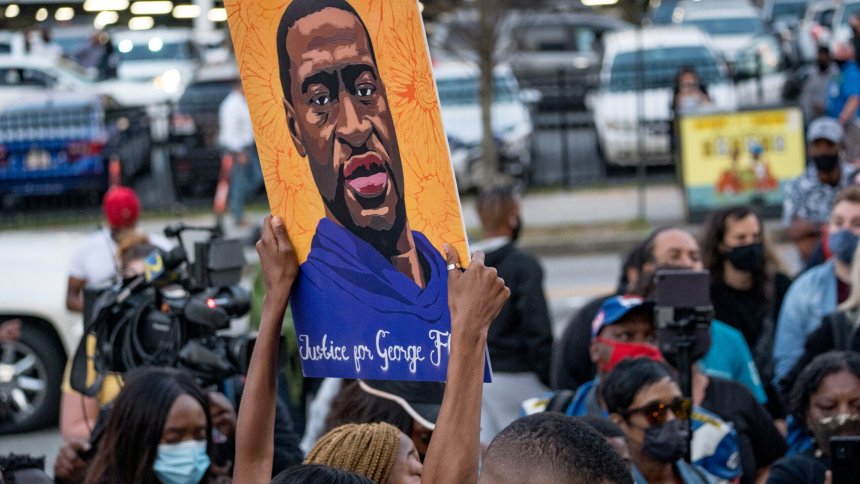
On May 25, 2020, George Floyd was murdered by a Minneapolis police officer, sparking a global racial reckoning at a time when much of the world was already grappling with the realities of the COVID-19 pandemic.
His death, arriving after dozens upon dozens of high-profile killings of unarmed Black Americans and on the tragic heels of two earlier that same year — both Breonna Taylor and Ahmaud Arbery — became a watershed moment that prompted a record number of corporations, media institutions, philanthropies, universities and beyond to make sweeping promises to address racial inequities.
So much money was pledged that summer. The Fifteen Percent Pledge launched, successfully pushing major retailers to dedicate 15% of their shelf space to Black-owned brands. Corporate diversity funds were announced. Diversity, equity and inclusion became both buzzwords and a booming career track. New grantmaking initiatives aimed at closing racial wealth gaps were rolled out. For a moment, it felt like long-overdue financial investment into Black communities and Black-led organizations was finally arriving.
But by 2023, questions about what had actually come from those lofty commitments were beginning to bubble up. By the following year, those concerns had only grown louder. In 2025, President Donald Trump’s dismantling of federal DEI initiatives accelerated a broader and bewildering corporate pullback. Now, new data suggests many of those early fears were justified.
A new report from Candid and ABFE, a philanthropic partnership focused on Black communities, entitled “From Transaction to Transformation: Three Ways Foundations Can Invest In Black-Led Nonprofits for Lasting Change,” released Tuesday (Apr. 7), found that the much-publicized funding boost to Black-led nonprofits after 2020 was both narrow and extremely short-lived.
“Black-led nonprofit leaders are being asked to meet rising community needs while navigating an increasingly hostile environment toward race-explicit work, often without the flexible, sustained funding needed to build staff, strengthen infrastructure, or plan for the long term,” Susan Taylor Batten, President and Chief Executive Officer of ABFE, said in a release. “This cycle of short-lived transactional investments keeps organizations doing the crucial work in communities in constant survival mode rather than scaling the solutions our communities need. At ABFE, we see this as a call to action to mobilize Black philanthropic resources and ensure investment in Black-led nonprofits is recognized as essential to equity and justice for all.”
According to the data, most of the increased funding went to a small group of larger Black-led organizations and lasted less than two years between 2020 and 2022, while smaller Black-led nonprofits saw little to no meaningful increase. In other words, the racial justice funding boom that many hoped would finally begin to reshape the landscape largely just reinforced who philanthropy was already comfortable funding.
“The importance of monetary investment—or financial support—for nonprofits cannot be overstated,” the authors of the report wrote. “Most nonprofits run on shoestring budgets; without ongoing grants to support nonprofits’ projects, programs, and missions, their ability to serve communities is immediately put at risk.”
The report also found Black-led nonprofits continue to face steeper barriers to foundation funding overall and often receive smaller grants when they do secure support. Many organizations reported that the influx of donations in 2020 came in the form of one-time contributions rather than sustained investments, making it difficult to build staffing, infrastructure or long-term programming.
Researchers analyzed foundation grantmaking data from 2016 through 2023, pairing it with a survey of more than 3,500 nonprofits and with interviews with nonprofit leaders and funders, to better understand how those funding decisions played out beyond the headlines.
Those realities are also colliding with a political environment that has made it more difficult to sustain race-focused funding. As companies and institutions retreat from DEI commitments amid legal challenges and political backlash, some funders have grown more hesitant to explicitly support Black-led causes, even as the needs those organizations serve remain unchanged. That shift has left many nonprofits navigating growing demand for services while also operating in a landscape that has become increasingly cautious about how racial equity work is framed and funded.
“While foundations navigate legal risks around language use and funding priorities, Black-led nonprofits face existential threats to their identities and missions. The question is not whether to continue supporting nonprofits that work with Black communities—but how to do so effectively and sustainably,” the authors wrote.
The report’s authors hope the findings push philanthropy to move beyond moment-driven giving and toward sustained investment in Black-led work. They argue that real change will require multi-year general operating support, stronger relationships between funders and Black nonprofit leaders, and a willingness to fund smaller, community-rooted organizations rather than defaulting to the largest and most visible groups. Without those changes, they warn, the same funding gaps are likely to repeat themselves the next time the country is forced into another racial reckoning.
“The bridges we build today will determine the path laid out for the next generation of Black leaders and communities,” the authors said. “They can either face the same barriers documented in this report, or they can inherit a philanthropic sector that more authentically and consistently values their contributions. This report is an invitation—to foundations interested in supporting Black communities and Black-led nonprofits committed to their missions—to build lasting bridges together.”
Share
What's Your Reaction?
 Like
0
Like
0
 Dislike
0
Dislike
0
 Love
0
Love
0
 Funny
0
Funny
0
 Angry
0
Angry
0
 Sad
0
Sad
0
 Wow
0
Wow
0