The discourse around whether or not ‘Wuthering Heights’ is whitewashing Heathcliff, explained
“Wuthering Heights” hit theaters just in time for Valentine’s Day, but some can’t help but wonder if the film is

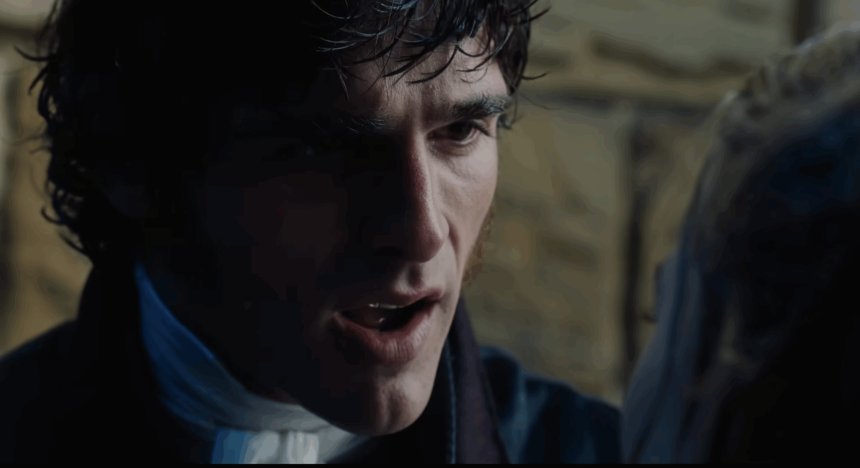
“Wuthering Heights” hit theaters just in time for Valentine’s Day, but some can’t help but wonder if the film is whitewashing Heathcliff.
“Wuthering Heights” has arrived in theaters just in time for Valentine’s Day, offering something a little darker for the real literary lovers among us. But alongside the excitement surrounding the highly anticipated new adaptation, a serious question has emerged: Did this version just whitewash Heathcliff?
The latest take on the classic novel stars Margot Robbie as Catherine Earnshaw and Jacob Elordi as Heathcliff, under the direction of Emerald Fennell. The film adapts “Wuthering Heights” by Emily Brontë, first published in 1847.
Since the casting was announced, some readers have pointed out that Heathcliff’s ethnicity in Brontë’s novel, often viewed as potentially Black and of color, is anything but straightforward. In this film, Heathcliff is played by Elordi, a white Australian actor who some people in some parts of the world might describe as “tall, dark, and handsome.” But “dark” in the novel carries a far more literal meaning.
So what is going on exactly? Did Hollywood really release a 2026 adaptation that ignores the racial ambiguity embedded in one of literature’s most tortured romantic leads? To answer that, it helps to return to the text.
How is Heathcliff described in the book?
Heathcliff is brought to Wuthering Heights as a young boy by Mr. Earnshaw and raised alongside Catherine. From the start, he is marked as an outsider. He is repeatedly described as “dark,” called a “lascar,” a term historically used for South Asian sailors on British ships, and referred to as a “gipsy.” Characters speculate about his origins, suggesting he could be part Indian, or from somewhere far beyond Yorkshire. His racial background is left ambiguous, but the language used to describe him signals that he is not simply coded as white and Anglo-Saxon.
At one point, Heathcliff himself compares his appearance to that of Edgar Linton, Catherine’s eventual husband, reflecting that he wishes he had Edgar’s “light hair” and “light skin.” The contrast is explicit. His exclusion, degradation, and social marginalization throughout the novel are closely tied to how he looks and how others perceive him.
Is he always portrayed as white on screen?
With the exception of a few depictions, Heathcliff is constantly, despite what the text says, imagined as white with the racial elements of the dynamic often ignored entirely. However, in the 2011 film adaptation by Andrea Arnold, Heathcliff was played by Black actor James Howson.
What do scholars say?
Many literary scholars argue that while Brontë never definitively names Heathcliff’s race, the text strongly suggests he was written as racially other. Most agree, his experience in the novel is not that of a white gentleman. Even the Brontë Personage Museum has acknowledged that his background, while open to interpretation, is most likely rooted in Victorian anxieties around empire, race, and class. The Atlantic Slave Trade was alive and well in 1847. In fact, the Brontë museum has an entire page dedicated to potential Black influences of Brontë at the time, bringing the story into further context.
There’s also another famous, tragic male figure of literature who is infamously described as a “Moor” and similarly ambiguous as Heathcliff: William Shakespeare’s Othello — and we typically see him brought to life by Black actors.
What has the filmmaker said?
Fennell has addressed the controversy, explaining that her adaptation reflects her personal reading of the novel.
“I think the thing is everyone who loves this book has such a personal connection to it, and so you can only ever make the movie that you sort of imagined yourself when you read it,” she told The Hollywood Reporter ahead of the film’s release.
She added that part of adapting a beloved classic is understanding that audiences bring their own interpretations with them.
“The great thing about this movie is that it could be made every year and it would still be so moving and so interesting,” she said. “There are so many different takes. I think every year we should have a new one.”
Why does this matter?
Heathcliff may be fictional, but the social forces shaping his story are not. His alienation, rage, and outsider status are deeply connected to how he is perceived racially and socially. Catherine ultimately marries Edgar Linton, the fair-haired, fair-skinned embodiment of social respectability. Heathcliff’s exclusion is not just about money or manners. It is about who is allowed to belong.
If, as Fennell suggests, she created the Heathcliff she personally imagined when reading the novel, then that begs a serious question. When a character described as dark-skinned, racially ambiguous, and explicitly contrasted with a light-skinned rival is imagined as a conventionally white romantic lead, what does that say about the limits of certain imaginations?
Perhaps something louder than intended.
Share
What's Your Reaction?
 Like
0
Like
0
 Dislike
0
Dislike
0
 Love
0
Love
0
 Funny
0
Funny
0
 Angry
0
Angry
0
 Sad
0
Sad
0
 Wow
0
Wow
0