The Beginner’s Guide To F1
Courtesy of McLaren By Okla Jones ·Updated December 15, 2025 < /> Getting your Trinity Audio player ready… Formula 1 can feel overwhelming if you’re new. The cars are loud, and longtime fans toss around terms like DRS, undercut, and “track limits” as if every race begins with a breakdown of all the rules. But [...]


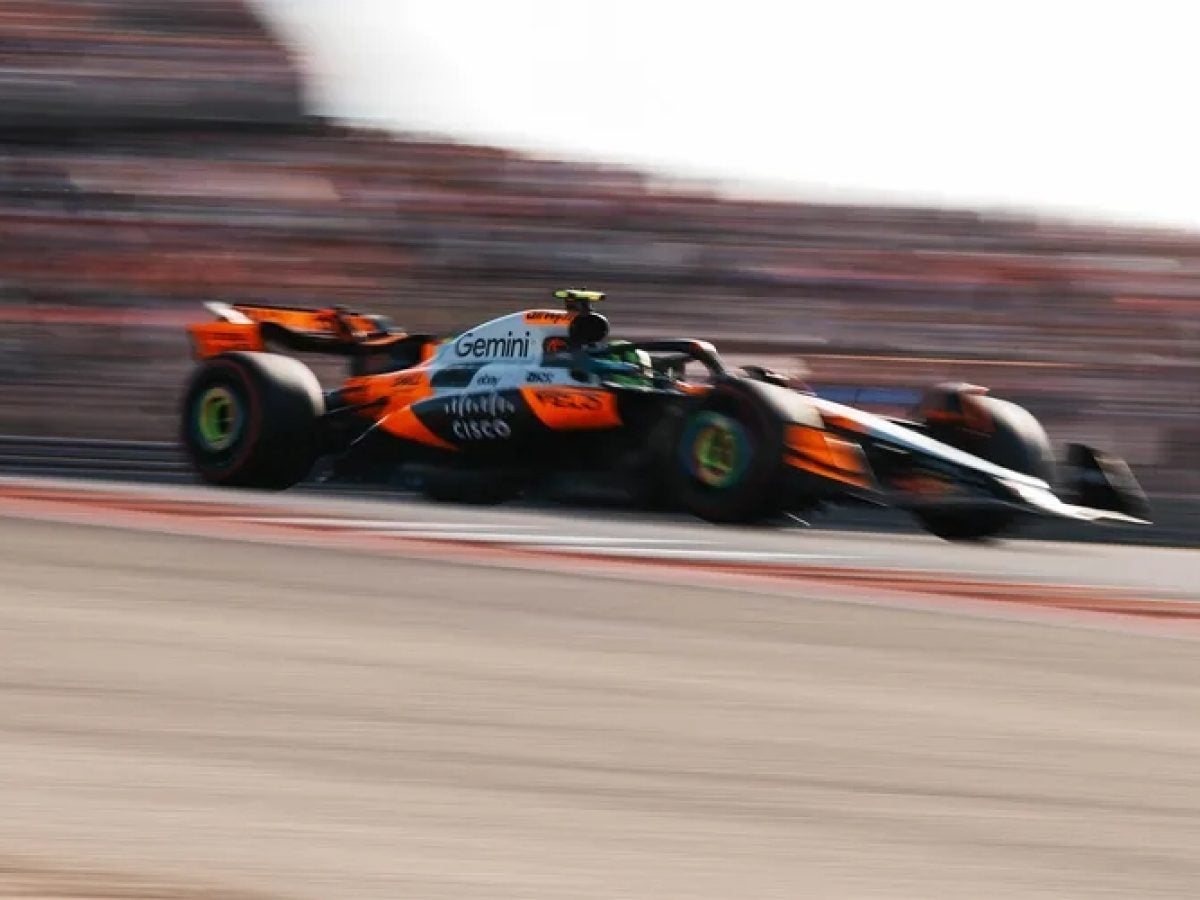 Courtesy of McLaren
  By Okla Jones ·Updated December 15, 2025 < /> Getting your Trinity Audio player ready…
Formula 1 can feel overwhelming if you’re new. The cars are loud, and longtime fans toss around terms like DRS, undercut, and “track limits” as if every race begins with a breakdown of all the rules. But once you slow it down, the sport reveals itself pretty clearly. At its core, F1 is about precision—human, mechanical, and now technological. That’s why looking at the sport through the lens of Google and McLaren is a useful way in. Their partnership shows how Formula 1 actually works, and how a race weekend like the U.S. Grand Prix in Austin comes together in real time.
Formula 1 race weekends normally run across three days. Friday is for Free Practice, which is exactly what it sounds like. Drivers aren’t racing for position yet; they’re learning the track, testing setups, and collecting data. Each session lasts an hour, and teams use that time to experiment with tire compounds, fuel loads, and car balance. For beginners, this is where you start recognizing how different cars behave and which teams look comfortable early.
Saturday brings qualifying, the first truly competitive moment of the weekend. Qualifying decides the starting order for Sunday’s Grand Prix and is split into three parts. Q1 eliminates the slowest five drivers, Q2 serves as another trim, and Q3 is a final shootout among the top ten, where pole position is on the line. Starting near the front matters because clean air helps lap times and overtaking is difficult on tight tracks. At Circuit of the Americas, Turn 12—which was my POV—is one of the key passing zones, which is why grandstand seats there offer such a clear view of race strategy unfolding.
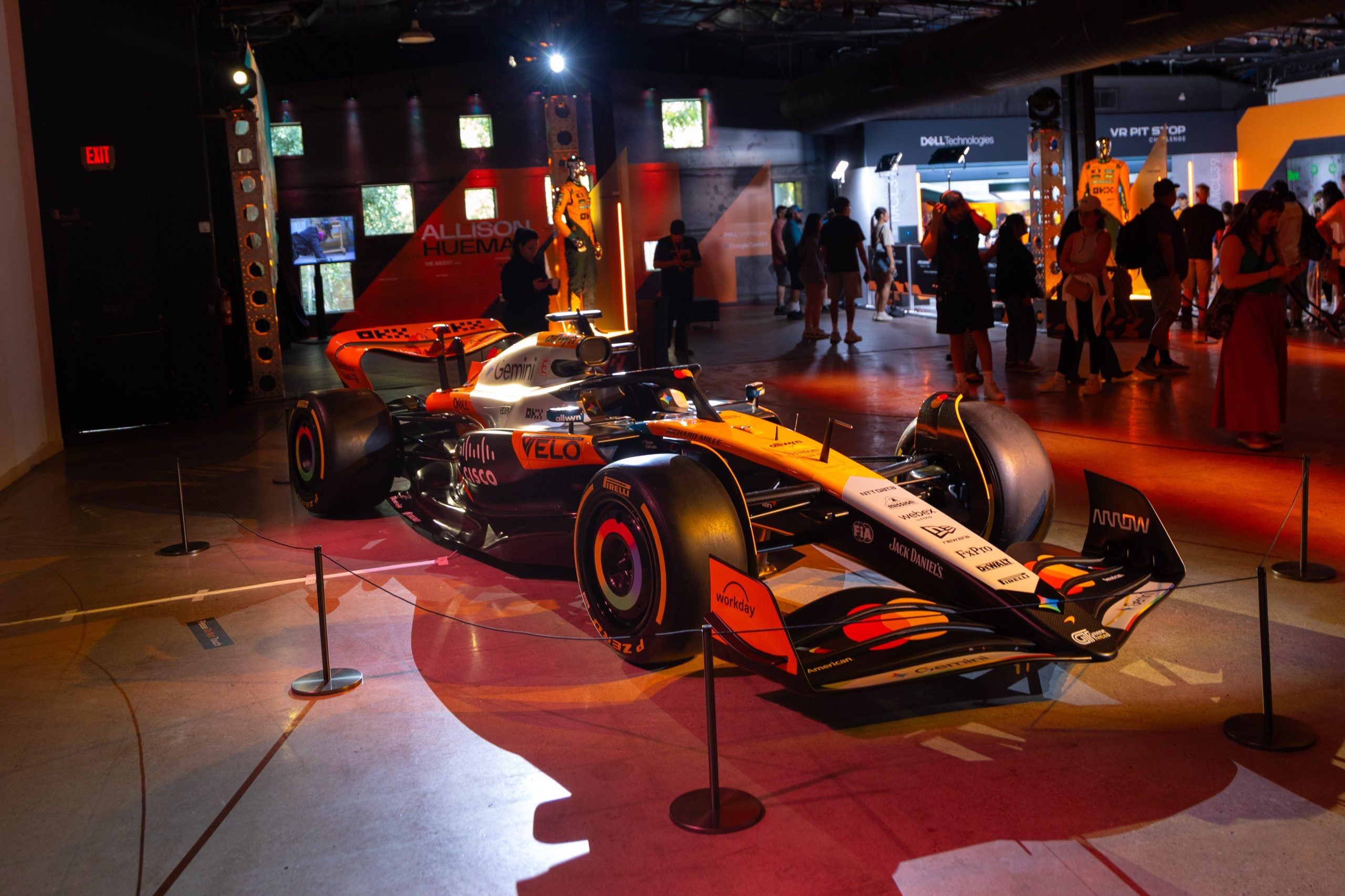 Provided by McLaren F1 Team
Sunday is the main event. The Grand Prix runs just over 300 kilometers, with drivers racing flat out while managing tire wear and fuel. F1 is a non-contact sport, which means drivers can’t push rivals off the track. They also have to stay within track limits, keeping at least one wheel inside the white line. Repeated violations earn warnings or penalties. During the Austin race, Lando Norris received a black-and-white flag—essentially a final warning—for exceeding track limits while battling Charles Leclerc for second place.
Flags are another key part of understanding the race. Yellow flags mean danger ahead and no overtaking. Red flags stop the session entirely. Blue flags tell slower cars to let faster ones through when they’re about to be lapped. The chequered flag ends the race. These signals are backed up by team radios and digital dashboards, but they remain central to how races are controlled.
Points are awarded to the top ten finishers. The winner earns 25 points, second place gets 18, and the points taper down to one for tenth. Teams care deeply because both drivers’ results count toward the Constructors’ Championship, which is awarded to the team with the most points across the season. McLaren secured the 2025 Constructors’ Championship at the Singapore Grand Prix, marking their second straight title and their first back-to-back championships in decades. In Austin, even without a win, the team showed why they’re leading the field. Norris finished second, Oscar Piastri battled into the top five, and the team left Texas still sitting at the top of the standings.
What makes McLaren especially interesting right now is how much of their success is tied to technology. Google’s partnership with the team began in 2022 and has expanded every year since. Chrome is McLaren’s exclusive browser. The team uses Android devices and wearables throughout operations, and Google Cloud supports everything from collaboration to data analysis. This season, Gemini joined the mix, bringing AI into the conversation.
When I spoke with Sameer Samat, President of the Android Ecosystem at Google, he emphasized that the relationship isn’t surface-level. “These aren’t just logos on a car,” he said. “These are real technology partnerships.” McLaren uses Google tools in daily operations, from communication to performance analysis. For Google, the team is a live testing ground. For McLaren, the tech helps answer constant questions about pace, weather, and strategy.
Samat also pointed out that Google’s broader goal is connection. “Technology should help bring people together, not separate or divide them,” he told me. In F1 terms, that philosophy translates to faster communication, and fewer blind spots during a race weekend where every second counts.
 Provided by McLaren F1 Team
Daryl Butler, Google’s Vice President of Marketing—and Morehouse alum—framed the partnership through culture and performance. “You have now established a reason for the consumer to interact with you based on your presence and proximity to the things that they love,” he said, explaining why F1 makes sense for Google. He also highlighted the sport’s technical demands. “The difference between a win and a loss could be milliseconds in a pit stop,” Butler noted, pointing to how Google tools help analyze everything from foot placement to car positioning during stops.
At Austin’s U.S. Grand Prix, I was able to see all the rules and regulations play out firsthand.. Max Verstappen led from pole and won by nearly eight seconds. Norris and Leclerc fought hard behind him, and fan-favorite (and only Black driver on the circuit) Lewis Hamilton edged out Piastri for fourth. The heat was relentless, the crowd was loud, and the atmosphere was unlike anything I had ever experienced before; especially at a sporting event.
Formula 1 isn’t just about speed—it’s about preparation. Once you understand the structure of the weekend, the rules of the race, and the way teams like McLaren use technology to gain an edge, the sport stops feeling intimidating. You’re able to follow the action with a better scope, and appreciate the race for more than just who crosses the line first.
TOPICS: F1 F1 Grand Prix Formula 1 Lewis Hamilton
The post The Beginner’s Guide To F1 appeared first on Essence.
Share
What's Your Reaction?
 Like
0
Like
0
 Dislike
0
Dislike
0
 Love
0
Love
0
 Funny
0
Funny
0
 Angry
0
Angry
0
 Sad
0
Sad
0
 Wow
0
Wow
0