Speedy Morman’s Complex exit represents a larger trend in media
Speedy Morman is the latest in a long line of Black journalists leaving traditional outlets to bet on themselves. On

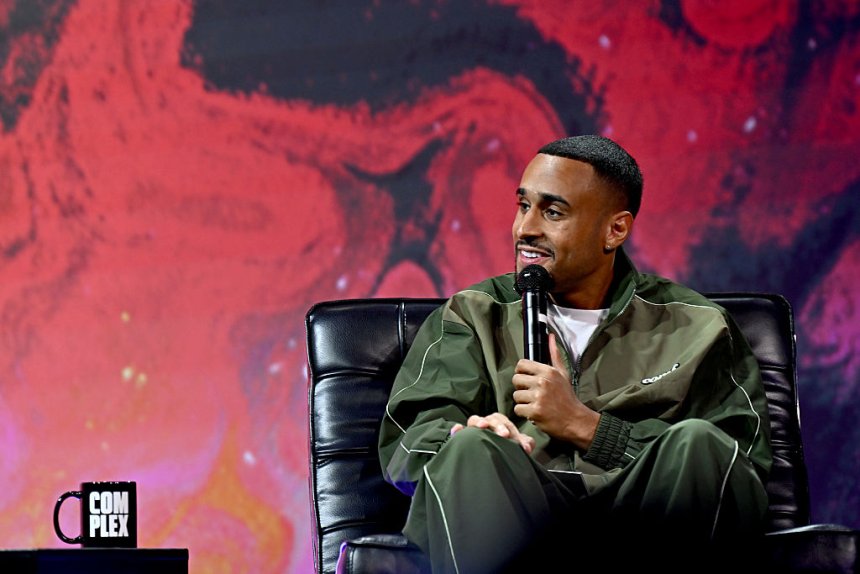
Speedy Morman is the latest in a long line of Black journalists leaving traditional outlets to bet on themselves.
On Monday (Apr. 27), Speedy Morman announced his departure from Complex, closing the door on a 10-year stint with the publication, which he describes as an “incredible era.”
“After 10+ years, I’ve decided to step away from Complex and my show ‘360 with Speedy’ to go independent and enter into some new partnerships,” he wrote. “Interviewing, hosting, and connecting with people on a deeper level has always been at the heart of who I am. I’m excited to continue to do that with new partners and audiences, and I can’t wait to see what the next 10 years have in store.”
As he steps into this next chapter, Morman is joining a larger collective of Black journalists and media personalities leaving traditional media platforms to pursue more independent endeavors. Between media acquisitions, mass layoffs, and cultural changes, more and more journalists have been forced to find creative ways to do what they love. Former beauty editor and journalist Kayla Greaves says there are multiple reasons behind the shift.
“The first one being that people don’t read anymore. It’s a harsh reality, but it’s reality and we see a lot of traditional media outlets crumbling because of it. Even TV news isn’t safe. The emergence of streaming and now has less people tuning into cable networks. People watch videos or listen to audio on their phones, and that’s how they now get their information—whether or not that information is factual is a different story,” she explains. “I think another big issue was that newsrooms were not open to using their editors as digital, front-facing talent at the beginning of this shift—some even tried to block us from doing it on our own. I don’t know what the industry would have looked like had they been open to adapting sooner, but I suspect it may have been in better shape than it is now.”
Philip Lewis, journalist and the president of the Washington Association of Black Journalists, echoed this, noting “a growing number of journalists who have become increasingly disillusioned with the state of our industry.”
“I have conversations with journalists all the time who are choosing to bet on themselves rather than be taken advantage of by news outlets that are unwilling to pay a living wage and are afraid to tell the truth about what’s happening in our country,” he explained.
“I would have loved to just be a writer for the rest of my life, but at my core, I’m a storyteller. So I’m now just finding a new medium to tell stories,” Greaves, who created the “More Pleasure” newsletter, added.
However, the constraints of a traditional newsroom is not a new phenomenon. In fact, Gia Peppers, an entertainment journalist and founder of Creatives of Faith and the “Healed Girl Era” podcast, noticed it in 2016, which led to her pivot into freelancing.
“I saw how easy it was for publications to let journalists go overnight, even after sacrificing so much to do a good job. I decided then that I would become my own brand and lend my voice to stories and projects that felt aligned with what I wanted to contribute to the world,” Peppers shared. “10 years later… Times are definitely harder with all of the whiplash, head-spinning changes we’ve experienced in the world we live in.”
For Lewis, the importance of building your own platform became apparent when Elon Musk acquired Twitter. So much so that he launched his Webby award-winning newsletter, “What I’m Reading”.
“Now that billionaires are choosing to buy and alter social media algorithms, it is crucial to have a direct-to-consumer model,” Lewis said. “[With my newsletter] I don’t have to hope the algorithm will surface an important story. I can just send it to you directly. Having a website, a newsletter, a blog, or another platform you own is critical.”
That autonomy has been a grounding force for many journalists navigating an ever-changing industry. As Greaves notes, “the world changed, and it has changed fast,” and as a result, she had to leave to remain adaptable and continue her love of storytelling.
“There are pros and cons, of course. But I will say it is really nice to be able to share stories on your own terms, with no one hovering over you—or having to go through a million layers of “higher ups” to get an idea greenlit while they take credit,” she adds.
“On one hand, it’s all overwhelming and terrifying. On the other, I think now that there are less gatekeepers. You can create your own viable means of storytelling through YouTube, podcasting, newsletters, and more. You still get to use your journalistic skills, but now you put those skills to work building something you can monetize,” Pepper echoes. “As newsrooms change and close every day, it is a new way to express your genius and to tell stories that you’ve always wanted to tell.”
Though independent media is a viable option for journalists, it’s unclear if it’s the solution for the industry as a whole. Though traditional media no longer has the same leve of influence it once had, Greaves and Lewis agree that “journalist-led” platforms could be the way forward.
I think it’s still possible to have a social-first, journalist-led type of platform. But it would need adequate funding, and people with real experience and good intentions to lead it,” the More Pleasure creator noted.
“While it’s great that more journalists are recognizing the power of independent media, the journalism industry won’t be saved by a million Substack newsletters. There’s room for independent journalists, news creators, and the like, but they cannot replace robust teams of reporters, editors and fact-checkers that have the funding and the means to pursue underreported stories,” Lewis concluded. “This is why I believe worker-owned journalism cooperatives are the future: One journalist can’t do everything, but a team of journalists can do anything.”
Share
What's Your Reaction?
 Like
0
Like
0
 Dislike
0
Dislike
0
 Love
0
Love
0
 Funny
0
Funny
0
 Angry
0
Angry
0
 Sad
0
Sad
0
 Wow
0
Wow
0