Somalis vote in the first one-person, one-vote local election in decades
MOGADISHU, Somalia (AP) — Residents of Somalia’s capital are set to vote Thursday in a controversial local election that marks

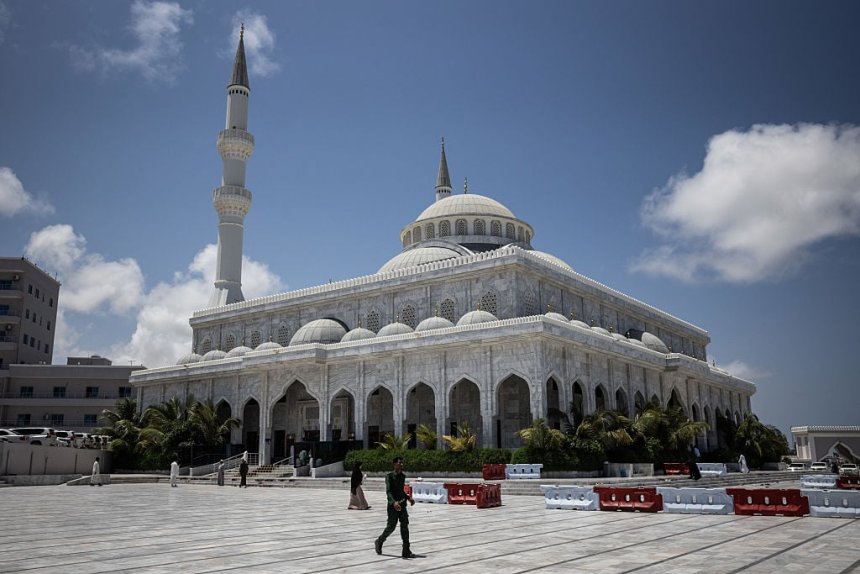
MOGADISHU, Somalia (AP) — Residents of Somalia’s capital are set to vote Thursday in a controversial local election that marks the country’s first-ever one-person, one-vote poll since 1969. Analysts say it is a major departure from clan-based power-sharing negotiations.
The voting of local council members, to be conducted across Mogadishu’s 16 districts, has been organized by the country’s federal government but rejected by the opposition parties, which have called the election flawed and one-sided.
Somalia has for decades selected its local council members and parliamentarians through clan-based negotiations, and it is the leaders who later elect a president. Since 2016, different administrations have promised to reintroduce one-person, one-vote elections, but insecurity and internal disputes between the government and the opposition have delayed their implementation.
This will be the first major voting exercise overseen by the country’s National Independent Electoral and Boundaries Commission, with up to 20 political parties fielding candidates.
The election will not determine the mayor of Mogadishu, who also serves as the governor of the central Banadir region. That position remains appointed, as the constitutional status of the capital is unresolved and requires a national consensus — a prospect that has grown increasingly distant amid deepening political rifts between President Hassan Sheikh Mohamud and the leaders of the states of Jubaland and Puntland over constitutional reforms.
The central region has more than 900,000 voters registered across 523 polling stations, according to the electoral commission.
Somalia has faced security challenges, with the al-Qaeda-linked al-Shabab militant group often carrying out deadly attacks in the capital.
Security in the capital has intensified ahead of the local elections.
Analysts say the Mogadishu vote represents the most concrete attempt yet to move Somalia away from its longstanding clan-based, power-sharing system.
“Mogadishu has demonstrated that local elections are technically feasible,” said Mohamed Husein Gaas, founding director of the Raad Peace Research Institute.
By moving ahead with the vote, Gaas said the federal government was empowering citizens, strengthening accountability and moving towards a more inclusive and legitimate state.
He said plans to expand direct elections to federal member states and eventually to the national level reflect a phased approach aimed at balancing security, political inclusion and development.
“The process signals a commitment to building a durable Somali state grounded in democracy, public trust, national cohesion and long-term stability,” Gaas said.
Opposition parties, however, argue that abandoning negotiated, clan-based arrangements without agreement risks undermining Somalia’s fragile federal settlement.
The elections, which were postponed three times this year, have drawn sharp criticism from opposition leaders, who accuse the government of using the process to entrench power and pave the way for extending the president’s term, which is due to end in 2026 — an allegation authorities deny.
Share
What's Your Reaction?
 Like
0
Like
0
 Dislike
0
Dislike
0
 Love
0
Love
0
 Funny
0
Funny
0
 Angry
0
Angry
0
 Sad
0
Sad
0
 Wow
0
Wow
0