Sandra Lindsay reflects on pandemic and being first person in U.S. to receive COVID-19 vaccine
Five years after she took the First COVID-19 shot in the US, Sandra Lindsay reflects on hope and how it’s

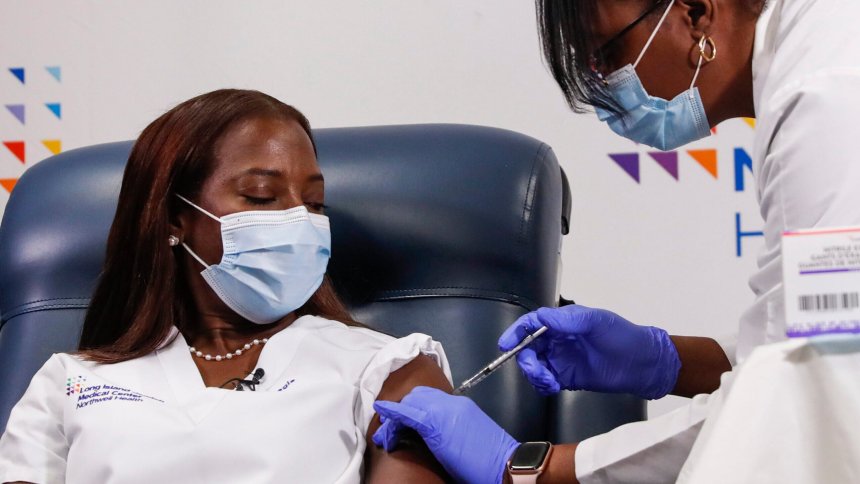
Five years after she took the First COVID-19 shot in the US, Sandra Lindsay reflects on hope and how it’s challenging to maintain.
Five years ago, on Dec. 14, 2020, after the COVID-19 pandemic brought the world to a standstill and inflicted devastating consequences for months on end — with more than 300,000 people dead in the United States and over 1.6 million worldwide — the very first person in the country received the vaccine: Sandra Lindsay, a Black nurse from Long Island, New York.
Marking the anniversary, Lindsay, 57, reflects on that historic moment, how she’s been since, and her concerns about the growing attacks on science and medicine under the current political climate in an emotional essay published Sunday in Time magazine.
“On December 14, 2020, I became the first person in the United States to receive the first FDA-approved COVID-19 vaccine,” Lindsay writes. “Now, as the world moves swiftly through the fifth year since the start of the pandemic, I often get flashbacks to that era, which taught me the importance of public health and hope.”
Lindsay begins the essay by taking readers back to the crushing demands the pandemic placed on her and her colleagues in the months leading up to that day.
“My colleagues were exhausted. With full-body personal protective equipment, dying patients in every part of the hospital, and no treatments or vaccines, we worked. Through unprecedented darkness, uncertainty, frustration, and so much deep, genuine fear, we worked,” she recalled.
“When the pandemic was at its deadliest, I told myself that if I could take one step, things would get better. If I could just help one patient… If only there were a vaccine…”
Lindsay, who immigrated to the United States from Jamaica more than 30 years ago and rose through the ranks of New York’s medical system to become Vice President of Public Health Advocacy for Northwell Health, became the first person in the country to receive the Pfizer-BioNTech COVID-19 vaccine. At the time, she said she stepped forward to inspire those who were skeptical of the vaccine, particularly in Black communities and even some members of her own staff.
“That was the goal today,” she told The New York Times days after receiving the shot. “Not to be the first one to take the vaccine, but to inspire people who look like me, who are skeptical in general about taking vaccines.”
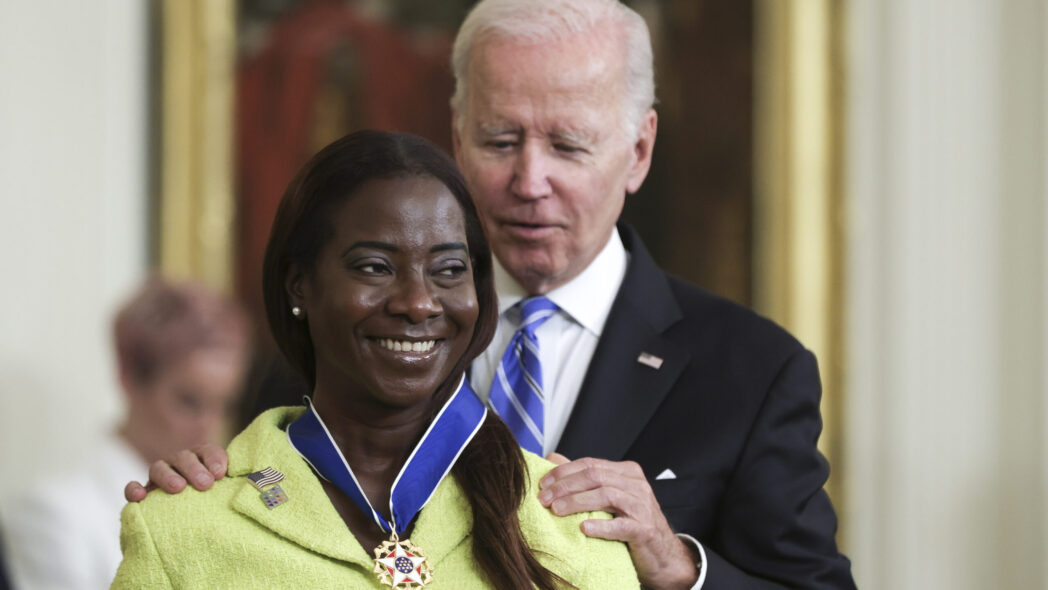
She was later awarded the U.S. Citizenship and Immigration Services’ Outstanding Citizen by Choice award in July 2021 and then, a year later, the Presidential Medal of Freedom in July 2022 by President Joe Biden for her life-saving contributions.
Today, artifacts from Lindsay’s pandemic experience are preserved by the National Museum of American History in Washington, D.C., including the scrubs, work ID, and clogs she wore during COVID-19’s worst days, as well as the vial and syringe used for her historic vaccination.
“These objects capture the day I received that first vaccine, and so many of the long days that led to it,” she writes. “I don’t know how other people feel when they see my scrubs, work badge, vaccine card and other objects from that time. When I look at them, I think about the pain and fear juxtaposed with hope.”
In the essay, Lindsay recounts logging thousands of miles in those clogs and caring for countless patients, noting that despite the trauma she still carries from that period, the experience did not leave her with despair.
“It may sound surprising when I say 2020 gave me hope,” she writes. “But that year showed me reasons to be optimistic that we can make strides in public health—like those we saw when COVID-19 vaccines were developed.”
She writes that holding onto hope is becoming increasingly difficult as the Trump administration moves to roll back vaccine mandates and long-standing public health guidance — not just with COVID-19, but other proven childhood immunizations — while amplifying misinformation, including debunked claims linking vaccines to autism pushed by Secretary of Health and Human Services Robert F. Kennedy Jr.
“Today, our healthcare system is struggling to regain trust amidst a barrage of disinformation and political maneuvering,” Lindsay writes. “The restoration of public confidence in science is as important for patients in fragile health as it is for America’s young people.”
Share
What's Your Reaction?
 Like
0
Like
0
 Dislike
0
Dislike
0
 Love
0
Love
0
 Funny
0
Funny
0
 Angry
0
Angry
0
 Sad
0
Sad
0
 Wow
0
Wow
0