Philomina Kane didn’t need a patent to protect Kin Apparel — she did so by building a strong brand
After finally securing a trademark for “satin-lined hoodies,” Kin Apparel’s founder is opening up about the legal strategy and more.

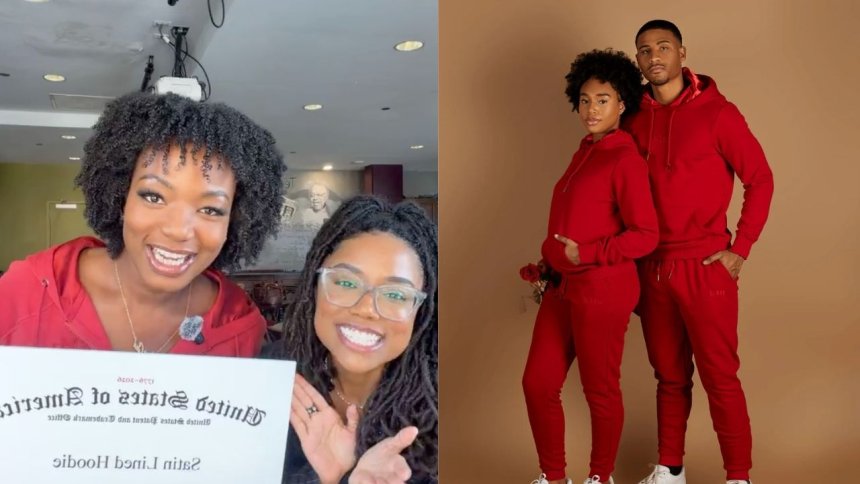
After finally securing a trademark for “satin-lined hoodies,” Kin Apparel’s founder is opening up about the legal strategy and more.
Every time another brand unveiled a satin-lined hoodie, Philomina Kane—the founder of Kin Apparel—could hardly ignore it. Her loyal customers would flood the comments, tagging Kin Apparel, insisting the viral hair-protecting athleisure brand was the originator.
Last year, that chorus reached its loudest yet after Nike and WNBA star A’ja Wilson released their own satin-lined collection, turning years of simmering frustration into a viral conversation Kane could no longer ignore.
Amid the public outcry, the situation landed an Atlanta attorney in Kane’s DMs, setting off a legal fight that ended last week when Kin Apparel secured a federal trademark for “satin-lined hoodie.”
“We did it, KINfolk!” Kane wrote in the caption of a post on Instagram celebrating the victory.
The milestone marks the latest chapter for Kin Apparel, which Kane officially launched in 2020, and that has since become synonymous with cozy luxe satin-lined apparel after appearing on “Shark Tank” and going viral in 2021. Now, the founder is pulling back the curtain and sharing the yearslong journey behind the trademark, from failed patent attempts to the legal strategy that ultimately won over federal trademark officials, in the hopes of helping other entrepreneurs navigate the intellectual property process.
When Kane launched Kin Apparel six years ago, she initially attempted to protect the brand through patents, both design and utility. However, those efforts were repeatedly rejected because the government said the concept wasn’t novel or distinctive enough to qualify for patent protection.
“I was met with everything but a yes,” she recalled during an Instagram Live last week.
After those failed attempts, the entrepreneur stopped pursuing that route altogether and focused instead on building Kin Apparel into the brand consumers associated most with satin-lined hoodies. As the company grew, now offering sweatsuits, baseball caps, cowboy hats, knit beanies, and more in an array of color schemes, it appeared on “Shark Tank,” and built a loyal customer base, her strategy seemed to be working.
“I was like, let me make this brand as big and as community-oriented as possible because that’s the only way I’m gonna go far with this innovation. So that’s what happened,” she said.
Everything changed in early 2025 when Nike’s A’ja Wilson satin-lined hoodie collection dropped and kicked off a wave of social media posts from fans insisting Kin Apparel had done it first.
“When that happened, y’all went nuts,” she teased. “Y’all went crazy. Like y’all were in the comments. ‘Kin Apparel did it first. Everyone was tagging Kin. Everyone was tagging me. Everyone was like, ‘Have you seen this? Are you gonna say something?’”
The attention caught the eye of Atlanta trademark attorney Jasmine Robinson, who reached out to Kane via Instagram and suggested pursuing a trademark rather than another patent. This move switched her strategy from protecting the invention to protecting the brand identity.
“There’s a difference between patent and trademark. I didn’t even know you could trademark satin-lined hoodie,” she admitted. “I always thought this was something that I needed a utility patent or a design patent on to protect it, but actually you can trademark something like this to stop people from ever making a collection, a brand, or calling something a satin-lined hoodie.”
Rather than arguing Kin Apparel invented a type of hoodie, the legal team argued that “satin-lined hoodie” had become uniquely associated with Kin Apparel in the minds of consumers after years of consistent use and widespread recognition. But the U.S. Patent and Trademark Office initially rejected the application, saying “satin-lined hoodie” was simply a generic product description, similar to trying to trademark “jean jacket” or something to that effect.
“They didn’t understand the historical context, the fact that this was a movement, the fact that this really centers around very much my identity, but also the Black community and Black identity to begin with,” she noted.
Instead of throwing in the towel, Robinson rolled up her sleeves and assembled a 30-page appeal backed by five years of evidence documenting Kin Apparel’s growth, media coverage, consumer recognition, and use of the phrase. After additional back-and-forth with the trademark examiner and a phone call to discuss the evidence, the examiner agreed that the mark had acquired distinctiveness and approved it for registration. They also secured this in the nick of time.
“It was only a matter of time, if you didn’t do it first that somebody [else] would have,” Robinson said.
Kane added, “That was the explanation of why we went for the trademark. Why it was also important to trademark satin-lined hoodie under Kin Apparel.”
With a trademark firmly in place, this opens the door for Kane to fight anyone who tries to launch a brand based on satin-lined hoodies. It doesn’t mean other athleisure brands can’t devise their own satin-lined hoodies; they absolutely still can. They just can’t lead with that as the centerpiece concept. This is a huge win for a brand that started off small and is now synonymous with an entire concept. It’s also a lesson in the importance of developing a strong brand identity.
“The way y’all be tagging Kin Apparel when you see another brand making a satin-lined hoodie. That’s because we’re known for it. We built the brand around it,” she declared.
Kane said she’s now focused on figuring out how to protect—and potentially license—what has become Kin Apparel’s signature brand identifier, marking the beginning of an entirely new chapter for the company. And to think she almost didn’t call her attorney back after the initial trademark rejection.
“What made me convinced was when you were like stuff like this happens, and you also mentioned you were expecting this. You were like this was just the first time like it happens. Let’s go again, and I was like, you know what? You’re right,” she recalled, before adding, “And I’ve never been one to give up.”
Share
What's Your Reaction?
 Like
0
Like
0
 Dislike
0
Dislike
0
 Love
0
Love
0
 Funny
0
Funny
0
 Angry
0
Angry
0
 Sad
0
Sad
0
 Wow
0
Wow
0