Michael Jackson and the night the Super Bowl stood still
The American Carnival is a yearlong cultural examination of the Super Bowl halftime show’s impact far beyond entertainment. Through history, politics, race, economics and music, the series explores how 12 minutes on the most-watched stage in the country often say more about America than the game itself. Bob Costas can still hear the instructions in [...]


The American Carnival is a yearlong cultural examination of the Super Bowl halftime show’s impact far beyond entertainment. Through history, politics, race, economics and music, the series explores how 12 minutes on the most-watched stage in the country often say more about America than the game itself.
Bob Costas can still hear the instructions in his head, even if they didn’t concern him.
No one is to make eye contact with Michael Jackson.
Costas, a 29-time Emmy winner and broadcasting legend, was the play-by-play announcer for 1993’s Super Bowl XXVII between the Buffalo Bills and Dallas Cowboys.
But what did concern him was the timing.
He had limited real estate to ask Mike Ditka, who was doing color commentary for the game, one question. The answer could be no more than 75 seconds. If it was 77 seconds, in Costas’ words, “we f‑‑‑ed the whole thing up.”
“Michael Jackson is waiting, and this is like a moon landing. It had to come off exactly as planned,” Costas told Andscape. “I remember it being that big of a moment.”
And then … it happened.
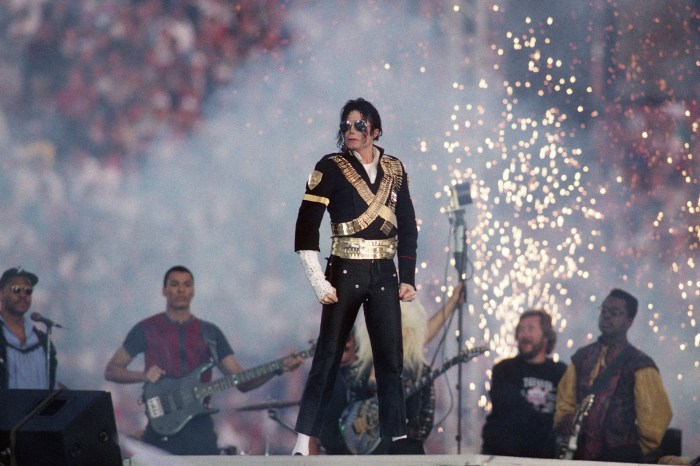
Following a Jackson doppelganger appearing atop a Jumbotron, the actual King of Pop catapulted onto the stage. The crowd roared as if Cowboys quarterback Troy Aikman had found Michael Irvin for another touchdown, which had just happened twice in the second quarter.
Then … nothing.
Jackson, not yet blemished by the troubling allegations that would surface later, stood motionless onstage as afternoon quickly gave way to dusk. No movement. No music. Just the presence of arguably the biggest artist in the world, on a stage the entire country was watching.
“For two whole minutes, he just holds it,” said New York Times bestselling author and cultural critic Gerrick Kennedy. “You can hear the audience from all that stillness. You can hear them shouting for him. You can see the anticipation.”
Those on stage never sensed confusion. Everything Jackson did was intentional — completely under his control.
“He just stood there,” said Grammy Award-winning, two-time Oscar-nominated singer-songwriter Siedah Garrett, who performed in the show. “Man, the promoters were losing their minds. ‘What is he doing? Why isn’t he moving?’ But Michael had his own way of doing everything. He milked every second of that moment.”
Before Jackson ever uttered a note, the shift was already happening. Jackson’s inactivity couldn’t be confused for anything other than dominance.
What was once an excuse to refill a cup, grab another slice of pizza or run to the bathroom — in the stadium or at home — had become something else. Now the framework had been set. The halftime show had become both spectacle and the country’s most-watched pageant.
“For the culture, for us,” comedian and former MTV VJ Bill Bellamy told Andscape, “it was a testament that we’re here.”
Steve Granitz/WireImage
Marching bands from Grambling State University and the University of Arizona headlined the halftime show at Super Bowl I in 1967. For decades, that was the energy fans came to expect. Ella Fitzgerald, Chubby Checker, Up with People and variety acts filled the bill (there was even an Elvis impersonator/magician in 1989), but none ever matched the anticipation (or execution) of the game itself.
The halftime show wasn’t designed with non-stadium viewers in mind — a strange disconnect, given that most were watching from home.
“[The Super Bowl] had musical performances that were like throwaways as opposed to this could really be something,” said Anjanette Levert, a filmmaker, 2025 Peabody recipient and lecturer at Spelman College.
The game changed in 1992.
The halftime show’s theme that year featured Gloria Estefan and famed American figure skaters Brian Boitano and Dorothy Hamill in a tribute to the 1992 Winter Olympics. But unlike the previous 24 years, another option existed in the highly popular sketch comedy show In Living Color.
Created by Keenan Ivory Wayans, the series helped launch the careers of comedians Jamie Foxx, Jim Carrey, Tommy Davidson, David Alan Grier and several members of the Wayans family. Even Jennifer Lopez — a future halftime performer — got her start as a “Fly Girl” on the show. The sketch comedy series was Saturday Night Live, but for young Black folks, In Living Color tapped into the youth and hip-hop energy of the early 1990s — something the NFL had failed to do.
“I auditioned for In Living Color,” Bellamy said. “I was like, ‘Yo, we going to finally get a real comedy show. Because I was only watching SNL for Eddie [Murphy]. Most of them skits was corny to me. I’m like, ‘Aight, that’s white people laughter.’ [Black comedy] was saving networks.”
In 1992, more than 22 million viewers tuned away from the Super Bowl’s halftime show to tap in with In Living Color’s counterprogramming. The show, which culminated with a performance by popular group Color Me Badd, had exposed a massive cultural and audience gap that the NFL and corporations tied to the Super Bowl couldn’t ignore.
“In Living Color showed these are the people who’ll turn away if you don’t have anything for them,” Levert said. “It let them know that you need diversity. We will vote with our feet or remote control.”
Nothing in show business speaks louder than money and ratings. And an entire industry was put on notice after In Living Color drew massive viewers away from the game. Football couldn’t be the only selling point. If the Super Bowl really aimed to be the biggest event in American culture, adaptation — not resistance — had to be the answer.
The NFL and the halftime show didn’t evolve because of a genuine interest in creativity. It evolved out of fear.
“You know how big a show that was to take [that much] viewership watching the f‑‑‑ing Super Bowl over to your special?” Kennedy said. “[They] had no choice but to call Michael.”
Ralf-Finn Hestoft/CORBIS/Corbis via Getty Images
By January 1993, Michael Jackson was at a unique point in his career. He was still seven months away from the first allegation of child abuse — claims he would vehemently deny for the rest of his life but that follow him into the afterlife. Hip-hop’s cultural ascension was undeniable, but the genre wouldn’t grace the halftime stage as headliner for almost another 30 years.
Still considered by fans as arguably the biggest star in the world, critics openly questioned Jackson’s visibility. He sued the tabloid The Daily Mail for claiming plastic surgery had disfigured his face. Perceptions had shifted, though his record sales and anticipation for his videos suggested otherwise. Songs like 1987’s “Leave Me Alone” directly addressed media criticism.
“He was so big he almost didn’t seem real. He was very mythical,” said Bellamy. “He’d show up at awards shows and disappear. He didn’t do a lot of interviews. His music videos became a litmus test on what our perception of him was.”
The NFL needed a solution. Michael Jackson saw an opportunity to cement his crown.
“You have to create something that’s big enough for people who don’t watch the game to come over and tune in for the entertainment. You need a star,” Kennedy said. “You need a moment that can capture not just the nation, but the globe. You have to create something that’s so big that you’ll not do anything but come and tune into it. When you start off with Michael, you’re saying a really big thing.”
The NFL did its job by selecting Jackson. Now, the King of Pop had to do his.
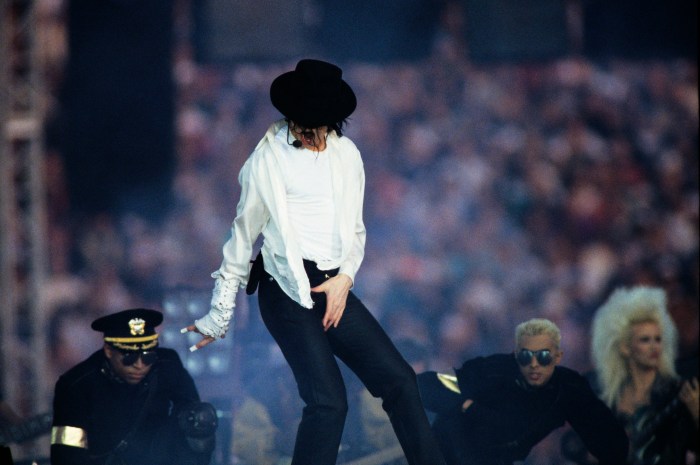
Jackson’s 12-minute performance proved groundbreaking at the moment. The most football-centric fans knew who he was and the type of show he could deliver. This wasn’t just a televised performance. It was narrative infrastructure. Few left the stands. And for the first time in Super Bowl history, the biggest performer in the stadium didn’t wear a helmet.
A creative tension lived in Jackson’s set. The first half of his mini-concert was flooded with undeniable hits like “Jam,” “Billie Jean,” and “Black or White.” The back half delivered its statement with “Heal the World.” The Rose Bowl crowd held signs depicting children across the stadium, while Jackson brought more than 3,500 kids on stage with him.
It wasn’t yet the full-scale production of today, but its rawness, global imagery and precision proved captivating.
The Dallas Cowboys went into halftime up 18 on the Buffalo Bills. The game wasn’t over, but Dallas was already planting its flag as one of the signature teams in league history. Still, Michael Irvin had to see it for himself. Since 2017, the Hall of Fame wide receiver has told the story of how he momentarily snuck out of the locker room to watch Jackson’s performance.
“That smoke came out … POOF! He came out, and he stood there like that for a while,” Irvin remembered in the 2025 Netflix docuseries America’s Team: The Gambler and His Cowboys. “Do something! I gotta get back in the locker room.”
Irvin may have wanted to see history, but his coach certainly didn’t give a damn.
Damian Strohmeyer /Sports Illustrated via Getty Images
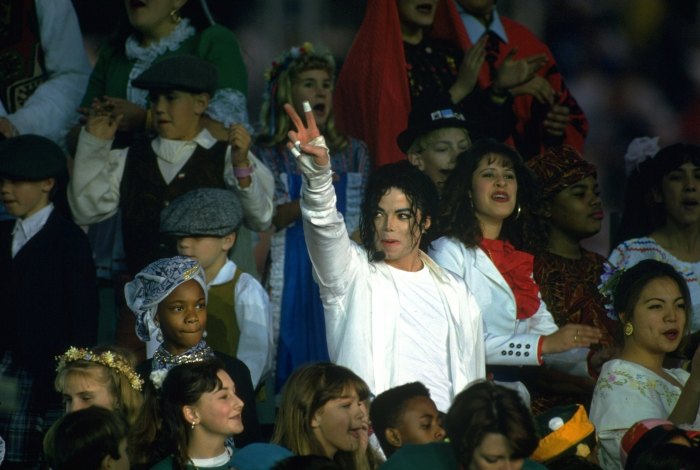
“I actually didn’t see the performance,” former Cowboys head coach Jimmy Johnson told Andscape. “It was pretty cool that Michael Jackson was there at halftime. Obviously, though, we were more concerned about winning the Super Bowl.”
Johnson is quick to point out that he’s never been to a concert — and never will. And that, while Jackson may have changed the halftime stage that night, he wasn’t the only history-altering spectacle that happened.
“People noticed, too, that we gave Buffalo an ass-kicking, and that Dallas was a force to be reckoned with after that,” Johnson said.
As for his star receiver sneaking out of the locker room during the Super Bowl, Johnson laughed. It’s a laugh that’s innocent now — but likely wasn’t then.
“If I’d have noticed one of my players wanting to sneak out to see Michael Jackson,” Johnson said, “I would’ve told him to get his ass back into the locker room.”
The template had been established. Not just for the NFL that found its marketing luxury liner in “America’s Team.” But it now saw the benefit of morphing the halftime show into its own American carnival.
The NFL would eventually require another cultural recalibration decades later through its ongoing, successful partnership with rapper JAŸ-Z and Roc Nation. The bottom line in both instances was the same: retention and attracting fans who weren’t invested in the game’s outcome.
But Michael Jackson understood what the league didn’t at the time.
“He knew that halftime was when people got up — went to the bathroom, went to get snacks,” Garrett said. “They didn’t really pay attention to what was on the screen. He knew how valuable that time was, so he wanted to make it a spectacle so you wouldn’t want to get up and leave.”
By 1993, the Super Bowl was no longer just a game. It was a proof of concept for what a once-a-year broadcast could look like — and how it could reverberate globally.
“Now it’s been made a coveted spot,” Levert said. “Everyone is expecting an extravaganza. You’ve got to go all out in terms of designs, theme and everything that ties back in.”
The Super Bowl needed spectacle beyond just the game itself. Black artistry didn’t just participate. The ripple effect refined the stage in ways that still resonate in 2026, as anticipation for the 2027 performer builds. An expectation surrounds the halftime show — an innovation by a Black artist in Jackson, with the seeds planted by a Black sketch comedy show in In Living Color.
Halftime is now a marketing platform, a tour launchpad and a global branding organism with no true American peer. If there is a more valuable sliver of time than the Super Bowl halftime stage, it hasn’t been invented yet. Though commonplace now, the NFL — and its audience — never demanded it because nobody had seen anything else.
This makes what Jackson and In Living Color did all the more paramount. They created a universe that simply didn’t exist.
“You had to utilize those 10 minutes of people’s attention to expand your brand beyond what you could imagine,” Bellamy said. “So, that’s why to this day, the Super Bowl halftime is a special pick. It’s a special performance. It’s an event for your career.”
There’s this reality, too: The Super Bowl ecosystem is the last stage of monoculture in society. Urgency is rare in a world where everything lives online, appearing on timelines and group chats within seconds. The fear of “If I miss this, I’ll never see it” simply doesn’t exist anymore. How viewers consume entertainment today compared to the start of the 1990s is wholly different.
Jackson’s performance proved what was possible in less than 15 minutes. It also proved viewers wanted to watch it live. The magnitude of this, 30-plus years later, is even more astounding as the value of live viewing has diminished.
Nearly 1.3 billion worldwide watched Jackson on Jan. 31, 1993.
“There really isn’t anybody that can do that,” Kennedy said. “That’s impossible.”
In the ‘90s, performances were recorded on VHS tapes to watch later. Now, those tapes take the form of social media and YouTube clips. Yet, even with a media landscape as fragmented as it’s ever been, a faint nostalgic heartbeat still exists.
“As witnessed by Bad Bunny and the ridiculous overreaction of, ‘Here’s your alternative. Let’s see Kid Rock,’” Costas said. “One of the things about the Super Bowl is that it defies that fragmentation of media.”
Heidi Gutman/Disney Entertainment via Getty Images
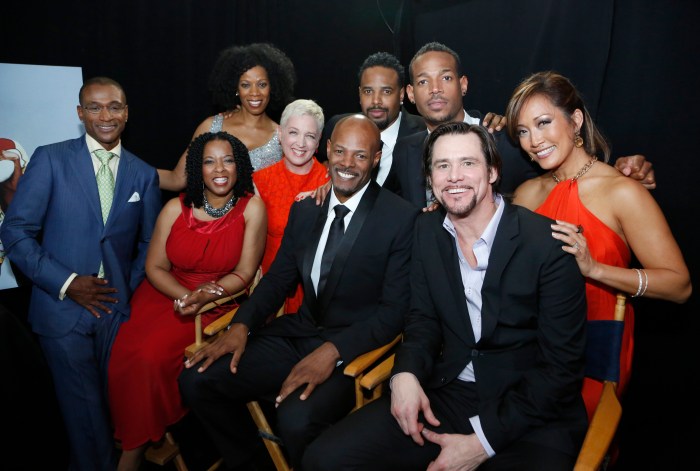
Whether Michael Jackson created the modern halftime show or simply accelerated it depends on who you ask. Some, like Costas, feel the show would’ve eventually gotten to where it is now. Others, like Kennedy, credit Michael Jackson as the blueprint.
Jackson undoubtedly made believing the impossible was possible with such high stakes on the line. He made it possible to believe that even at the Super Bowl, one could simultaneously entertain, educate and empathize. He’s almost like a godfather-type figure.
“He set the stage for what the bar is,” Levert said. “People can see a direct line between — maybe not necessarily Bad Bunny, but certainly from Kendrick Lamar or Usher’s Super Bowl.”
It always comes back to that moment.
Jackson, in sunglasses, standing on stage — as close to a superhero as a mortal could look. The world may have thought he was wasting time. In reality, he was asserting total control over a moment that had long been treated as a sideshow. There was no silence — only mass hysteria.
For a performance that lasted less than a football quarter, the most important element was doing nothing. That day, the NFL began to understand what its halftime show could be. Not just a break in the action — but an event within it. The league didn’t always get it right. Over the years, some shows resonated more than others. But the expectation had been set.
“He elevated that show so much,” Garrett said. “Every time I see it now, I see Michael’s influence — the spectacle … the involvement of the audience.”
Ultimately, Jackson’s performance became a timestamp. For the NFL. For the entertainer. And for the more than 1 billion people who watched around the world. It proved what the halftime show could be.
For Bellamy, then just a few years into his MTV career, moments like that didn’t come often.
“There’s certain moments you want to be alive for,” he said. “Or to say, ‘I saw that.’ Like, ‘Yo … did I really just see that?’”
Because with Michael Jackson, that was always the feeling.
Did we really just see that?
The post Michael Jackson and the night the Super Bowl stood still appeared first on Andscape.
Share
What's Your Reaction?
 Like
0
Like
0
 Dislike
0
Dislike
0
 Love
0
Love
0
 Funny
0
Funny
0
 Angry
0
Angry
0
 Sad
0
Sad
0
 Wow
0
Wow
0