
Lizzo thinks everyone should be canceled at least once: ‘Live like the internet doesn’t exist’
After being “canceled” more times than she can count on one hand, Lizzo is opening up about what she’s learned.

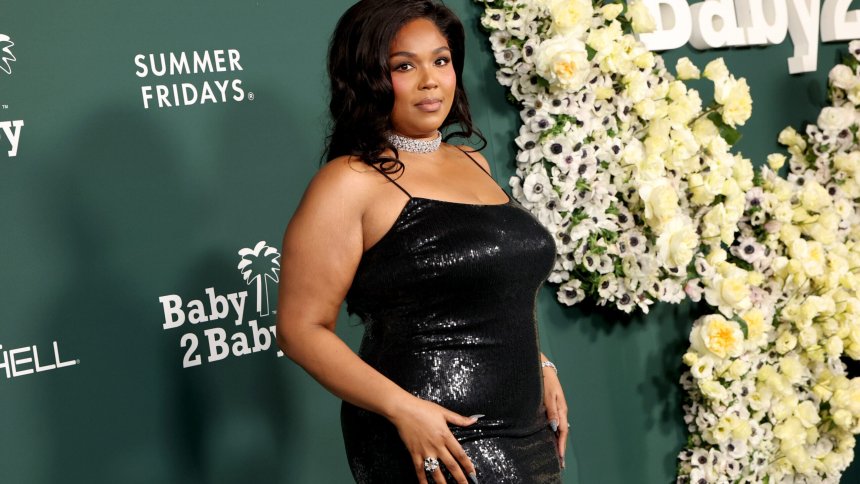
After being “canceled” more times than she can count on one hand, Lizzo is opening up about what she’s learned.
If you ask Lizzo, she thinks everyone should be canceled at least once in their life.
The 37-year-old singer opened up about the many different times she’s been quote-unquote “canceled” throughout her career in a new essay she penned on Substack titled, “CANCEL ME (AGAIN): A “cancelled” woman’s take on why everyone should get cancelled at least once.”
She kicks off the candid essay by recalling growing up in the Pentecostal COGIC church in Detroit, Michigan, where she was “terrified” and “radicalized” into being an obedient servant of God from an early age and a person who was regarded as good.
“I was obsessed with being a Good Person,” the “Good as hell” singer wrote.
She explained how that foundation is at serious odds with the many times she’s been canceled and the perception that many of her detractors mostly online wield against her.
“All those years of being a good person doesn’t matter to the internet. The internet doesn’t know that I faithfully turn the other cheek in the face of hate,” she expressed. “The internet doesn’t care about what really happened to someone. It only cares about believing the hype. And if I’ve learned one thing about the internet, it is this: lies are easy to believe and the truth is hard to prove.”
Lizzo — who broke out in the 2010s with a genre-blending mix of R&B, club-ready bangers, and big, soulful power ballads — has been open in the past about the toll the constant backlash she faces has had on her, leading her to nearly quit the industry last year.
In her new essay, the “Truth Hurts” singer recalled the wave of backlash she faced in 2019 after wearing a revealing courtside outfit to a Lakers game, a look that featured cut-out pants and a custom black thong.
During the game, she was actually invited onto the court by the Lakers cheerleaders to dance to one of her songs and remembers the arena erupting in applause and support. But by the next morning, she said the narrative had been flipped. Headlines claimed she had “stormed the court” to boos from an offended crowd, and the online reaction spiraled from jokes to vicious body-shaming to even death threats. Some critics went so far as to call for her to be banned from future Lakers games.
“I was cancelled, baby—and it felt like sh—,” she recalled.
Other times the “Coconut Oil” artist claimes to have been canceled include: announcing she was going on a juice cleanse, for wearing a mask, for playing a crystal flute, for crying, for complaining, for saying she makes music for Black women, for unknowingly using a slur in a song, and for seemingly being “out of it” during a meet and greet.
Through it all, she’s learned to say “f— it,” rather than try to do the impossible and please everyone. Especially, she said, in these high-pressure, hyper-sensitive times.
“You aren’t getting out of this thing without unintentionally hurting someone’s feelings,” she continued. “Society is a big bleeding heart. Sensitivity is at an all time high and because of personalized algorithms, any content you see that doesn’t cater to you personally feels like an attack on your identity.”
Instead, she’s leaning into being imperfect.
She added, “Live like the internet doesn’t exist, don’t censor yourself to the unrealistic standards of people who aren’t even perfect themselves. I’ve decided to be b—y, sloppy— wabi sabi!”
Share
What's Your Reaction?
 Like
0
Like
0
 Dislike
0
Dislike
0
 Love
0
Love
0
 Funny
0
Funny
0
 Angry
0
Angry
0
 Sad
0
Sad
0
 Wow
0
Wow
0



![New Song: Josh Levi – ‘Say It [Remix]’ (featuring Brandy)](https://thatgrapejuice.net/wp-content/uploads/2026/09/brandy-thatgrapejuice-2026-say-it-remix-josh-levi.jpg)