Keisha Lance Bottoms says returning to braids after her historic election was ‘liberating’
Georgia’s governor-elect reflected on the pressures Black women face to conform to traditional standards of professionalism. For Keisha Lance Bottoms,

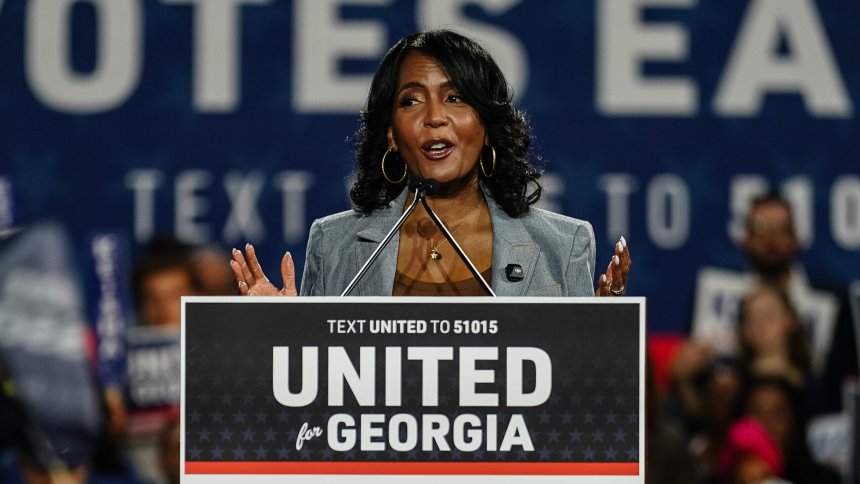

Georgia’s governor-elect reflected on the pressures Black women face to conform to traditional standards of professionalism.
For Keisha Lance Bottoms, getting her braids back after the campaign was more than a hairstyle change. It was a moment of personal freedom after months of feeling that she had to manage how people perceived her appearance while pursuing one of the most powerful political positions in the country.
The Georgia governor-elect opened up about the experience during a conversation with MS NOW host Symone Sanders Townsend, reflecting on the expectations Black women face around beauty, appearance and professionalism.
Bottoms explained that she had become attached to a particular look during the campaign because her appearance was already challenging some people’s expectations of what a gubernatorial candidate should look like.
“I got wed to a certain look just because it was already confusing to people that I didn’t have short hair,” she said.
Returning to braids after the campaign, she added, “was liberating.”
The conversation went beyond her personal experience. Bottoms pointed to the unspoken rules that have shaped how Black women are expected to present themselves, particularly in professional environments.
“As a Black woman in America, there are things that you are just told—sometimes verbally, sometimes nonverbally—growing up about what is and is not acceptable,” she said.
She specifically mentioned braids, nails and lashes as examples of styles and beauty choices that have been dismissed as unprofessional.
“For so many years, I think that there are many things like braids, nails, lashes that folks would say, ‘Ah, that’s not professional. You have to look a certain way,’” Bottoms explained.
Sanders Townsend highlighted the significance of Bottoms appearing in braids and a suit as she prepares to lead Georgia, becoming the first Black woman elected governor of a U.S. state. She described the image as powerful and inspiring, even joking that it made her want to get braids herself.
Bottoms, however, said her relationship with changing hairstyles began long before her political career. Her mother owned a hair salon, and growing up, she was accustomed to seeing different hairstyles every week.
“I grew up in a hair salon—my mom owned the hair salon. So every week it was a different hairstyle,” she recalled. “And I’m trying to make a statement. This is just what you do.”
She also offered a reminder that the Black hair salon often serves a much larger purpose than helping someone choose a hairstyle.
In describing the spaces, Bottoms said, “It’s sometimes it’s the doctor’s office, the therapist’s office, the clothing store, and it just happens to be the place that you get your hair done.”
For her, those spaces are part of a wider experience of community, where conversations, advice and emotional support can happen alongside everyday beauty routines.
Bottoms also reflected on the constant calculations Black women can feel pressured to make about their appearance, “Will this be acceptable? And what signal are we giving or not giving?”
Her comments offer a glimpse into the personal considerations that can accompany public leadership, particularly for Black women whose appearance is often scrutinized alongside their qualifications and decisions.
As Bottoms prepares to take office, her reflections have turned a conversation about returning to braids into a broader statement about identity, cultural belonging and the freedom to lead without having to fit someone else’s definition of professionalism.
Share
What's Your Reaction?
 Like
0
 Dislike
0
 Love
0
 Funny
0
 Angry
0
 Sad
0
 Wow
0