
Keisha Lance Bottoms reflects on her father Major Lance and the legacy that shaped her politics
Former Atlanta mayor opens up about growing up as the daughter of soul legend Major Lance, his incarceration, and how

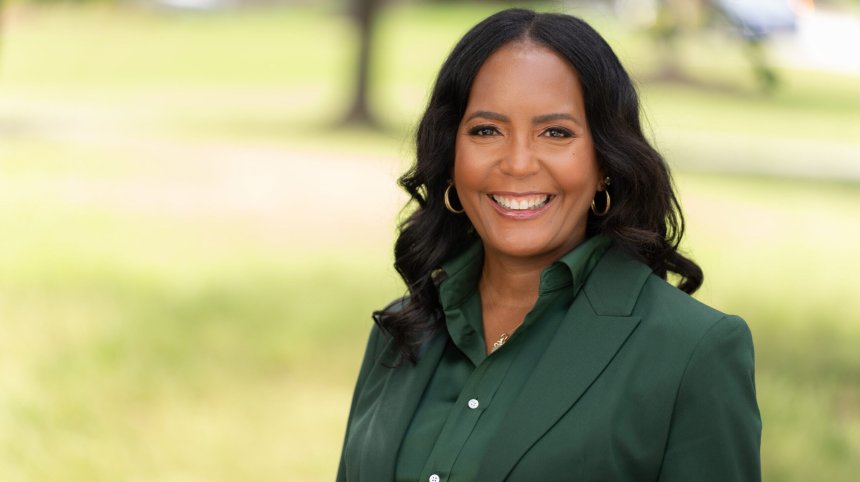
Former Atlanta mayor opens up about growing up as the daughter of soul legend Major Lance, his incarceration, and how that personal history shaped her approach to criminal justice reform.
Former Atlanta Mayor and Biden-Harris White House advisor Keisha Lance Bottoms is offering a rare window into the layered legacy of her upbringing, one shaped by the brilliance of 1960s soul music and the lasting impact of the American criminal justice system, in a deeply personal new profile published by Rolling Stone.
At the center of the story is her father, Major Lance, the Chicago-born soul singer known for hits like “The Monkey Time” and “Um, Um, Um, Um, Um, Um.” For many, he stood as part of a golden era of Black music, a voice tied to the rise of the “Chicago sound” alongside artists like Curtis Mayfield. But for Bottoms, he was also a father whose life outside the stage lights became a defining force in her worldview.
Bottoms recalls a childhood briefly touched by the glow of the music industry, where watching her father perform meant being close to Black cultural royalty. The excitement of that world, however, was cut short when she was around eight years old.
Her father was arrested and later convicted on cocaine trafficking charges, a moment that shifted everything. The transition from concert stages to prison visiting rooms became a defining memory, marking what she describes as the “missing years” of her childhood. It also introduced her early to the stigma carried by families tied to incarceration.
The feature details how that experience did not stay private. Instead, it became foundational to Bottoms’ political identity and her time as the 60th mayor of Atlanta.
Rather than distancing herself from her father’s past, Bottoms has consistently framed it as part of a broader story about the consequences of the war on drugs. Her policy priorities, including efforts to reform bail and reduce unnecessary criminalization, reflect an understanding of how labels like “offender” can obscure one’s perceived humanity.
In the profile, that perspective is rooted in the personal experience of seeing her father not as a headline or a case file, but as a talented artist whose life was reshaped by circumstances far beyond music.
The article also revisits Bottoms’ 2017 mayoral campaign, where she made the strategic decision to speak openly about her father’s incarceration.
By addressing it directly, she removed the opportunity for opponents to weaponize her family history. More importantly, it allowed her to connect with voters who had lived similar experiences, particularly in a city where the impact of incarceration is deeply felt across generations.
Pass the politics, the profile also lingers on Major Lance’s complicated legacy. He remains celebrated as a soul pioneer whose music helped define an era, yet his later years reflect the volatility and instability that many Black artists of his generation faced.
Bottoms describes maintaining a bond with her father through letters and prison visits, a relationship that, even in hardship, reinforced her belief in second chances.
That belief has followed her through public life, from City Hall in Atlanta to her role in the Biden-Harris administration. In telling this story, the piece underscores a familiar but often overlooked truth in Black American life: that legacy is rarely linear.
For Keisha Lance Bottoms, her father’s music helped shape the soundtrack of her childhood. His struggles, she suggests, helped shape the mission of her career.
Share
What's Your Reaction?
 Like
0
Like
0
 Dislike
0
Dislike
0
 Love
0
Love
0
 Funny
0
Funny
0
 Angry
0
Angry
0
 Sad
0
Sad
0
 Wow
0
Wow
0




![New Song: Josh Levi – ‘Say It [Remix]’ (featuring Brandy)](https://thatgrapejuice.net/wp-content/uploads/2026/09/brandy-thatgrapejuice-2026-say-it-remix-josh-levi.jpg)