Karmelo Anthony’s case is a reminder of the importance of jury duty in Black communities
Karmelo Anthony was sentenced to 35 years by a non-Black jury. Here’s why that matters, and what we can do

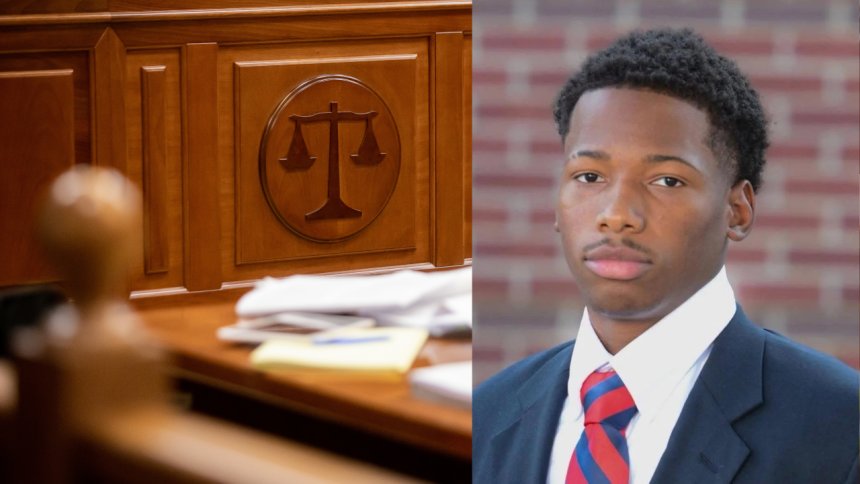
Karmelo Anthony was sentenced to 35 years by a non-Black jury. Here’s why that matters, and what we can do about it.
This week, 19-year-old Karmelo Anthony was convicted of murder and sentenced to 35 years in prison for the fatal stabbing of Austin Metcalf, a white 17-year-old student-athlete, during a track meet in Frisco, Texas. The verdict, handed down in Collin County, has since ignited a firestorm of debate across social media, activist circles, legal commentary, and community spaces, and at the center of it all is one glaring detail: the jury.
In Collin County, where the trial took place, Black people make up 12.1% of the population, per the Dallas Morning News. And yet, of the approximately 600 residents summoned for jury duty, the trial ultimately concluded with 12 jurors and 6 alternates — not one of whom identified as Black. According to CBS News, the prosecution dismissed the three Black qualified jurors during the final jury selection. Despite Anthony’s defense attorneys accusing prosecutors of removing them without proper cause, the prosecution argued that the case’s circumstances were “race-neutral” and did not require a diverse jury. Judge John Roach Jr. ultimately sided with the prosecutors.
However, many community members saw things differently.
“The prosecution used its final strikes to remove the remaining qualified Black jurors from the jury pool, raising serious concerns about fairness and equal justice,” Next Generation Action Network, a civil rights organization, shared in light of the jury selection. “We respect the court, but we will not remain silent.”
Law professor Anna Offit echoed those concerns in an op-ed for the Dallas Morning News, pointing out that in Texas, the stakes of jury composition are particularly high because jurors don’t just decide guilt or innocence; they also decide the sentence.
“This means the jurors in Karmelo Anthony’s trial will not just be assessing his guilt or innocence. They will potentially determine how this community should respond when a particular person is convicted of having committed a particular crime,” she wrote. “In doing so, they will reaffirm shared ideas about why certain people act the way they do and what should be done about it.”
As experts debate whether the presence of Black people on the jury would have changed the outcome of Anthony’s case, the discourse is a reminder of the importance of jury duty and of Black communities being intentional about showing up when summoned.
View on Threads
View on Threads
View on Threads
The exclusion of Black people from juries is not a new phenomenon; it is, in fact, deeply American. For years, the U.S. Constitution effectively denied Black communities the right to serve on juries through the machinery of slavery. And even after emancipation, many states continued to bar Black citizens from jury service or from being tried before a jury of their peers. It wasn’t until the ratification of the 14th Amendment in 1868, granting all citizens “equal protection of the laws,” and the Civil Rights Act of 1875, which abolished race-based discrimination in jury selection, that the door was legally opened.
Even so, the gap between legal protection and lived reality has always been wide.
Today, that gap is made even more stark when you consider that nearly every elected prosecutor in America is white, despite the fact that more than 40% of Americans are people of color, as reported by the Equal Justice Initiative. The constitutional right to a jury of one’s peers exists precisely to protect defendants from the unchecked biases of police, judges, and prosecutors. But when juries fail to reflect the diversity of the communities they serve, those biases go unchallenged, and for Black defendants, the consequences look like wrongful convictions and excessive sentences.
“Stop wondering why our kids are not being saved when we have people that don’t even see their humanity nine out of 10 times pulling up to jury duty, and you saying you got other things to do, and you trying to come up with every excuse for not showing up. You’ve got to pay it forward,” Rep. Jasmine Crockett said in a livestream reflecting on Anthony’s case. “You need to show up for jury duty. It doesn’t matter if you’re going to the criminal or the civil or whatever.”
She continued: “The most patriotic thing you can do is show up to jury duty and be able to lend your lived experiences. I really want to promote people engaging in civic duty in all ways, not just at the ballot box. So let’s talk about serving on juries. Do not look for every reason to get out. And I know that it is a sacrifice.”
Though serving on a jury can sometimes be an inconvenience, as it requires you to miss work and spend hours and sometimes days in a courtroom, our presence in these spaces can be a lifeline for our communities.
Share
What's Your Reaction?
 Like
0
Like
0
 Dislike
0
Dislike
0
 Love
0
Love
0
 Funny
0
Funny
0
 Angry
0
Angry
0
 Sad
0
Sad
0
 Wow
0
Wow
0