Kamala Harris and Abdul El-Sayed face a challenge: Bridging Michigan’s divide among Black voters
Kamala Harris’ return to Michigan highlights Democrats’ effort to rebuild trust with Black voters as Abdul El-Sayed works to unite

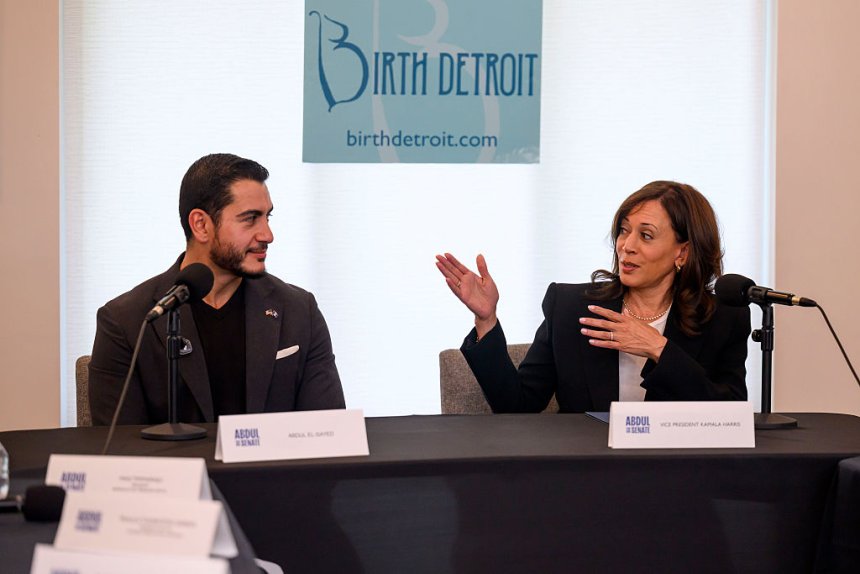

Kamala Harris’ return to Michigan highlights Democrats’ effort to rebuild trust with Black voters as Abdul El-Sayed works to unite different parts of the party’s coalition.
Kamala Harris made her second trip to Michigan since losing the 2024 presidential election on Tuesday, campaigning for Democrats on the ballot this midterm election as they struggle to bridge divides with Black voters in the state.
“I don’t think the party has been working hard enough, and so it’s good to see that Kamala Harris is going to step in and do what she needs to do,” says Dr. Alvin Tillery, co-founder and CEO of 2040 Strategy Group. He tells theGrio, “She’s still the most popular, active politician with Black voters, particularly those crucial Black women voters in the Gen X and Baby Boom segments that make everything happen in the Black community.”
Harris’ office says the campaign stop in Michigan was about “emphasizing the stakes” of the Nov. 3 election for Black voters and the need to elect state and local Democrats who will “fight for the people.”
Harris’s Michigan return included a campaign engagement with the Democratic nominee for the U.S. Senate, Abdul El-Sayed, who narrowly won his primary against U.S. Rep. Haley Stevens. The primary contest exposed a divide among Black Michiganders between younger progressive voters who backed El-Sayed and older traditional, church-going voters in the suburbs who mostly backed Stevens.
The Democratic Party’s progressive divide — and whether Harris is trying to bridge it

Political experts who spoke to theGrio both on and off the record say it’s clear Harris is helping El-Sayed bridge those gaps with Black voters, many of whom remain skeptical of backing the 41-year-old Muslim scientist born to Egyptian immigrants.
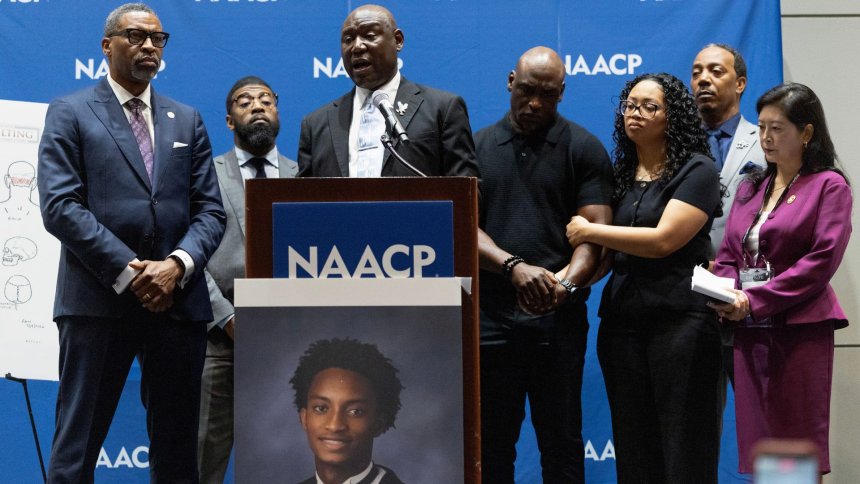
“He has relationships to deepen with Black voters and civic leaders in Detroit,” says Paul Kanan, former communications director for the Michigan Democratic Party. He says that El-Sayed holding a conversation on Black maternal health with Harris and leaders, including at the NAACP, “gives him an opportunity to do exactly that.”
Kanan says there’s no better person than Harris to help El-Sayed make inroads with Black voters, telling theGrio, “Michigan voters know Kamala Harris very well.” Despite Harris’ loss to Donald Trump in Michigan in 2024, the Democratic operative noted, “the presidential race here was incredibly close.”
Harris’ presence in Michigan lends El-Sayed “credibility” for Black voters to “hear what he has to say,” says Kanan. He explained, “The fact that those doors are opening for him to make those relationships, those connections, that’s a strong development.”
Tillery, who is also a political science professor at Northwestern University, says that the divide between Black voters in the Michigan U.S. Senate race is misunderstood by most political insiders.
“I think that they want to believe that Black voters voted for Stevens because they are less progressive than El Sayed’s platform, but that’s false,” he told theGrio.
Tillery instead believes that Black voters remained skeptical of El-Sayed because they’re not going to “waste their votes on somebody that they don’t think has a chance of winning.” The same was believed to be true for Barack Obama‘s 2008 presidential election, in which he garnered more support from Black voters after his win over Hillary Clinton in the Iowa presidential primaries.
“We know from a lot of survey evidence that Black voters are the most pragmatic and intelligent voters in the electorate,” says Tillery.
The political consultant, who advises progressive Democratic congressional candidate Chris Rabb, says that pro-Israel and Democratic establishment groups like AIPAC “threw an $80 million punch” at El-Sayed to “tamp down Black votes in the primary.”
Tillery added, “Now the whole party’s got to be working hard to get that back.”
Is Kamala Harris positioning herself for 2028?
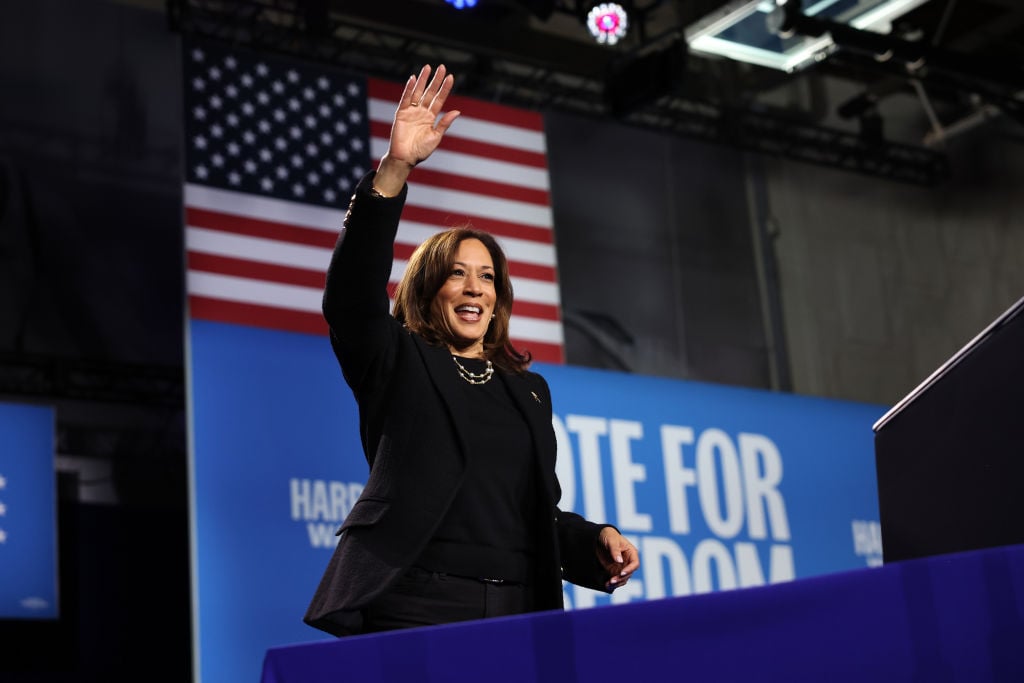
Kamala Harris’ visit to Michigan is also fueling more speculation of a third run for U.S. president in 2028.
After declining to run for governor of California last year and leaving the door open when asked about another White House run at various speaking engagements across the country, Harris’ return to the campaign trail in a state she narrowly lost in 2024 will only further fuel the rumors.
“It signals that she’s going to run again,” Tillery tells theGrio.
Michigan is particularly resonant for Harris and any future plan to run for president in 2028. It’s the state where thousands of uncommitted voters boycotted her 2024 presidential bid as a result of the Biden administration’s policies on Israel’s military strikes in Gaza that killed more than 75,000 Palestinians, including innocent women and children.
“We know that she didn’t create enough daylight between herself and President Biden’s Gaza policy, which was her Gaza policy, and that was a huge mistake that cost them the state and perhaps the White House,” noted Tillery, who shared his agency’s polling research with the Biden-Harris White House about how the issue was animating some Black voters. He said the Gaza issue continues to follow the Democratic Party.
Kamala Harris’ engagement with progressive voices who have spoken out against Israel and Gaza, like El-Sayed and New York City Mayor Zohran Mamdani, suggests she has learned some lessons of 2024.
“If [progressive] issues are ultimately issues that the Harris team wants to pick up on, there’s probably no better ally or relationship to have than with someone like Abdul, who is clearly making folks across the country pay attention,” said Kanan.
However, Dr. Tillery says the lessons learned for Harris can’t be said for the Democratic Party’s consultant and donor class.
“They wasted all that money trying to beat El-Sayed, and they haven’t put an equal chip cup in to boost him up,” argued Tillery, who said the same can be said for progressive candidate Angie Nixon, who won the U.S. Senate nomination in Florida in an upset against an establishment candidate.
If Harris is going to run for president in 2028, Black voters, from whom she has the strongest support, will be critical to any electoral success. However, a significant segment of Black voters and voters writ large, namely younger voters, are no longer loyal to the Democratic Party as generations past.
“Black voters under 45 are the swing voters,” says Tillery, who noted they’re not swinging to the Republican Party, but rather whether to vote at all.
He added, “You’ve got a way better chance of getting those people to come out and vote Democrat for Kamala Harris or Gavin Newsom or J.B. Pritzker than you do white women living in the suburbs.”
Share
What's Your Reaction?
 Like
0
Like
0
 Dislike
0
Dislike
0
 Love
0
Love
0
 Funny
0
Funny
0
 Angry
0
Angry
0
 Sad
0
Sad
0
 Wow
0
Wow
0