Judge blocks Trump’s $1.7B ‘slush fund,’ but for Black reparations the ‘narrative damage is already done’
“We’ll keep fighting on all fronts to make sure the public channels their righteous anger where it belongs: into reparations

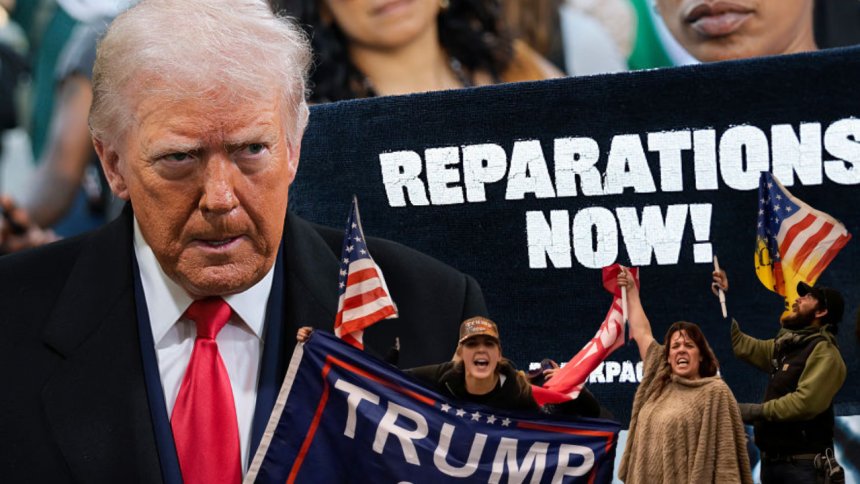
“We’ll keep fighting on all fronts to make sure the public channels their righteous anger where it belongs: into reparations for Black Americans,” says Dreisen Heath, founder of the Why We Can’t Wait Reparations Network.
A federal judge has blocked the Trump administration’s controversial $1.776 billion “anti-weaponization” fund that has been ridiculed by critics who call it a “slush fund” for pro-Trump rioters convicted for violently attacking the U.S. Capitol on Jan. 6, 2021.
On Friday, U.S. District Judge Leonie Brinkema ordered that the U.S. Department of Justice temporarily halt transferring money to the fund, as well as any consideration of any claims submitted to the fund, and the disbursement of any money from the fund.
The plaintiffs in the case accuse the DOJ of creating a “slush fund” — established as part of a $10 billion settlement of a personal lawsuit filed by President Donald Trump over the leaking of his tax returns — that is unconstitutional and based on “blatant partiality.” The lawsuit is filed by individuals and groups who say they were targeted by the Trump-Vance administration as ideological or political opponents.
“By its own terms, the Anti-Weaponization Fund is available only to claimants who assert that they were targeted by ‘Democrat’ administrations, even though the current administration has weaponized the awesome power of the federal government against its perceived political opponents like no other administration before it,” the lawsuit asserts.
As theGrio previously reported, racial justice advocates and progressive Democrats like U.S. Reps. Jasmine Crockett and Ayanna Pressley slammed the Trump fund as an insult to Black Americans.
“It’s a slap in the face to Black people who’ve been fighting for reparations after centuries of enslavement, segregation, [and] ongoing discrimination by the government,” Pressley told theGrio.
Dreisen Heath, reparations researcher, policymaker, and founder of the Why We Can’t Wait Reparations Network, tells theGrio of Friday’s court ruling, “Judge Brinkema’s order does the minimum required and prevents taxpayer funds from moving before a single dollar is irreversibly spent on what amounts to a slush fund for Trump’s personal grievances.”
However, she noted, “The narrative damage is already done.” 
“Framing January 6 defendants as victims of ‘weaponization’ distorts who the actual victims of systemic harm in this country are — and that distortion doesn’t get walked back by a court order,” said Heath. “We’ll keep fighting on all fronts to make sure the public channels their righteous anger where it belongs: into reparations for Black Americans.”
Ironically, the fund that the anti-weaponization money would’ve been distributed through is a Treasury Department judgment fund established in 1956 that has been used to settle claims of racial discrimination against Black and Native American farmers.
“Most claimants had to wait years for those payments,” Heath previously told theGrio. “The president suing himself and settling with himself using the same fund with no court ever ruling that the government owed anyone anything…is an abuse of taxpayer money.”
The policymaker, who has worked on racial justice legislation alongside members of Congress, called out some who characterized the Trump fund as “reparations,” saying it “completely undermines and weaponizes what real reparations are.” However, she said, the swiftness of the fund does show what is possible for Black Americans and the fight for reparations.
Dr. Marcus Anthony Hunter, a reparations scholar and professor of sociology and African-American studies at UCLA, called out the very clear differences between what the Trump administration is attempting to do with the anti-weaponization fund versus the years-long fight to secure reparations for Black America.
“On the J6er side is a demand to not be held accountable and to receive funds based on your grievances around that accountability, where reparations, especially in the case around American slavery, are to make the government and the state accountable for institutionalizing, sanctioning, and constitutionalizing the enslavement of other human beings,” Hunter previously told theGrio.
The fund is also facing another legal challenge from two former Capitol and D.C. police officers, Harry Dunn and Daniel Hodges, who were injured while defending the U.S. Capitol against the pro-Trump mob.
The lawsuit claims the fund endangers the lives and safety of Dunn and Hodges by encouraging those who “enacted violence in the President’s name to continue to do so.” The two former police officers continue to face “credible” death threats and acts of violence on a “regular basis,” the suit warns. Additionally, the complaint notes that, if allowed to begin making payments, the fund will “directly finance the violent operations of rioters, paramilitaries, and their supporters who threatened Plaintiffs’ lives that day, and continue to do so.”
Share
What's Your Reaction?
 Like
0
Like
0
 Dislike
0
Dislike
0
 Love
0
Love
0
 Funny
0
Funny
0
 Angry
0
Angry
0
 Sad
0
Sad
0
 Wow
0
Wow
0