Jay-Z revisits how Biggie and 2Pac’s friendship unraveled into hip-hop’s most infamous feud
In a conversation with Rick Rubin, Jay-Z offered his perspective on the personal tensions, misunderstandings and media coverage that helped

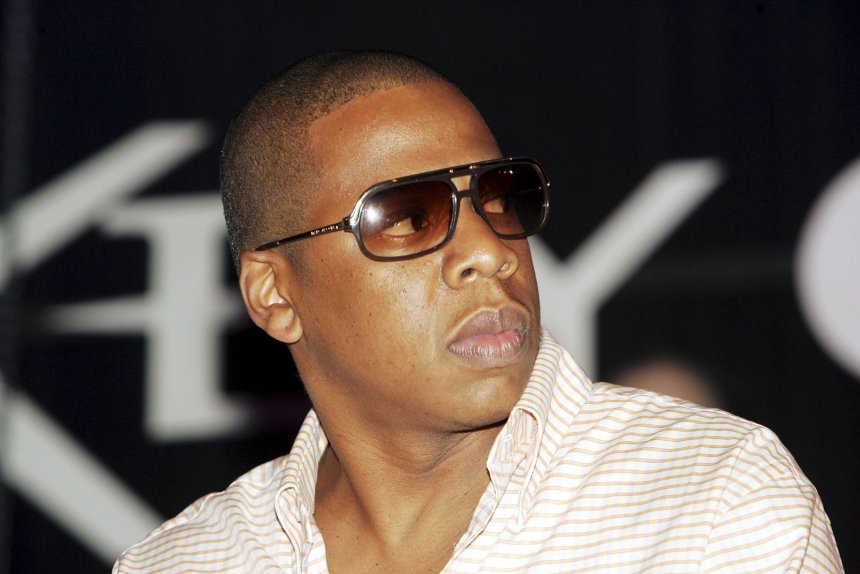

In a conversation with Rick Rubin, Jay-Z offered his perspective on the personal tensions, misunderstandings and media coverage that helped turn a falling-out between two rap stars into the East Coast-West Coast rivalry of the 1990s.
Jay-Z is taking another look at one of the most consequential chapters in hip-hop history: the complicated friendship between The Notorious B.I.G. and 2Pac.
During the first episodes of his new HBO Max docuseries, JAŸ-Z in 8, Jay-Z sat down with legendary producer Rick Rubin to discuss his career, music and the people who shaped his journey. Their conversation eventually turned to Biggie and 2Pac, two rappers who were once friends before their relationship deteriorated and became intertwined with the larger East Coast-West Coast conflict of the 1990s.
Jay-Z, who was close with Biggie before his death, offered his own recollection of what happened.
According to Jay-Z, Biggie had become concerned about some of the people surrounding 2Pac as the California rapper’s profile grew. Jay-Z recalled Biggie warning 2Pac to be careful about certain people he believed were dangerous.
Jay-Z said 2Pac then repeated Biggie’s warning to those same individuals, creating tension for Biggie in New York.
The Brooklyn rapper said the memory helped him understand an encounter he witnessed involving Biggie and his own longtime friend, Tyran “Ty Ty” Smith. Jay-Z recalled arriving at a club with Smith and seeing Biggie decide not to enter because someone he had problems with was inside.
Looking back, Jay-Z said he understood that Biggie’s concerns were connected to the people he had previously warned 2Pac about.
But the relationship between the two rappers would fracture even further after 2Pac was robbed and shot at Quad Recording Studios in Manhattan on Nov. 30, 1994.
2Pac survived the attack and later accused Biggie and Sean “Puffy” Combs of knowing more about the shooting than they acknowledged. Both denied involvement. No one was charged in the 1994 attack.
Years later, convicted murderer Dexter Isaac claimed he participated in the robbery and said music executive James “Jimmy Henchman” Rosemond hired him. Rosemond denied the allegation. Isaac’s account did not establish who fired the shots that struck 2Pac, and the circumstances surrounding the attack have remained disputed.
Jay-Z’s account focuses on what he believes happened emotionally after the shooting.
He said 2Pac knew Biggie had warned him about people in his circle but ultimately directed his anger toward his former friend.
That interpretation is Jay-Z’s recollection of the situation, rather than a definitive account of 2Pac’s thinking. Other accounts of the period have documented that 2Pac increasingly believed Biggie and Combs had betrayed him, even though they denied involvement in the shooting.
The release of Biggie’s “Who Shot Ya?” further complicated matters. Biggie maintained that the song had been recorded before 2Pac was shot, but 2Pac interpreted it as a response to the attack and eventually answered with “Hit ‘Em Up,” one of the most direct diss records in rap history.
From there, a personal dispute between two artists became attached to a much broader rivalry between New York and Los Angeles hip-hop.
Jay-Z believes the media played a significant role in expanding the conflict beyond Biggie and 2Pac themselves.
“It took on a life of its own,” Jay-Z said during the conversation, recalling how magazines began covering the dispute and how people who had no connection to the original tensions became involved.
That distinction is important because the so-called East Coast-West Coast war was never simply a disagreement between two rappers.
There were already longstanding rivalries involving record labels, artists, regional identities and competing hip-hop scenes. Death Row Records co-founder Suge Knight and Bad Boy Records founder Sean Combs became central figures in the growing tension, while 2Pac’s move to Death Row intensified his public opposition to Biggie and Bad Boy.
The conflict ultimately became inseparable from the deaths of both artists. 2Pac was killed in Las Vegas in September 1996. Six months later, Biggie was fatally shot in Los Angeles. Neither murder has resulted in a conviction.
Jay-Z’s recollections do not resolve the unanswered questions surrounding either killing. Instead, they provide another perspective from someone who knew Biggie personally and watched the relationship between two influential artists change from friendship to hostility.
For a generation that watched the conflict unfold in real time, that distinction matters. What began as a personal breakdown became a cultural narrative much larger than the two men at its center, with consequences that continued long after both rappers were gone.
The conversation also offers a glimpse into how Jay-Z understood his own position during that period. His friendship with Biggie eventually led to their collaboration on “Brooklyn’s Finest,” but Jay-Z said he was conscious of avoiding language that could further inflame the growing coastal tensions. He recalled cutting a reference to California from Biggie’s verse because he did not want the song to become part of the escalating East Coast-West Coast conflict.
Nearly three decades later, Jay-Z’s reflections underscore how complicated that era was. The history includes documented events, conflicting accounts and unanswered questions, making it difficult to reduce the story to a simple rivalry between East and West.
What is clear is that Biggie and 2Pac’s relationship changed dramatically, and the fallout became one of the defining stories of 1990s hip-hop.
Share
What's Your Reaction?
 Like
0
Like
0
 Dislike
0
Dislike
0
 Love
0
Love
0
 Funny
0
Funny
0
 Angry
0
Angry
0
 Sad
0
Sad
0
 Wow
0
Wow
0