If it weren’t for the Wayans brothers… we wouldn’t have grand Super Bowl Halftime shows
Before the Wayan Brothers’ “In Living Color” special halftime episode, the NFL Super Bowl halftime show was seen as a

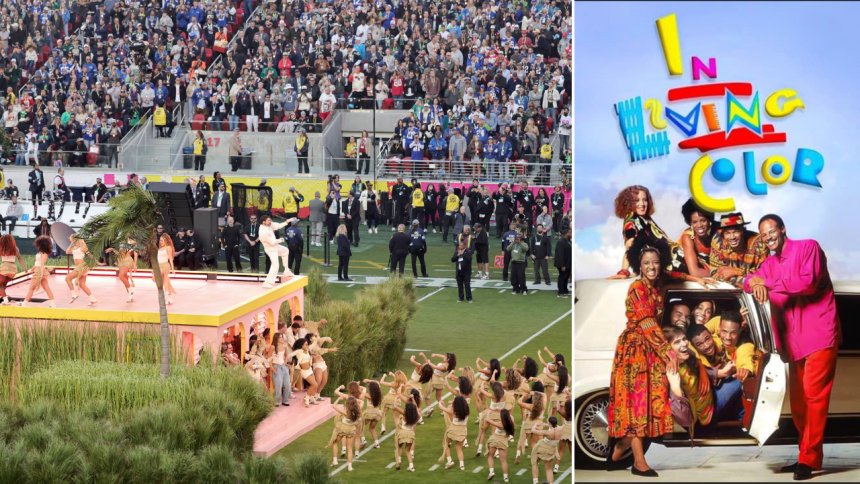
Before the Wayan Brothers’ “In Living Color” special halftime episode, the NFL Super Bowl halftime show was seen as a “bathroom break.”
Most people remember Michael Jackson becoming the first mega star to perform at a Super Bowl halftime show. But do you know what led to that decision? What’s often left out of the story is why the NFL felt the need to book a star of that magnitude in the first place. The answer starts with the Wayans brothers.
In the early 1990s, Super Bowl halftime was not designed for television audiences. It was pageantry meant for the stadium: marching bands, theme-driven spectacles, nostalgia acts, and commissioner speeches that sent viewers to refresh their snacks, stretch their legs, or go to the bathroom.
“[Halftime is] the time that everybody went to pee”, as Keenen Wayans told ESPN in 2021. “They create a half-time show for the 100,000 people in the stadium that I don’t think translates that well to the small screen.”
That same year, the Wayans brothers’ creation, “In Living Color,” debuted on Fox in 1990. Loud, fast, irreverent, and unmistakably Black, the show occupied the cultural space Saturday Night Live avoided with its diverse cast and contemporary humor, which audiences loved. The show quickly became a hit amongst viewers, garnering 12 million views weekly, a notable figure for the budding network at the time.
Another key part of the show’s success stemmed from its audacity to lean on cultural storytelling — and it’s audacity to air a special episode during the NFL’s Super Bowl halftime show in 1992.
During “In Living Color’s” first season, Fox marketing executive Jay Coleman recognized what the NFL had overlooked: Super Bowl halftime wasn’t protected by loyalty. It was vulnerable. Coleman proposed airing a special halftime episode, not as counter-programming before or after, but as a direct alternative. An idea the network leaned into, running ads that told viewers exactly when to switch between channels.
“It was prime for a takeover,” David Alan Grier later told ESPN. “We were just going to do our show during halftime. We had a very young audience, very urban — but everybody loved it.”
That year the NFL halftime show was themed “Winter Magic,” featured Olympic figure skating and a performance by Gloria Estefan. Meanwhile, “In Living Color” promised sketches, live energy, and a performance by Color Me Badd, then riding the peak of mainstream R&B popularity
“There was an ad exec at Frito-Lay, and he’s the one who came up with the idea of counterprogramming against the Super Bowl. [Frito-Lay sponsored the “In Living Color” halftime show.] We brainstormed and decided that we’d do it as a live version of the show. We wanted to put up a [countdown] clock on the screen so that people would know when to go back to the game. I was very confident that we would steal the show. It was such a perfect opportunity,” Wayans continued.
The result was modest in numbers but seismic in meaning. Fox pulled 11 percent of the Super Bowl’s nearly 80 million viewers. For the first time, the NFL lost audience share during its most sacred broadcast window.
“To this day, ‘In Living Color’ had the best halftime show. I love Michael Jackson. And Justin Timberlake is a friend of mine,” Marlon Wayans shared. “But you could put all of them onstage, and it wouldn’t be like the halftime ‘In Living Color’ s*** because it was nothing like going from the excitement of the game to those laughs. The laughs were everything.”
The NFL didn’t acknowledge this for years. They really just huddled up and said, “Let’s get Michael Jackson, and let’s make sure this never happens again. “They just kept getting big names, like Prince [2007] and Madonna [2012],” Keenan added.
Three decades into the Super Bowl’s halftime transformation, the through line remains unmistakable. Every elaborate stage, every headline-grabbing performer, every halftime show designed to “break the internet” traces back to 1992, when the Wayans brothers offered millions of viewers a better option.
Share
What's Your Reaction?
 Like
0
Like
0
 Dislike
0
Dislike
0
 Love
0
Love
0
 Funny
0
Funny
0
 Angry
0
Angry
0
 Sad
0
Sad
0
 Wow
0
Wow
0